Weekly Hot Tub Maintenance Made Easy: Chlorine, Bromine, Salt & @Ease
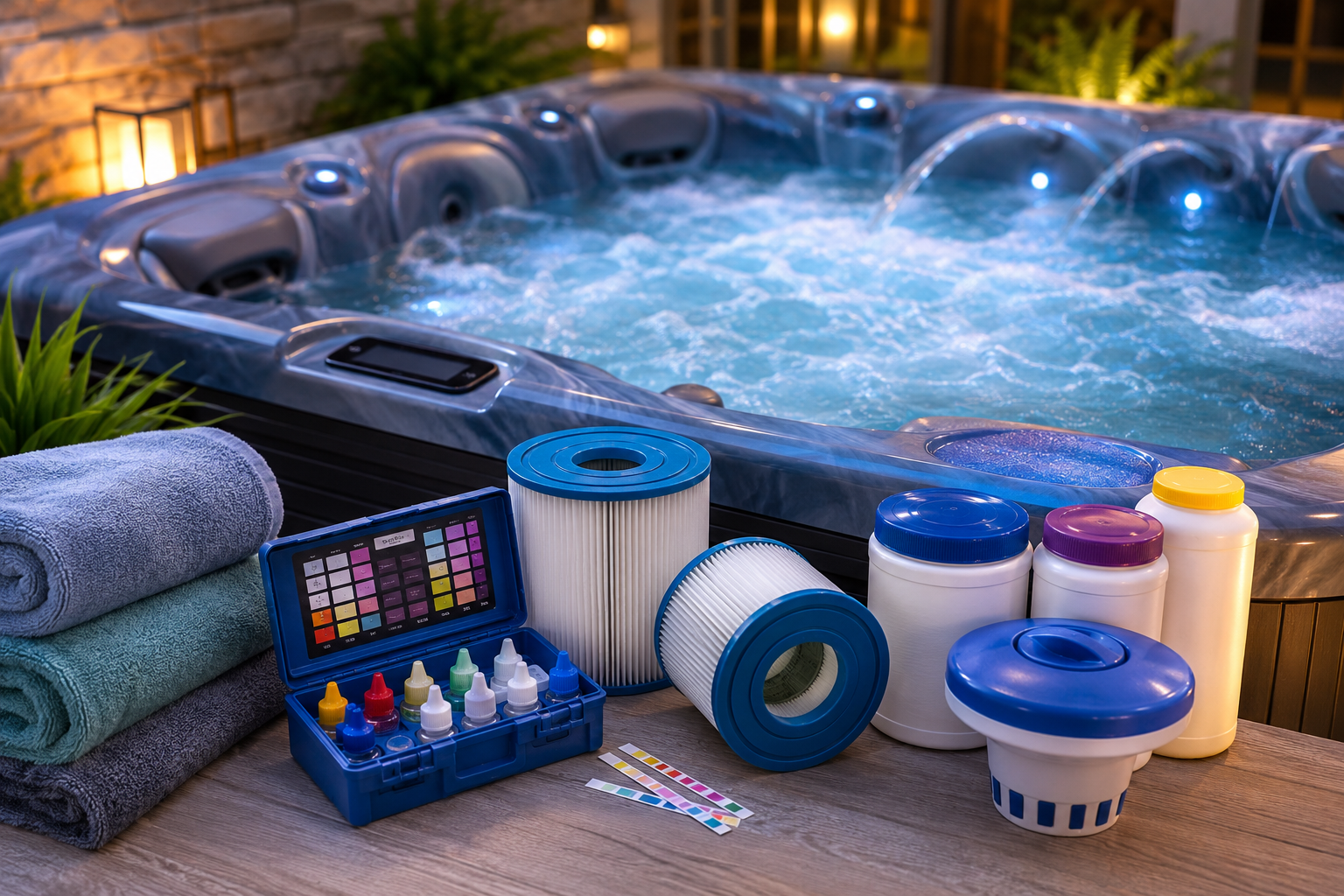
Chlorine, Bromine, Salt & @Ease: Weekly Hot Tub Maintenance Made Easy
Keeping your hot tub clean doesn’t have to take up your whole Saturday. A weekly routine gives you time to clean, inspect, and catch small problems before they become bigger ones.
But weekly maintenance doesn’t mean you can leave the water unchecked between those sessions. Sanitizer and pH can change much faster, especially when several people use the hot tub.
This guide separates those frequent water checks from your weekly tasks, then explains how the routine differs for chlorine, bromine, saltwater, and FROG @ease systems.
Key Takeaways From This Report
Which water checks belong between weekly maintenance sessions
What to include in your weekly cleaning and inspection routine
How care differs for chlorine, bromine, saltwater, and FROG @ease systems
Why shock products and schedules need to match your water-care system
How to find the right calcium-hardness range for your hot tub
What to check on filters, covers, and supplemental equipment
When to investigate a recurring problem instead of adding more chemicals
For conventional chlorine and bromine setups, check sanitizer and pH at least twice a day, including before you soak. Test more often during heavy use or when you’re working through a water problem.
A saltwater chlorine generator still needs regular water testing. Producing chlorine automatically doesn’t guarantee that the amount being produced matches demand.
For FROG @ease, use the dedicated test strips and follow the testing instructions for your particular system. Its SmartChlor reading is interpreted differently from a conventional chlorine test.
If a reading falls outside your system’s recommended range, follow the product instructions to correct it and retest before getting in. These checks complement your weekly maintenance—they don’t replace filter cleaning, waterline care, or equipment inspections.
📅 Universal Weekly Checklist (All Sanitizers)
- Test your water (sanitizer, pH, total alkalinity).
- Adjust levels as needed.
- Check water level and top off so the pump doesn’t run dry.
- Verify your temperature — accidental bumps or heater issues can waste energy or stress equipment.
- Rinse or inspect your filter; deep clean monthly or quarterly depending on usage.
- Wipe the waterline to prevent scum buildup.
- Optional weekly boosters:
- Enzymes to reduce scum lines and break down oils and other organic waste.
Keep Calcium Hardness on Your Schedule
Calcium hardness usually changes more slowly than sanitizer or pH, so it doesn’t normally need the same frequent testing. Check it monthly, after a refill, and after substantial top-ups—or more often if your system’s instructions require it.
Use the calcium range specified for your hot tub and water-care system. 150–250 ppm isn’t a universal target, and some saltwater systems require considerably lower levels to help limit scale on the chlorine-generating cell.
If your reading is outside the recommended range, follow your manufacturer’s guidance before adding a hardness increaser or treatment product. Foam or cloudy water alone doesn’t tell you whether calcium needs adjusting.
Between Weekly Maintenance Sessions
⚡️ Does Every Hot Tub Need Weekly Shock?
Shock treatment can help deal with accumulated bather waste, but the right product and schedule depend on your water-care system. A routine that works for a manually dosed chlorine hot tub may not suit FROG @ease or a saltwater system.
Follow your sanitizer system’s instructions for the product, dose, and frequency. Some routines include weekly oxidation; others call for treatment at different intervals or after heavier use.
Shock and Sanitizer Have Different Jobs
Non-chlorine shock helps oxidize contaminants, but it doesn’t replace the need to maintain your system’s sanitizer level. In a bromine system, a compatible oxidizer can also reactivate bromide into active bromine.
Chlorine-based shock adds chlorine as well as providing oxidation, but it isn’t appropriate for every setup. Check compatibility before choosing a product.
Test Before Adding More
Cloudy water or an unusual smell doesn’t automatically mean the hot tub needs another dose of shock. Check sanitizer, pH, filter condition, and circulation so you can address the cause.
After treatment, follow the product’s circulation and waiting instructions. Confirm that the water meets your system’s recommended conditions before getting back in.
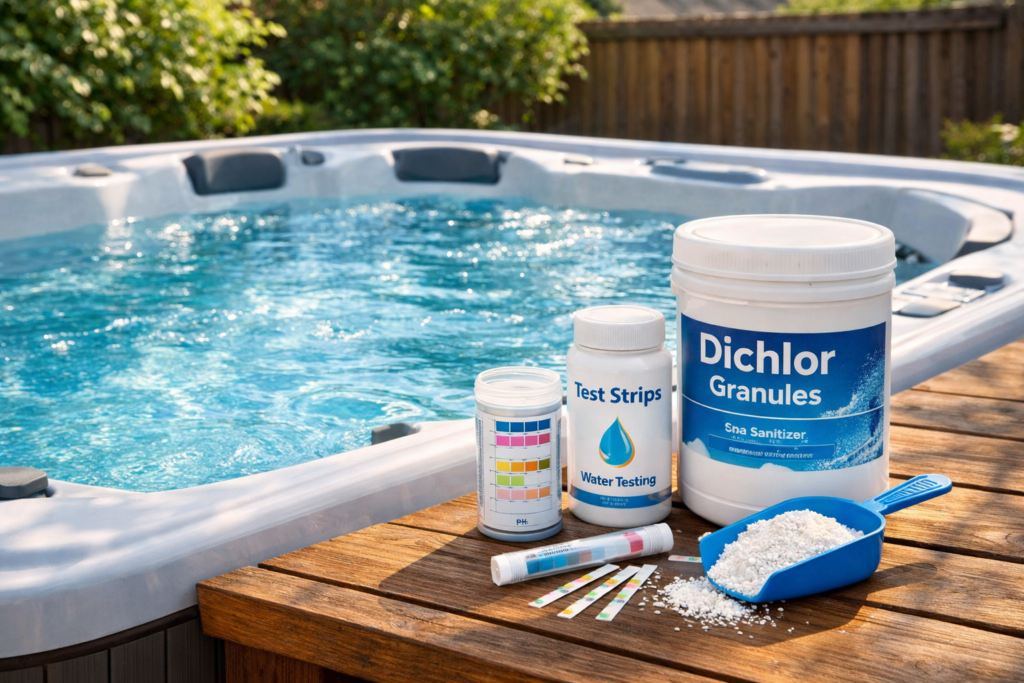
💥 Chlorine
With a manually dosed chlorine system, you add sanitizer as needed to maintain an adequate level in the water. The amount needed can change with use, so testing should guide your dosing.
For general guidance, aim for 3–5 ppm free chlorine, following your sanitizer’s label and hot tub’s instructions. Free chlorine is the chlorine available to sanitize the water—not the same as total chlorine.
Keep Testing Between Weekly Sessions
Check free chlorine and pH at least twice a day, including before soaking, and more often during heavy use. Don’t wait for your weekly maintenance session to address a low reading.
If chlorine keeps dropping faster than expected, review recent use, filter condition, and your dosing routine. Repeatedly adding more without investigating can leave the underlying problem unresolved.
Your Weekly Chlorine Checklist
Review your recent readings and whether your dosing routine is keeping up with use.
Check total alkalinity, particularly if pH keeps drifting.
Inspect and clean the filter as directed.
Wipe the waterline and check water level and circulation.
Follow your water-care instructions for any scheduled oxidation or shock treatment.
Match Shock Treatment to Your Routine
Some chlorine routines call for weekly oxidation, but the appropriate product and frequency depend on your setup and usage. Follow the product instructions rather than assuming every hot tub needs the same treatment.
Non-chlorine shock can help oxidize bather waste, but it doesn’t replace your chlorine residual. After any treatment, observe the stated circulation and waiting periods, then confirm acceptable chlorine and pH readings before getting in.
🔵 If You’re Using Ozone with Chlorine
An ozonator provides supplemental oxidation that can help reduce some of the workload on chlorine. But having ozone doesn’t automatically mean you should lower your chlorine target.
Maintain the sanitizer level specified by your chlorine product and hot tub’s water-care instructions.
Keep testing the water regularly, even when the ozone system appears to be working. It doesn’t replace the need for a sanitizer residual in the water or routine cleaning and maintenance.
Follow your water-care instructions for shock treatments, too. The appropriate product and frequency depend on your setup, how much the hot tub is used, and the condition of the water.
🏵️ Bromine
For general guidance, maintain bromine at 4–8 ppm, following your product label and hot tub’s instructions. Check bromine and pH between weekly maintenance sessions, including before soaking.
A feeder releases sanitizer gradually, but demand changes with use. The setting that worked during a quiet week may need attention after several people have been soaking.
Your Weekly Bromine Checklist
Check the feeder and replenish it with the correct bromine product as directed.
Inspect the feeder for damage or blocked openings.
Review your bromine readings and adjust the feeder according to its instructions.
Check total alkalinity and keep up with regular pH testing.
Follow your bromine system’s directions for oxidation or shock treatments.
Use only products approved for your feeder and sanitizer system. Never mix chlorine and bromine tablets together in a dispenser.
Follow the Startup and Shock Instructions
Some bromine routines require establishing a bromide reserve when you fill the hot tub. Follow your system’s startup instructions rather than assuming that adding tablets immediately creates the required reserve.
An appropriate oxidizer can help manage bather waste and reactivate bromide into active bromine. The product, dose, and frequency depend on your system and usage, so follow its directions rather than treating weekly non-chlorine shock as a rule for every setup.
A bromide reserve isn’t the same as an adequate active bromine reading. Keep testing, and correct out-of-range results before getting in.
🌊 Salt (Saltwater Chlorine Generator)
A saltwater system generates chlorine from dissolved salt, reducing the amount you need to add by hand. You still need to test the water to confirm that production is keeping up with demand.
Your Weekly Saltwater Checklist
Review free chlorine readings. Test the chlorine available in the water, not just the system’s output setting. Follow your system’s recommended range and adjust production as directed.
Check pH and total alkalinity. Watch for recurring pH drift rather than repeatedly adding chemicals without checking alkalinity.
Check the system display. Investigate low-salt, cell, or other warnings using the troubleshooting instructions.
Check salt when required. Follow the manufacturer’s testing schedule and recheck after substantial water replacement. Confirm the level before adding more salt.
Keep up with filter and waterline cleaning. Automatic chlorine production doesn’t remove the need for routine maintenance.
Continue your regular sanitizer and pH checks between weekly maintenance sessions, especially after heavier use.
Follow the Cell’s Maintenance Instructions
Some systems have serviceable cells; others use replaceable cartridges. Inspect, clean, or replace yours according to the manufacturer’s schedule. Don’t remove or rinse it weekly unless the instructions call for that.
Keeping calcium hardness within your system’s specified range helps limit scale. Use only approved cleaning methods—unnecessary or improper cleaning can damage the cell.
Plan for Heavier Use
Several people soaking can use chlorine faster than the system produces it. Follow your manual’s instructions for a temporary output increase, boost cycle, or supplemental sanitizer when needed.
Use shock treatments only as directed for your setup, and confirm acceptable sanitizer and pH readings before getting back in.
 Frog @ease
 Frog @ease
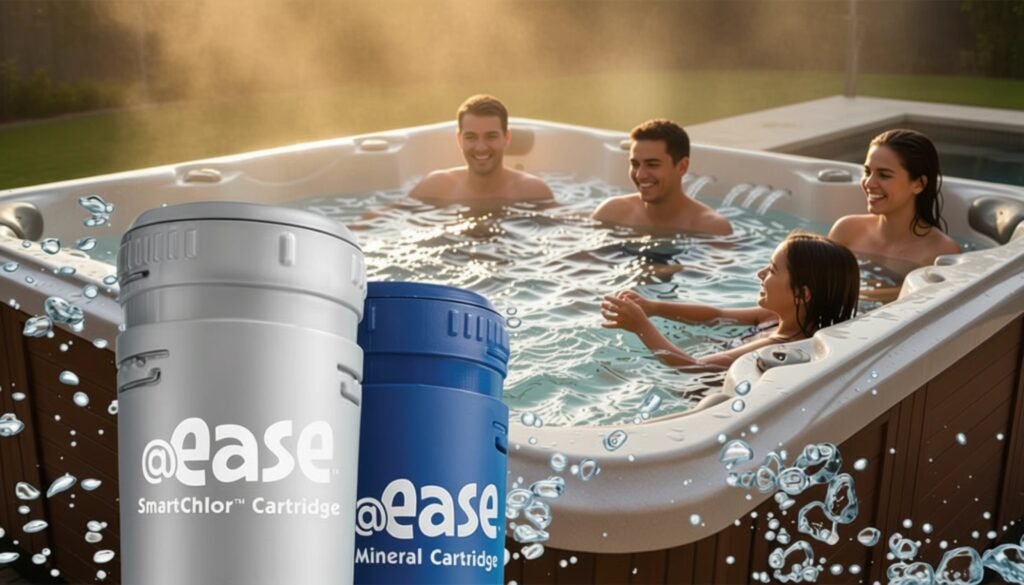
FROG @ease combines a mineral cartridge with a SmartChlor cartridge to maintain a lower chlorine level as part of a complete sanitizing system. It reduces manual dosing, but you still need to check the water and keep up with routine maintenance.
Use the Right Test Strips
Use FROG @ease test strips and follow their instructions to check the SmartChlor reserve, pH, and total alkalinity. Don’t interpret SmartChlor results the same way you would a conventional chlorine test.
If the SmartChlor indicator shows that attention is needed, follow your system’s troubleshooting steps. Check whether the cartridge is empty, confirm its setting, and make sure the water is balanced.
Check Cartridges and Water Balance
During your weekly maintenance session:
Check the SmartChlor cartridge and replace it when depleted.
Confirm the cartridge setting is appropriate for your hot tub and usage.
Check pH and total alkalinity, adjusting as directed.
Keep track of the mineral cartridge’s replacement schedule.
SmartChlor cartridge life varies with water temperature, hot tub size, and how often people soak. Don’t assume a cartridge will last a full month simply because the previous one did.
Follow the FROG Shock Schedule
Weekly shocking isn’t a universal requirement for FROG @ease. Its standard maintenance guidance generally calls for a compatible non-chlorine shock once a month or when replacing the SmartChlor cartridge. Follow the instructions for your particular version, including any additional treatment needed for water problems.
What If You Also Have Ozone?
An ozonator may provide supplemental oxidation, but it doesn’t replace either cartridge or the need to test the water. Follow the FROG settings and test-strip guidance rather than lowering the setting simply because ozone is installed.
If water becomes cloudy or cartridge life changes noticeably, check water balance, filter condition, usage, and cartridge operation. Those changes alone don’t prove the ozonator has failed.
🛠️ Other Components to Check
Water testing is only part of the routine. A quick look at your cover, filters, and accessible equipment can help you catch wear or damage before it becomes a bigger problem.
Ozone Systems
Follow your ozonator’s instructions for inspection and servicing. Where safely accessible, check tubing and connections for cracks, leaks, or disconnection. Switch off power as directed before inspecting equipment, and leave electrical work to a qualified technician.
Bubbles alone don’t confirm that the unit is producing ozone. Cloudy water or increased sanitizer demand can have several causes, so don’t use either as proof that the ozonator has failed.
Replace the unit or serviceable components according to the manufacturer’s guidance rather than a universal replacement interval.
Covers
Wipe the underside and clean the exterior using products approved for your cover’s material. If you have a vinyl cover, use a protectant only if the manufacturer recommends it. Fabric covers may need different care.
Check seams, handles, straps, clips, and the center hinge for wear. Look for areas where the cover no longer sits properly on the hot tub. A cover that becomes unusually heavy or difficult to lift deserves closer attention.
Filters
Inspect the pleats, end caps, and supporting bands where present. Look for tears, cracks, loose material, or buildup that remains after proper cleaning.
Rinse and deep-clean according to the filter manufacturer’s instructions and your usage. Some filter types require different care, so check before soaking them in cleaner or using a particular cleaning method.
Replace damaged filters or ones that no longer clean up properly. Keeping a second compatible set can make maintenance easier—you can install a clean set while the other is being cleaned.
🧠 Final Thoughts
Hot tub maintenance is easier when you have a routine that fits your equipment and the way you use it. Set aside time each week to check the filters, wipe the waterline, review your water readings, and look for anything that needs attention.
Between those sessions, keep up with sanitizer and pH checks. A feeder, salt system, or SmartChlor cartridge can reduce manual dosing, but you still need to confirm that the water is ready for your next soak.
Follow the instructions for your particular system, make measured adjustments, and investigate recurring problems before adding more products. A little consistent attention can help you spend less time troubleshooting and more time enjoying your hot tub.
💬 Get More Comfortable With Your Water Test Results
Not sure what a reading means or which adjustment to make? Our Hot Tub Water Balance guide explains sanitizer, pH, total alkalinity, and calcium hardness in practical terms—so you can approach your next water check with more confidence.
Looking for Another Hot Tub Answer?
Search The Hot Tub Report for more water care, troubleshooting, and buying advice.
Trusted Links & References
A Little More Hot Tub Know-How, Delivered
Get practical water care tips, maintenance advice, and helpful reports delivered right to your inbox. It’s free, and it’s all about making hot tub ownership a little easier.
HOT TUB CONCIERGE SERVICE
Need a Little More Help?
Sometimes a little one-on-one guidance makes all the difference.
Whether you’re shopping for a hot tub, troubleshooting a water problem, or just looking for some expert advice, I’m here to help.
Get personalized guidance during a 30-minute Hot Tub Concierge consultation.
Recommended Reads From The Hot Tub Report
Looking for more helpful advice? Explore these related reports for additional hot tub tips, practical guidance, and answers to common ownership questions.
💬 Join the Conversation!
Have a question, a helpful tip, or a hot tub experience to share? Drop a comment below! We’re here to help each other enjoy better hot tub ownership.
Please keep comments friendly, helpful, and on topic.