Hot Tub Water Balance: A Complete Guide to the Four Pillars
Hot Tub Water Balance: Crystal-Clear Hot Tub Water Starts With These Four Pillars
Hot tub water care can feel confusing when you’re adding chemicals but not getting the results you expect. The water turns cloudy, foam appears when the jets start, or the pH keeps drifting after you’ve adjusted it.
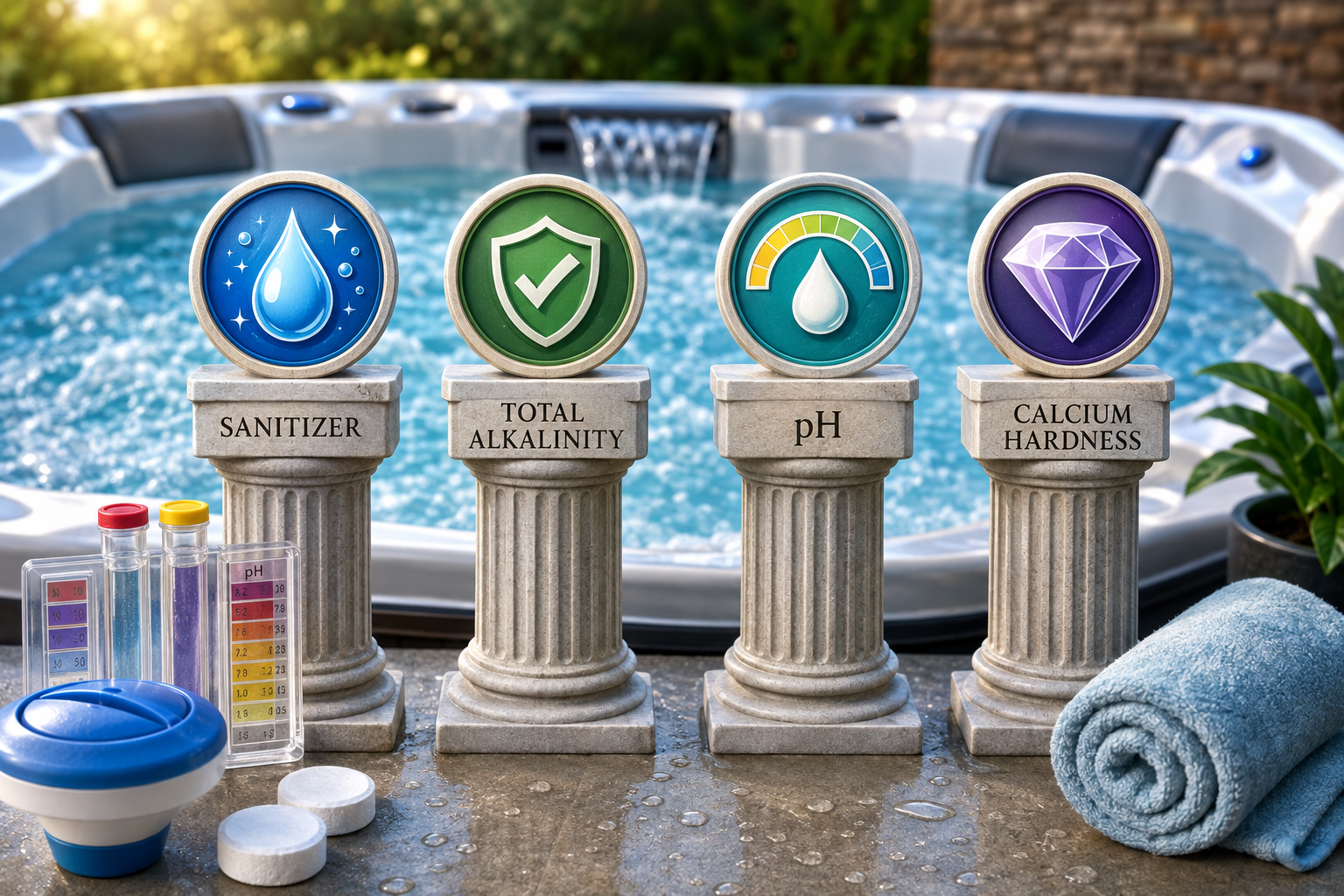
Getting familiar with four measurements—sanitizer, total alkalinity, pH, and calcium hardness—gives you a useful starting point. Each tells you something different about the water and helps you decide what needs attention.
But those readings don’t tell the whole story. Clean filters, proper circulation, regular maintenance, and what bathers bring into the water all affect how well your hot tub stays clean and comfortable. Water can look clear and still have inadequate sanitizer, so appearance alone is never a substitute for testing.
In this report, we’ll explain what each measurement means, how they relate to one another, and how to use your test results to make sensible adjustments. The goal is to help you understand what your water needs without turning every maintenance session into a chemistry lesson.
What This Report Breaks Down
What sanitizer, total alkalinity, pH, and calcium hardness tell you about your water
How these measurements relate to one another
Which ranges to check in your owner’s manual
How to test, make adjustments, and investigate common problems
🏛️ What Are the Four Pillars of Water Balance?
Each measurement has a different job. Sanitizer helps control microorganisms. Total alkalinity helps buffer changes in pH. pH tells you how acidic or basic the water is, affecting comfort, equipment, and sanitizer performance. Calcium hardness tells you how much dissolved calcium is present.
These measurements are related, but getting one right doesn’t make up for another being outside its recommended range. Water with an acceptable pH can still have too little sanitizer, for example.
Some combinations also help explain recurring problems. High alkalinity can contribute to rising pH, particularly with aeration from the jets. High calcium together with high pH can encourage scale buildup. Recognizing those connections helps you make a useful adjustment instead of repeatedly treating the same symptom.
Think of your test results as information to guide your next step. Use them alongside your hot tub’s instructions, filter maintenance, and circulation checks to understand what needs attention.
🧼 Pillar One: Sanitizer
🎯 What Does Sanitizer Do?
Sanitizer helps control bacteria and other microorganisms in your hot tub. Every soak introduces things like sweat, body oils, cosmetics, and dirt, which add to the work your water-care system needs to do.
That’s why maintaining a sanitizer residual—the amount still available in the water—is so important. Clear water alone doesn’t tell you whether there’s enough sanitizer to protect bathers.
🧪 Common Sanitizer Systems
Most hot tubs use chlorine or bromine. A saltwater system produces chlorine from dissolved salt, so it’s still a chlorine-based system.
Mineral cartridges and other supplemental systems may help with water care, but they don’t automatically eliminate the need for sanitizer. Follow the instructions for your particular setup.
✅ Test Rather Than Guess
Cloudiness, unusual odors, or slippery surfaces are reasons to check the water, but low sanitizer may have no obvious warning signs. Likewise, a strong chemical smell doesn’t necessarily mean you’ve added too much sanitizer.
Use a suitable test kit or fresh test strips to measure the level. If the reading is outside the recommended range, correct it according to the product instructions and retest before getting in.
The goal is a consistent sanitizer level—not adding extra chemicals whenever the water looks or smells different.
⚖️ What Levels Should You Maintain?
For a general starting point, aim for:
Free chlorine: 3–5 ppm
Bromine: 4–8 ppm
Check your sanitizer’s label and the instructions for your hot tub and water-care system. Some systems have specific operating requirements, so use the guidance that applies to your setup.
For chlorine, make sure you’re measuring free chlorine, the chlorine available to sanitize the water—not just total chlorine.
If your reading is outside the recommended range, follow the product instructions to correct it and retest before getting in.
🛡️ Pillar Two: Total Alkalinity
📖 What Is Total Alkalinity?
Total alkalinity measures your water’s ability to resist changes in pH. Think of it as a buffer that helps keep pH from shifting too easily.
It doesn’t sanitize the water, and it isn’t the same measurement as pH. But if you’re repeatedly adjusting pH and struggling to keep it steady, alkalinity is worth checking.
What Range Should You Aim For?
A common starting range is 80–120 ppm, although some hot tubs and water-care systems recommend lower levels. Follow the range specified for your setup.
The aim is enough buffering to help manage pH without encouraging persistent upward drift.
When Alkalinity Is Too Low
Low alkalinity gives the water less resistance to pH changes. Chemical additions and normal use may cause larger shifts than you expect.
It doesn’t automatically mean pH will keep dropping. Test both readings so you know whether alkalinity needs adjusting rather than assuming it’s the cause of every pH problem.
When Alkalinity Is Too High
High alkalinity can contribute to rising pH, particularly when jets and air controls aerate the water. You may find yourself adding pH reducer only to see the reading climb again.
If that pattern sounds familiar, check alkalinity before repeating the same adjustment. Rising pH can also encourage scale when calcium levels are high.
Make Adjustments Gradually
Use the appropriate product according to its label and your hot tub’s instructions. Products that lower alkalinity also lower pH, so monitor both as you work.
Allow the specified circulation time, then retest before adding more. Small adjustments make it easier to reach a useful balance without overshooting.
⚖️ Pillar Three: pH
📖 What Is pH?
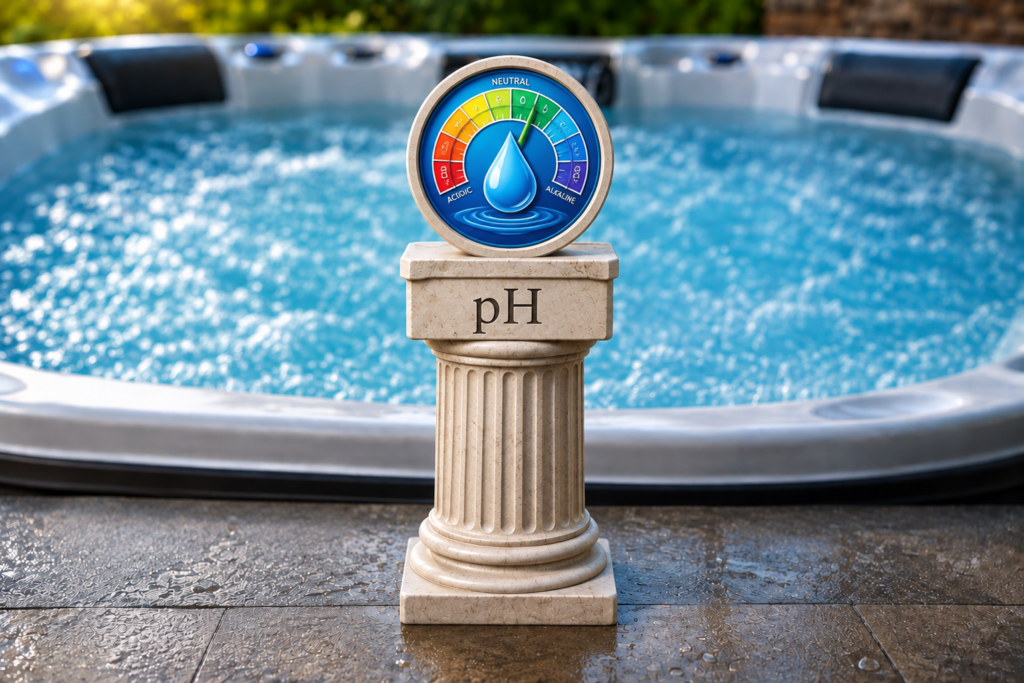
pH measures how acidic or basic your water is.
The pH scale runs from:
🔴 0–6.9 = Acidic
⚪️ 7 = Neutral
🔵 7.1–14 = Alkaline
Ideal Range
7.2–7.8
Most hot tubs perform best around: 7.4–7.6
🌟 Why pH Matters
- Improves comfort
- Helps sanitizer work properly
- Protects equipment
- Reduces scale
- Prevents corrosion
Low pH
Can cause:
- Corrosion
Eye irritation
Heater damage
Rapid sanitizer loss
High pH
Can cause:
- Scale
- Cloudy water
- Poor chlorine efficiency
- Mineral deposits
💎 Pillar Four: Calcium Hardness
📖 What Is Calcium Hardness?
Calcium hardness measures the amount of dissolved calcium in your water. Your starting level largely depends on the water you use to fill the hot tub.
Unlike sanitizer, calcium isn’t something you normally need to replenish after every soak. The goal is to keep it within the range recommended for your hot tub and water-care system.
🎯 What Level Should You Aim For?
Check your owner’s manual before adding calcium increaser. There isn’t one target that suits every hot tub.
Some manufacturers recommend 150–250 ppm, while others specify lower levels. Certain saltwater systems require considerably softer water to help protect the chlorine-generating cell from scale.
If your manual and a general water-care chart disagree, use the instructions for your specific model and system.
Low Calcium
Water below your manufacturer’s recommended range may contribute to foaming, although soap residue, lotions, and other contaminants can cause foam too.
Avoid assuming that low calcium automatically means the water will corrode your equipment. Corrosion also depends on pH and other aspects of water chemistry, and some hot tub systems are specifically designed to operate with low calcium levels.
If testing confirms that calcium is below your system’s target, use a calcium-hardness increaser according to its label. Add only what’s needed, circulate as directed, and retest.
High Calcium
High calcium can contribute to scale, especially when pH is also high. You may notice rough deposits around the waterline or buildup on equipment. Scale on heating surfaces can also interfere with heat transfer.
Cloudy water can have several causes, so test before assuming calcium is the problem.
If hardness is above your recommended range, a partial refill with suitable lower-calcium water or an approved calcium-removal product may help. A scale-control product may help manage deposits, but it doesn’t necessarily remove calcium from the water.
Getting calcium right starts with knowing what your particular hot tub requires.
🔄 What Order Should You Adjust Your Water In?
The best starting point depends on whether you’re filling the hot tub or maintaining water that’s already in use.
After a Fresh Fill
Test your source water, then follow the startup instructions for your hot tub and water-care system. Those instructions should guide the order of adjustments and when to add sanitizer.
Total alkalinity is commonly addressed before fine-tuning pH because changing alkalinity can also change pH. Check calcium hardness against your system’s requirements, and establish the correct sanitizer level before using the hot tub.
Saltwater and other specialized systems may have additional startup steps, so a general checklist shouldn’t replace their instructions.
During Routine Water Care
Start by checking sanitizer and pH. If either is outside the recommended range, keep the hot tub out of use while you correct it. Don’t leave inadequate sanitizer unaddressed while trying to perfect every other reading.
If pH keeps drifting, check total alkalinity before repeatedly adding more pH-adjusting chemicals. Address calcium hardness when testing shows it needs attention.
Give Each Adjustment Time to Work
Follow each product’s directions for dosing, circulation, and retesting. Add products separately, never mix chemicals together, and observe any required waiting periods between additions.
Small, measured adjustments are easier to manage than adding several products at once and trying to work out which one changed the water.
📅 How Often Should You Test?
A regular testing routine helps you catch changes before they turn into frustrating water problems. Sanitizer and pH need the most frequent attention, while alkalinity and calcium hardness generally change more slowly.
Check Sanitizer and pH Frequently
Check sanitizer and pH at least twice a day, including before you soak. Test more often when several people are using the hot tub or you’re troubleshooting a problem.
Don’t assume yesterday’s results still apply today. A busy evening in the hot tub can change sanitizer demand considerably. Follow your water-care system’s instructions, and correct readings outside its recommended range before getting in.
📆 Weekly
Test total alkalinity weekly and whenever pH becomes difficult to manage. It’s also worth checking after a refill or substantial water replacement.
If you keep adjusting pH and it won’t stay where you want it, check alkalinity before adding more chemicals.
🗓️ Monthly
Check calcium hardness monthly, after a refill, and after substantial top-ups—especially if your source water is hard. Follow your manufacturer’s testing schedule if your system requires more frequent checks.
Use the range specified for your hot tub and water-care system rather than assuming every hot tub needs the same calcium level.
Retest After Making Adjustments
Add products according to their labels, allow the specified circulation time, and then retest. Give each adjustment time to work before deciding whether you need more.
Keep test strips and reagents properly stored and within their expiration dates. Reliable results make water care much easier than guessing.
🚩 Common Water Problems and What to Check
Cloudiness, foam, and unusual odors are clues—not diagnoses. Different problems can look similar, so test the water before deciding what to add.
| Water Problem | Possible Causes | What to Check First |
|---|---|---|
| Cloudy water | Inadequate sanitizer, dirty filters, poor circulation, or mineral precipitation | Test sanitizer and pH, then check filter condition and water flow. |
| Foam when the jets run | Soap residue, lotions, body oils, or calcium below your system’s recommended range | Check calcium hardness and consider what bathers may be introducing through swimwear and skin products. |
| pH keeps rising | High total alkalinity or carbon dioxide leaving the water during aeration | Test alkalinity and review how much aeration the water receives before repeatedly adding pH reducer. |
| pH keeps falling | Low total alkalinity or the effects of acidic water-care products | Test alkalinity and review the products and amounts you’ve been adding. |
| Rough white deposits | Calcium scale, often encouraged by high pH and high calcium hardness | Test pH and calcium hardness against your system’s recommended ranges. |
| Strong chemical odor | Chlorine byproducts, accumulated contamination, or excessive sanitizer | Measure sanitizer and pH. For chlorine systems, check combined chlorine with a suitable test kit. |
| Sanitizer drops quickly | Heavy use, accumulated contaminants, or insufficient sanitizer output or dosing | Check the level, review recent use, and confirm that your dosing routine or generating system is working as directed. |
| Slippery or slimy surfaces | Possible microbial growth or biofilm | Stop using the hot tub. Check sanitizer and follow your manufacturer’s cleaning and disinfection guidance before returning it to use. |
If a problem keeps returning, look beyond the chemical readings. Filter maintenance, circulation, bather load, and the condition of the water all matter. Adding more chemicals without identifying the cause can make troubleshooting harder.
⭐ Best Practices for Easy Water Care
 Test your water consistently. Make small chemical adjustments. Allow the water to circulate before retesting. Clean your filters regularly. Drain and refill your hot tub every 3–4 months (or as recommended based on use and water quality). Shower before soaking to reduce oils and lotions entering the water. Address small issues before they become large ones.
🧠 Final Thoughts
You don’t need to become a chemist to take good care of your hot tub. Understanding sanitizer, total alkalinity, pH, and calcium hardness gives you a starting point—and makes your test results more useful.
Follow the ranges recommended for your hot tub and water-care system, make measured adjustments, and give each product time to work before adding more. Keep up with filter cleaning and routine maintenance, too. Good water care involves both the chemistry and the equipment moving and filtering your water.
If a problem keeps returning, take a step back and look for the cause. A consistent routine will usually serve you better than reaching for another bottle whenever something looks different.
💬 Make Your Water-Care Routine Easier
Now that you understand the four measurements, put them to work with a routine you can follow. Our Hot Tub Water Care 101 guide walks you through the everyday care that helps keep your water ready to enjoy.
Looking for Another Hot Tub Answer?
Search The Hot Tub Report for more water care, troubleshooting, and buying advice.
Trusted Links & References
A Little More Hot Tub Know-How, Delivered
Get practical water care tips, maintenance advice, and helpful reports delivered right to your inbox. It’s free, and it’s all about making hot tub ownership a little easier.
HOT TUB CONCIERGE SERVICE
Need a Little More Help?
Sometimes a little one-on-one guidance makes all the difference.
Whether you’re shopping for a hot tub, troubleshooting a water problem, or just looking for some expert advice, I’m here to help.
Get personalized guidance during a 30-minute Hot Tub Concierge consultation.
Recommended Reads From The Hot Tub Report
Looking for more helpful advice? Explore these related reports for additional hot tub tips, practical guidance, and answers to common ownership questions.
💬 Join the Conversation!
Have a question, a helpful tip, or a hot tub experience to share? Drop a comment below! We’re here to help each other enjoy better hot tub ownership.
Please keep comments friendly, helpful, and on topic.