- John Gill
- No Comments
Hydrotherapy for Muscle Recovery
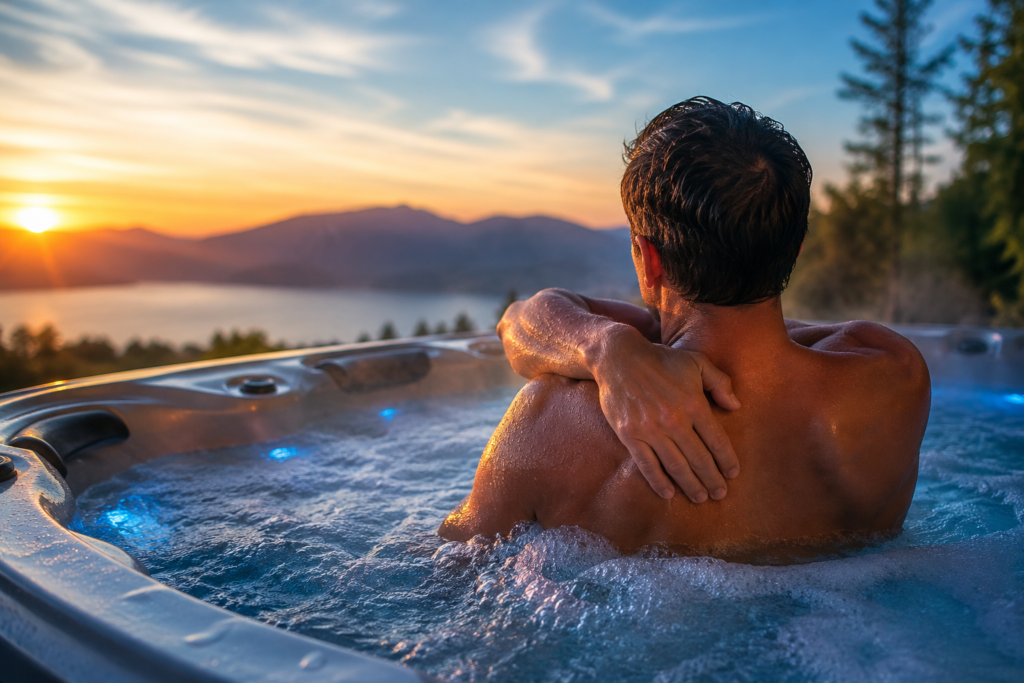
Hydrotherapy for Muscle Recovery: The Complete Hot Tub Guide to Faster Recovery and Better Performance
Whether you’re a weekend warrior, dedicated athlete, or simply dealing with sore muscles after yard work, one of the most effective recovery tools may already be sitting in your backyard.
Hydrotherapy—the therapeutic use of warm water, massage, and buoyancy—has been helping people recover from muscle fatigue, reduce soreness, and improve mobility for centuries. Modern hot tubs take those benefits even further by combining heat, strategically placed massage jets, and full-body immersion into one relaxing recovery session.
In this report, you’ll learn exactly how hydrotherapy works, what the science says about muscle recovery, and how to get the maximum benefit from every soak.
What’s Explained in This Report
- Hydrotherapy combines heat, massage, and buoyancy to support muscle recovery.
- Warm water helps improve circulation, reduce stiffness, and relax tight muscles.
- Massage jets can target specific muscle groups and relieve tension.
- Buoyancy reduces pressure on joints and makes movement easier.
- For most adults, 15–20 minutes at 100–102°F is ideal.
- Stay hydrated before and after soaking.
- Hydrotherapy works best alongside proper sleep, nutrition, hydration, and exercise.
🏆 Why Hydrotherapy Works
After exercise or strenuous physical activity, your muscles experience microscopic damage. This is completely normal and is actually how muscles become stronger.
However, during recovery, your body must:
✅ Repair muscle fibers
✅ Deliver oxygen and nutrients
✅ Remove metabolic waste
✅ Reduce inflammation
✅ Restore flexibility
A properly used hot tub helps support several of these recovery processes simultaneously.
Instead of treating only one area with a heating pad or massage gun, hydrotherapy works on your entire body at once.
🌡️ The Four Recovery Benefits of Hot Tub Hydrotherapy
🔥 1. Heat Increases Blood Flow
Warm water causes blood vessels to dilate (vasodilation).
Improved circulation means more:
- Oxygen
- Nutrients
- White blood cells
- Healing factors
can reach recovering muscles.
Better circulation also helps remove byproducts created during exercise.
Benefits
✔ Reduced stiffness
✔ Faster muscle relaxation
✔ Improved flexibility
✔ Better joint mobility
💆 2. Massage Jets Reduce Muscle Tension
A quality hot tub doesn’t simply heat the body. Its jets provide targeted massage to specific muscle groups including:
- Neck
- Shoulders
- Upper back
- Lower back
- Glutes
- Hamstrings
- Quadriceps
- Calves
- Feet
The moving water helps relax muscle fibers while encouraging additional circulation.
Many athletes describe hydrotherapy as combining:
- Heat therapy
- Massage therapy
- Stretching
- Relaxation
Into one treatment.
🌊 3. Buoyancy Removes Pressure
One of hydrotherapy’s greatest advantages is water’s natural buoyancy.
When submerged to shoulder level: Your body effectively weighs only a fraction of its normal weight.
This reduces stress on:
- Knees
- Ankles
- Hips
- Spine
- Lower back
The result is easier movement with less discomfort. For people recovering from intense workouts or chronic joint pain, this reduced loading can be especially helpful.
😌 4. Relaxation Improves Recovery
Recovery isn’t only physical. Exercise places stress on the nervous system. Warm water activates the body’s parasympathetic (“rest and digest”) response.
This can help:
- Lower stress hormones
- Reduce muscle guarding
- Slow heart rate
- Encourage deeper breathing
- Improve overall relaxation
Many people also report sleeping better after an evening soak—an important part of recovery because muscle repair largely occurs during sleep.
🧬 The Science Behind Muscle Recovery

Research has shown that warm-water immersion can:
- Improve circulation
- Increase joint range of motion.
- Reduce muscle stiffness
- Promote relaxation
- Reduce the perception of pain
Heat therapy has long been used in sports medicine because increasing tissue temperature can temporarily improve flexibility and make movement feel easier.
While hydrotherapy isn’t a replacement for proper nutrition, sleep, or progressive training, it can be an excellent addition to a balanced recovery routine.
🏋️ Best Times to Use a Hot Tub
Timing matters.
✅ After Strength Training
A soak can help relax tight muscles and reduce post-workout stiffness.
Ideal soak:
15–20 minutes
100–102°F (38–39°C)
🚴 After Endurance Exercise
Long runs, cycling, hiking, or swimming often leave muscles fatigued.
Hydrotherapy can help restore comfort while encouraging relaxation.
Remember to rehydrate first.
🏌️ After Recreational Activities
Hydrotherapy isn’t just for athletes.
Great after:
- Golf
- Tennis
- Pickleball
- Yard work
- Skiing
- Snow shoveling
- Long workdays
🧘 Recovery Days
Many people use their hot tub on rest days.
This promotes mobility without additional physical stress.
⏱️ How Long Should You Soak?
For most healthy adults:
Recommended
⏱️ 15–20 minutes
Water temperature:
🌡️ 100–102°F
If your spa is set to 104°F (40°C), shorten your session to about 10–15 minutes and pay attention to how you feel.
Longer sessions aren’t necessarily better and can increase the risk of dehydration or overheating.
💧 Hydration Is Essential
Warm water increases sweating—even when you don’t notice it.
Always:
🥤 Drink water before soaking
🥤 Keep water nearby
🥤 Rehydrate afterward
Avoid excessive alcohol before or during hot tub use, as it can increase the risk of dehydration and impair judgment.
🎯 Jet Placement Matters
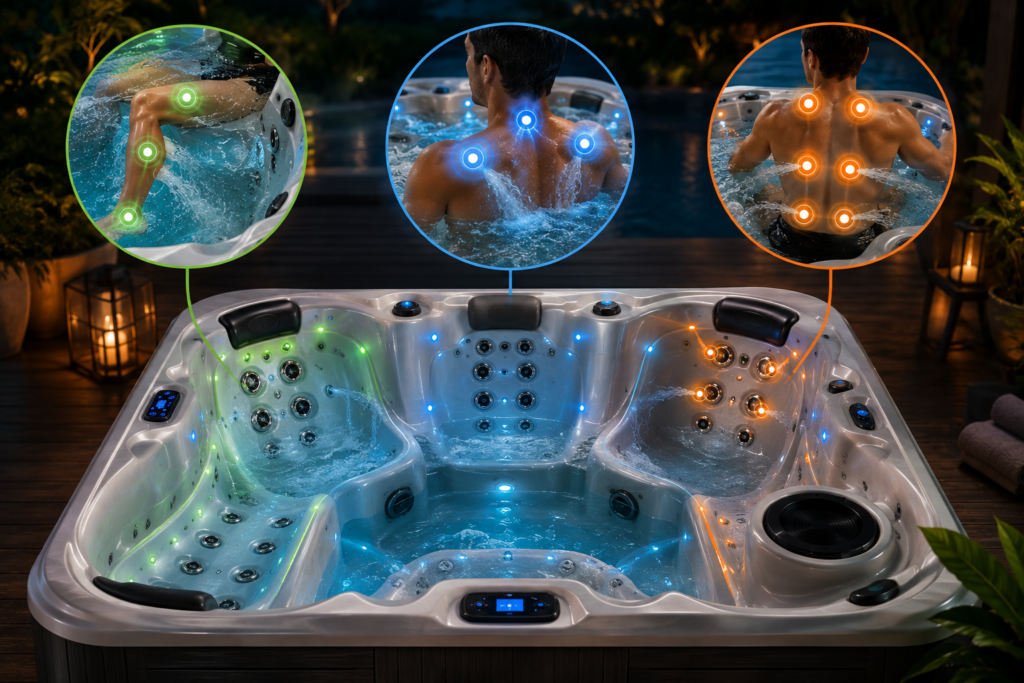
One advantage of premium hot tubs is targeted hydrotherapy.
Different seats are designed to massage different muscle groups.
For example:
🦵 Leg Recovery
Focus on:
- Hamstrings
- Calves
- Feet
Excellent after:
- Running
- Cycling
- Hiking
💪 Upper Body Recovery
Target:
- Traps
- Neck
- Shoulders
Helpful after:
- Weight training
- Desk work
- Swimming
🧍 Full Body Recovery
Move between different seats during your soak.
This exposes multiple muscle groups to varying jet patterns and pressure levels.
⚠️ Common Hydrotherapy Mistakes
Avoid these common errors:
❌ Staying in too long
❌ Water that’s too hot
❌ Using alcohol instead of water
❌ Skipping hydration
❌ Ignoring dizziness or overheating
Expecting hydrotherapy to replace proper recovery habits like nutrition, sleep, and appropriate exercise
🧴 Build the Ultimate Recovery Routine
For even better results, combine hydrotherapy with these healthy habits:
- Hydrate before and after your soak.
- Eat a balanced meal or snack with protein and carbohydrates after exercise.
- Perform gentle stretching or mobility work after soaking.
- Prioritize 7–9 hours of quality sleep.
- Stay lightly active on recovery days instead of remaining completely sedentary.
Together, these habits create a more complete recovery strategy than any single tool alone.
❓ Frequently Asked Questions
For even better results, combine hydrotherapy with these healthy habits:
- Hydrate before and after your soak.
- Eat a balanced meal or snack with protein and carbohydrates after exercise.
- Perform gentle stretching or mobility work after soaking.
- Prioritize 7–9 hours of quality sleep.
- Stay lightly active on recovery days instead of remaining completely sedentary.
Together, these habits create a more complete recovery strategy than any single tool alone.
Is a hot tub better than ice after a workout?
It depends on your goal. Warm water is generally preferred for relaxation, stiffness, and mobility.
Cold-water immersion is sometimes used immediately after intense competition or very strenuous exercise to manage acute soreness.
Many recreational exercisers benefit more from warm hydrotherapy for everyday recovery.
Can a hot tub reduce delayed onset muscle soreness (DOMS)?
Many people find that warm water and massage jets reduce the feeling of soreness and stiffness after exercise.
While hydrotherapy may improve comfort and mobility, it doesn’t eliminate the normal muscle repair process.
How often should I use a hot tub for muscle recovery?
Many owners soak 3–5 times per week, while others enjoy daily sessions.
As long as you stay hydrated, avoid overheating, and follow your healthcare provider’s advice if you have medical conditions, regular use can be part of a healthy recovery routine.
What temperature is best?
For most adults:
100–102°F (38–39°C) is ideal for recovery.
104°F (40°C) is the maximum recommended spa temperature in many regions and is best reserved for shorter sessions.
🌊 Final Thoughts
The Hot Tub Report Trusted Links & References
Recommended Reads from The Hot Tub Report
💬 Join the Conversation!
Have a question, tip, or hot tub story to share? Jump in! The Hot Tub Report is all about helping each other get more enjoyment out of hot tub ownership.
Just keep it friendly, helpful, and on topic. No spam, personal attacks, or inappropriate content, please. Comments that don’t fit the spirit of the community may be removed.
Be helpful. Be respectful. And happy hot tubbing! 🛁