How Long Should You Stay in a Hot Tub?
Finding the Perfect Soak: How Long Should You Stay in a Hot Tub?
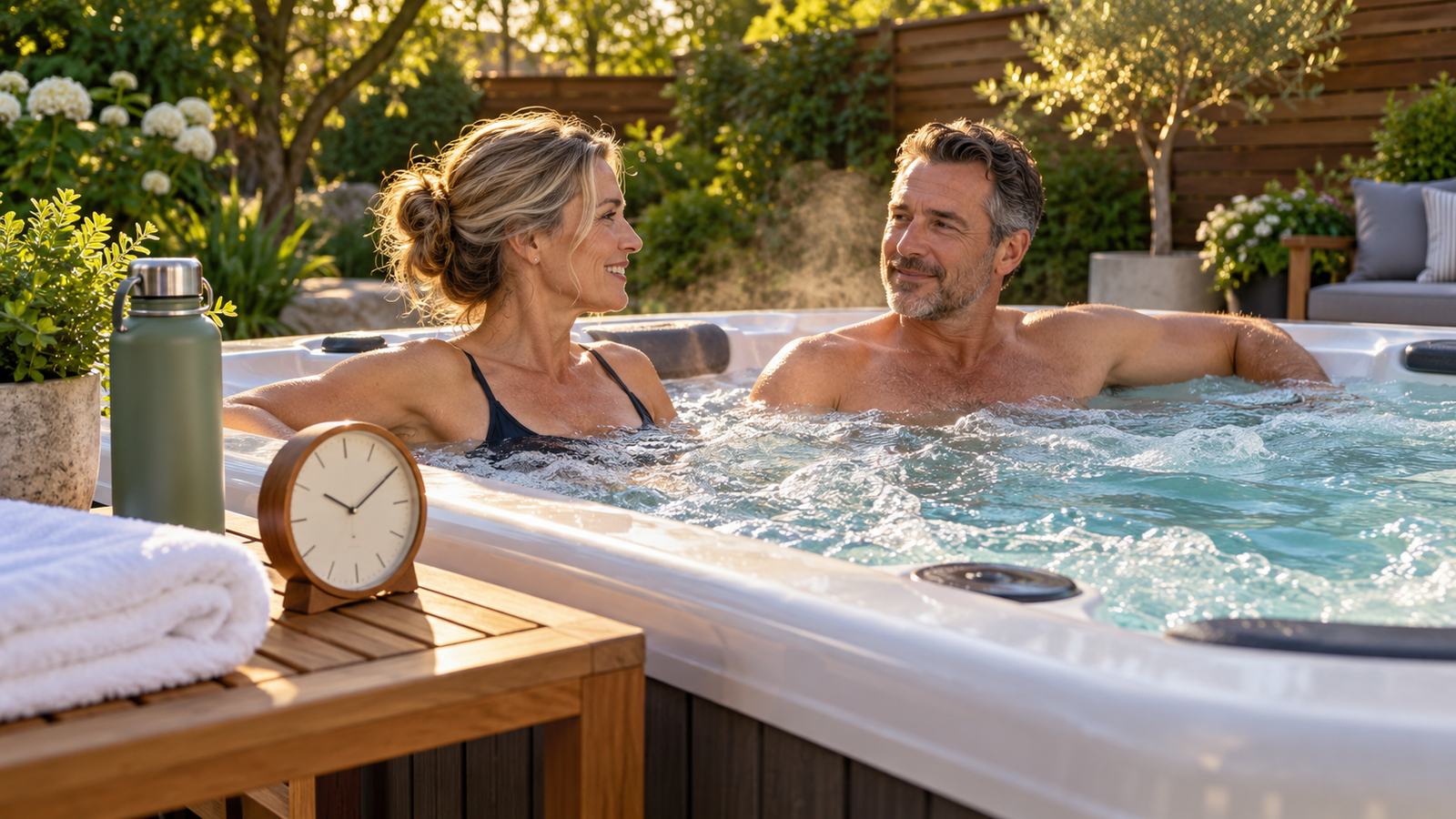
A short session of about 5–10 minutes is a conservative starting point, especially if you’re new to hot tubs or unsure how you handle the heat. Your water temperature, health, and medications all matter, so that starting point isn’t a guarantee that ten minutes is appropriate for everyone.
You’ve probably seen advice suggesting 15 minutes, 20 minutes, or even longer. That’s part of what makes this question confusing. People use different water temperatures, have different health considerations, and don’t all respond to heat the same way.
For everyday use, I’d focus on finding a comfortable temperature, deciding on your time before getting in, and finishing your soak while you still feel good. There’s no prize for staying in the longest.
💧 What You’ll Learn in This Report
- A sensible starting point for hot tub soak time.
- How water temperature affects your session.
- How to choose a comfortable temperature.
- Warning signs that mean it’s time to get out.
- Who needs extra precautions.
- Simple habits for a better soak.
⏱️ How Long Should You Stay in a Hot Tub?
A hot tub can feel so comfortable that you lose track of time. You sit down, turn on the jets, start a conversation, and suddenly your planned short soak has turned into something much longer.
That’s why setting a timer is useful. It makes the decision before you’re settled in.
HealthLink BC advises avoiding hot tub sessions longer than ten minutes. Other sources discuss longer sessions for healthy adults, but those recommendations shouldn’t be treated as interchangeable. Temperature, health, and the conditions behind the advice matter.
Start with a short session, follow your hot tub’s safety instructions, and follow any personal limits given by your healthcare provider. If you feel uncomfortable or unwell, end the soak before the timer goes off.
The goal is to get out feeling relaxed—not drained, dizzy, or overheated.
🌡️ Water Temperature Makes a Difference
Ten minutes at 100°F can feel quite different from ten minutes at 104°F. As the water gets hotter, your body takes on more heat, making a cautious approach to time increasingly important.
The U.S. Consumer Product Safety Commission advises that hot tub water should never exceed 104°F (40°C). That is an upper limit, not the setting everyone should use.
You don’t have to turn your hot tub all the way up to enjoy it. A lower setting may give you the warmth and relaxation you’re looking for without feeling overwhelming.
🎯 Finding a Temperature That Feels Right
For a generally healthy adult without medical restrictions, 100°F can be a practical setting to try during a short first session. Some people prefer cooler water, and that’s perfectly reasonable.
Give yourself a little time to judge the warmth. The first few seconds of stepping into the water don’t tell you how you’ll feel once you’re seated and immersed.
Comfortable at 100°F? There’s no reason to raise it.
Too warm? End your soak and try 98°F or 99°F next time.
Prefer slightly warmer water? Make a small adjustment for a separate short session, staying within your spa’s instructions and any personal health limits.
Changing one degree at a time makes it easier to compare comfort. Avoid increasing both the temperature and your soaking time together.
Finding your preferred setting isn’t about building tolerance or working your way toward 104°F. It’s about finding water you enjoy spending a short time in.
🫧 Why a Longer Soak Can Leave You Feeling Worse
Warm water helps you relax, but it also affects your circulation and body temperature.
Your blood vessels widen, your blood pressure may drop, and your body can accumulate heat. That can leave you feeling lightheaded or weak, particularly when you stand up to get out.
You can also lose fluid through sweating without noticing it. Being surrounded by water doesn’t keep you hydrated.
This is why a longer session doesn’t necessarily mean more benefit. An enjoyable soak should leave you feeling comfortable afterward, rather than needing to recover from the heat.
🚩 Signs It’s Time to Get Out
Your timer helps you manage the session, but you should leave sooner if you notice:
Dizziness or lightheadedness.
Nausea or a headache.
Unusual weakness.
Feeling uncomfortably hot.
A racing or irregular heartbeat.
Exit carefully, and ask for help if you feel unsteady. Move to a cooler place, sit down, and allow yourself to cool off.
Chest pain, fainting, confusion, or trouble breathing require urgent medical help.
Don’t wait for symptoms before deciding to end a soak. These are reasons to leave immediately, not milestones to see how long you can last.
👨👩👧 Who Needs Extra Precautions?
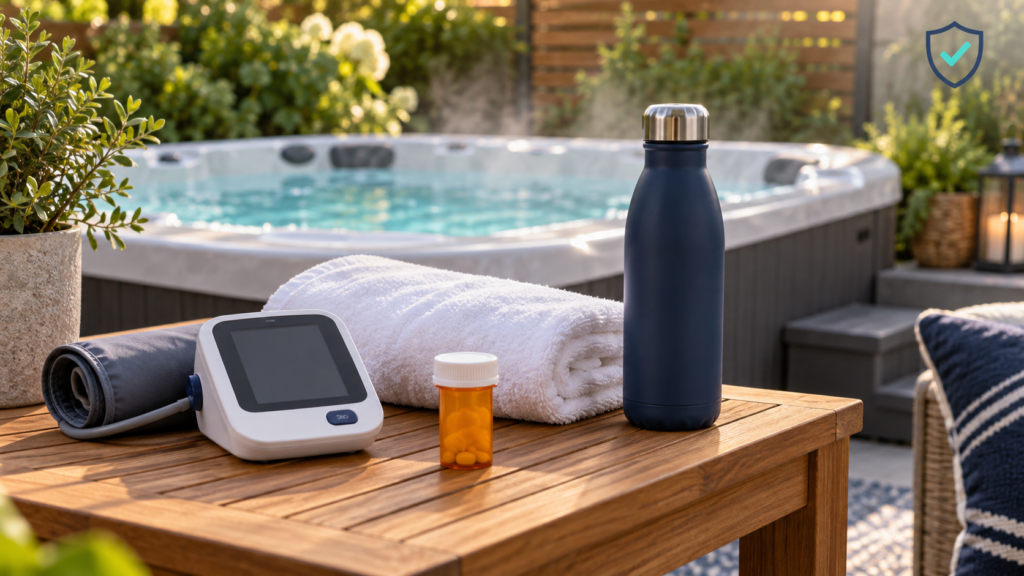
General advice about soaking time won’t fit every person using your hot tub. A few situations deserve particular attention.
Pregnancy
If you’re pregnant, talk with your healthcare provider before using a hot tub. Overheating is a concern, and choosing a shorter session or cooler setting doesn’t automatically make hot tub use appropriate for your pregnancy.
Children
Hot tubs aren’t suitable for children younger than five. Older children need close, continuous adult supervision and guidance appropriate to their age and health.
Don’t apply an adult’s preferred temperature or soaking routine to a child. Follow the spa’s safety instructions and ask the child’s healthcare provider if you’re unsure.
Heart Conditions and Blood Pressure Concerns
Ask your healthcare provider whether hot tub use is appropriate and what limits you should follow. Heat can affect circulation and blood pressure, so advice from a friend with a similar condition isn’t a substitute for guidance about your own health.
Medications
Some medications affect alertness, blood pressure, or your response to heat. Your pharmacist or healthcare provider can help you understand whether yours call for additional precautions.
💧 Simple Habits for a Better Soak
Decide on Your Time Before Getting In
Set a timer where you can hear it. If you’re soaking with other people, agree on the session length before the conversation gets going.
Check the Temperature
Check the actual water temperature before entering, especially when using an unfamiliar hot tub. If you have reason to doubt the display, verify it with an appropriate thermometer.
Keep Drinking Water Nearby
Have drinking water available before and after your soak, and use an unbreakable container around the spa.
Hydration is helpful, but it doesn’t prevent overheating or give you extra soaking time.
Avoid Alcohol Before and During Your Soak
Avoid alcohol before and during hot tub use. It can impair judgment and add to the risks associated with heat and drowsiness.
Get Out Slowly
Keep your towel, footwear, and a clear exit within reach. Use a secure handrail if one is available, and stand up carefully.
In winter, check the path for ice before you get in. You don’t want to discover a slippery step while you’re wet and heading indoors.
Stay Awake and Avoid Soaking Alone
Relaxing is the point, but falling asleep in a hot tub is dangerous. If you’re struggling to stay awake, skip the soak.
Having another person nearby also means help is available if you become unwell or have difficulty getting out.
❓ Common Questions About Hot Tub Soak Time
Can I Stay in for 30 Minutes if I Feel Fine?
I wouldn’t use feeling fine as the reason to extend a session to 30 minutes. Comfort alone doesn’t tell you how your body is responding to heat.
Stick with your planned short session and any limits in your spa instructions or personal medical guidance.
Can I Stay in Longer at a Lower Temperature?
Cooler water generally reduces the heat load on your body, but it doesn’t provide a universal safe soaking time.
Choose a lower temperature because it feels more comfortable. Don’t assume it gives you an unlimited window to stay in.
Does Cold Winter Air Make a Longer Soak Safe?
No. Your face may feel cool while most of your body remains immersed in hot water.
That contrast is one of the pleasures of winter hot tub use, but the temperature of the air isn’t a reliable measure of your body temperature.
Can I Get Back in After Taking a Break?
A break gives you an opportunity to cool down, but it isn’t an automatic reset. Repeated sessions can still add up to substantial heat exposure.
If you felt dizzy, nauseated, weak, or overheated, end your hot tub use for that session rather than returning as soon as the symptoms ease.
Does Sitting With My Shoulders Out Let Me Stay Longer?
Keeping more of your body above the water reduces the area directly exposed to the hot water and may feel more comfortable.
It doesn’t establish a specific amount of extra soaking time. Use the shallower seat for comfort while keeping your planned limit.
Is It Okay to Use a Hot Tub Every Day?
Daily use may suit some healthy adults, but it isn’t appropriate for everyone. Each session still needs sensible limits on time and temperature.
If you have a medical condition or take medication that could affect your response to heat, ask your healthcare provider about a suitable routine.
🧠 Final Thoughts
A good soak doesn’t need to be a long one. Start with a short session, find a temperature that feels comfortable, and make getting out part of the plan before you get in.
Your preferred routine may be different from your neighbor’s, and that’s fine. What matters is that it fits your health, follows your spa’s instructions, and leaves you feeling relaxed afterward.
John’s Take: I’d rather finish a short soak feeling good and look forward to the next one than stay in until the heat stops being enjoyable.
💦 Make the Rest of Your Routine Easier
A comfortable soak starts before you turn on the jets. Clean water, balanced chemistry, and a manageable maintenance routine all help you enjoy your hot tub with fewer interruptions.
Explore our Water Care Guides for practical help with testing, sanitizer levels, filters, and common water problems.
Looking for Another Hot Tub Answer?
Search The Hot Tub Report for more water care, troubleshooting, and buying advice.
Trusted Links & References
A Little More Hot Tub Know-How, Delivered
Get practical water care tips, maintenance advice, and helpful reports delivered right to your inbox. It’s free, and it’s all about making hot tub ownership a little easier.
HOT TUB CONCIERGE SERVICE
Need a Little More Help?
Sometimes a little one-on-one guidance makes all the difference.
Whether you’re shopping for a hot tub, troubleshooting a water problem, or just looking for some expert advice, I’m here to help.
Get personalized guidance during a 30-minute Hot Tub Concierge consultation.
Recommended Reads From The Hot Tub Report
Looking for more helpful advice? Explore these related reports for additional hot tub tips, practical guidance, and answers to common ownership questions.
💬 Join the Conversation!
Have a question, a helpful tip, or a hot tub experience to share? Drop a comment below! We’re here to help each other enjoy better hot tub ownership.
Please keep comments friendly, helpful, and on topic.