Hot Tub Winter Delivery: A Clear, Easy Guide for New Owners

Hot Tub Winter Delivery: How to Prepare for a Cold-Weather Startup
Prepare for winter hot tub delivery with guidance on clearing access, electrical readiness, filling, suspected freezing, and your first startup.
Your new hot tub is on its way, and you’re already picturing that first warm soak with snow around you. Before you get there, a few practical details need to come together: a clear delivery route, a properly prepared base, and a plan for filling and starting the hot tub in cold weather.
Working in the hot tub industry here in the Northeast, I’m familiar with how winter can complicate delivery day. A snowbank across the gate, a frozen garden hose, or electrical work that isn’t finished can turn an exciting afternoon into a frustrating delay.
The good news is that much of this can be planned ahead. Talk with your dealer about what the delivery crew handles, what you need to prepare, and who will help with startup. Having the hot tub in position and having it ready to fill are two separate milestones.
This report walks through preparing for winter delivery, coordinating the electrical work, filling your hot tub, and knowing what to do if freezing conditions interfere with startup—so you can approach that first soak with fewer surprises.
💧What You’ll Learn in This Report
- How to prepare the delivery route and hot tub base for winter conditions
- What to coordinate with your dealer and electrician before filling
- How to prepare your hose and water source for a cold-weather fill
- Why fill-water temperature and startup procedures depend on your model
- What to do if you suspect ice in the plumbing or equipment
- What to confirm about circulation, heating, and water chemistry before your first soak
🚚 Prepare the Path to the Delivery Area
Getting a hot tub into your backyard takes more room than walking through it. The delivery crew needs clearance for the hot tub, moving equipment, and the people guiding it—especially around gates, corners, and steps.
Confirm the Route Before Delivery Day
Send your dealer photos or a short video showing the route from the driveway to the installation site. Include narrow openings, slopes, steps, tight turns, and overhead obstacles such as branches or roof overhangs.
Ask how wide and tall the opening needs to be for your particular hot tub and the equipment the crew plans to use. If a gate or fence section needs removing, arrange that ahead of time.
Clear Snow With the Delivery Crew’s Plan in Mind
Ask the dealer which areas need clearing and how much working space the crew requires. A narrow shoveled walkway may be fine for you but too tight for the delivery.
Remove snowbanks that block gates, turns, or access to the base. Keep the unloading area accessible, and avoid piling snow where it could slide or fall back into the route.
Some crews use sleds on suitable snow-covered routes; others need a cleared surface for carts or different equipment. Let the crew determine what works for your property.
Address Ice and Hidden Obstacles
Tell the dealer about slippery slopes, uneven ground, drainage channels, or steps that snow could conceal. Use traction or deicing products appropriate for the surface and consistent with the crew’s instructions.
Move furniture, planters, hoses, and other obstacles before the truck arrives. Secure pets indoors and keep children away from the delivery route.
Revisit the Route After New Snow
A route that was ready yesterday may need attention again this morning. If overnight snow or ice changes access, send updated photos to the dealer before the crew heads out.
A few minutes of communication can help the team arrive prepared—or identify when rescheduling is the better choice.
🚧 Prepare the Base Before the Hot Tub Arrives
The delivery route gets your hot tub into the backyard. The base supports it once it’s filled with water and people, so it needs to be ready before the truck arrives.
Follow the Requirements for Your Model
Use the manufacturer’s instructions for the foundation, support, and levelness your hot tub requires. Concrete, a properly constructed paver base, or another approved foundation may be suitable, depending on the model and site.
If you’re placing the hot tub on a deck, have its ability to support the filled hot tub and occupants verified by a qualified professional. A deck that comfortably holds patio furniture isn’t automatically ready for a hot tub.
Remove Snow and Ice From the Installation Surface
The crew needs to see the base and position the hot tub directly on its approved supporting surface. Don’t rely on packed snow or ice to fill low spots or make an uneven base look level.
If you cover the prepared base with a tarp before a storm, arrange to remove it and any accumulated snow before placement. Be aware that moisture can still freeze underneath.
Leave Room for Service and the Cover
Confirm which direction the hot tub should face before it’s set down. Think about the steps, electrical connection, equipment-access panels, and the space needed to operate the cover lifter.
Keep the manufacturer’s required service clearances available. Positioning an equipment panel tightly against a wall or fence can make a future repair much harder.
Let the Crew Choose How to Move It
Delivery teams may use carts, sleds, protective ground coverings, or specialized lifting equipment. The right method depends on the hot tub, access, terrain, and conditions that day.
Tell your dealer about sprinkler heads, drains, septic components, or other features along the route that snow may hide. If the site or base isn’t ready, discuss the next step before unloading.
Getting the location right on delivery day is much easier than moving a filled hot tub later.
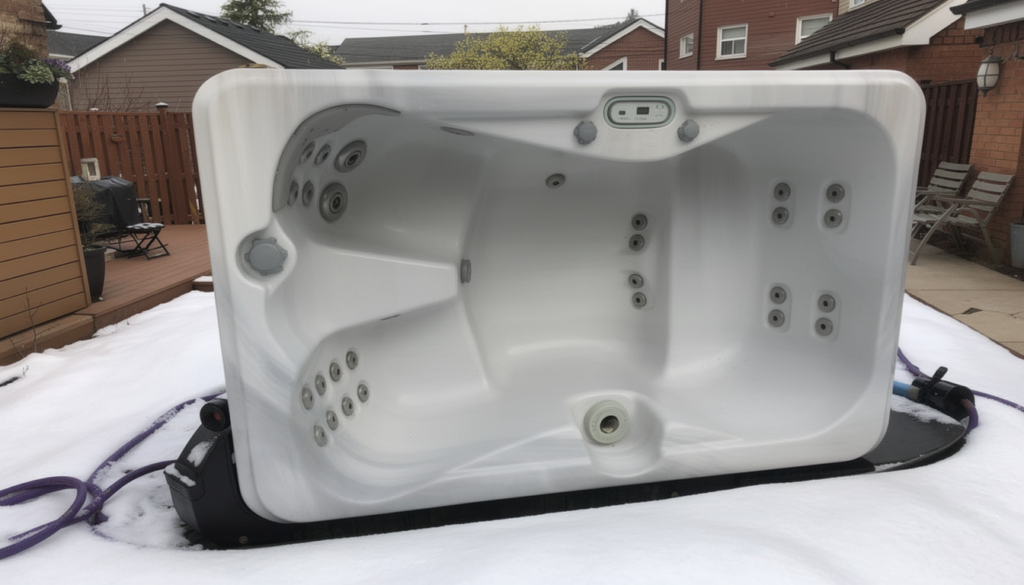
🔋 Coordinate the Electrical Work Before Filling
In freezing weather, you want filling, startup, and heating to follow one another without an avoidable delay. That means confirming the electrical supply is ready before you start the hose.
Delivery and electrical installation are often separate appointments. Ask your dealer who handles each step and whether the electrician needs the hot tub in its final position before completing the connection.
For a Hardwired Hot Tub
Give your electrician the manufacturer’s electrical requirements for the exact model you purchased. The circuit, wiring, protective devices, and connection must match that installation—not simply what worked for another hot tub.
Arrange the work so the connection and any required inspections are complete before filling begins. Confirm who will authorize startup and whether the dealer provides a startup visit or telephone support.
For a Plug-and-Play Hot Tub
A factory cord doesn’t eliminate the need for a suitable electrical supply. Confirm that the outlet, circuit, and GFCI protection meet your model’s requirements before delivery.
If electrical work is needed, have it completed in advance. Don’t plan on using an extension cord as a temporary solution.
Keep Power Off Until Filling Is Complete
Having the supply ready doesn’t mean turning the hot tub on while it’s empty. Keep power off until the water reaches the specified level and the required pre-start steps are complete.
Then follow the model’s startup and priming procedure. You need to confirm that water is circulating and heating has begun; an illuminated display alone doesn’t establish that everything is working.
Have a Plan if Startup Is Delayed
If the electrical work falls behind, contact your dealer before filling. Ask how the delivered hot tub should be protected while it waits, including whether residual water could remain in its plumbing.
If you’ve already started filling and discover that power won’t be available, get guidance promptly. Don’t assume that simply draining the main tub will remove water trapped throughout the equipment.
The goal is to have the people, power, and startup instructions ready before you add water.
❄️ Filling Your Hot Tub in Cold Weather
Before you connect the hose, confirm that the hot tub is ready to fill and that power will be available for startup afterward. If you suspect frozen plumbing or equipment, speak with your dealer before adding water.
Prepare Your Hose and Water Source
Bring the hose indoors ahead of time so it can thaw completely. Inspect it for splits, damaged fittings, or blockages before using it.
Confirm that your water source is working and that the hose reaches the hot tub without pulling tight. If an outdoor faucet appears frozen, don’t force it or try to thaw it with an open flame. Arrange a suitable water source before proceeding.
If your startup instructions recommend a hose pre-filter, have it ready too. Remember that a pre-filter can slow the filling process, so allow enough time.
Use the Filling Point Specified in Your Manual
Many hot tubs are filled through a designated opening in the filter compartment to help water enter the plumbing and reduce trapped air. Follow your model’s directions for removing filters and positioning the hose.
Don’t assume that every opening in the filter area is an appropriate filling point, and don’t remove a standpipe unless the instructions specifically require it.
Keep the electrical power off throughout filling.
Stay Nearby and Watch the Water Level
Fill to the operating level shown in your owner’s manual. Too little water can interfere with circulation, while overfilling can create spills that freeze around the hot tub.
Stay close enough to monitor progress and respond if the hose moves or water appears somewhere unexpected. If filling stops unexpectedly or you notice a significant leak, contact your dealer before continuing.
Finish With Startup and Hose Storage
Once the required water level is reached, remove the hose, reinstall any components as directed, and follow the startup procedure. Confirm that the pumps establish water flow and that the controls show normal operation.
Disconnect and drain the hose after use, and store it where it won’t freeze. Follow the faucet’s winter-use instructions as well—some frost-resistant outdoor faucets need the hose disconnected to drain properly.
With filling complete, your next priority is confirming circulation and heating so the hot tub can begin warming up.
⛄️ Starting Your Hot Tub in Freezing Weather
Freezing temperatures don’t automatically rule out delivery or startup. They do make coordination more important, because you need a plan if filling, circulation, or heating doesn’t go as expected.
Confirm the Startup Plan With Your Dealer
Before delivery, ask whether the forecast affects their procedures. Explain when the electrical connection will be ready, how you’ll supply water, and whether someone will be available to help with startup.
Leave enough time to fill the hot tub and observe its operation while support is available. Beginning late in the evening can make an unexpected problem harder to resolve.
Don’t Rely on the Air Temperature Alone
A warmer afternoon doesn’t necessarily mean equipment that has been sitting in freezing conditions has thawed. Likewise, an empty-looking hot tub may still contain residual water in its plumbing.
If you see ice or have reason to suspect internal freezing, keep the power off and have your dealer assess the situation before filling or starting it. Don’t use the pumps or built-in heater to try to clear suspected ice.
A pump that hums or doesn’t move water isn’t proof of freezing. Trapped air or another equipment problem can cause similar symptoms, so have your dealer help identify the cause
Confirm Circulation Before Assuming It’s Heating
After filling, follow the prescribed priming procedure and watch for water flow. A display that lights up or a pump that makes noise doesn’t confirm successful circulation.
If the pump isn’t moving water, stop unsuccessful priming attempts within your manual’s limits and contact your dealer promptly. Avoid repeated resets or extended pump operation while trying to work out the cause.
Know What to Do if Startup Can’t Be Completed
Ask your dealer in advance how to protect the hot tub if the power connection is delayed or the equipment won’t operate. The appropriate response depends on its condition, the weather, and the help available.
Simply draining the main tub may leave water trapped in pumps and plumbing. Any temporary protection or winterization needs to address the whole system.
A coordinated startup matters more than rushing to fill on delivery day.
🔥 What Water Temperature Should You Use for Filling?
It’s tempting to use hot water to shorten the wait for your first soak. Before connecting to a warm-water source, read the filling instructions for your particular hot tub.
Manufacturers may specify temperature limits or prohibit hot-water filling. Follow those directions rather than judging the water by how comfortable it feels against your hand.
Avoid Very Hot Water
Don’t pour boiling water into the hot tub or direct very hot water against a cold shell, fittings, or filter housing. Hot filling can also interfere with startup; some owner’s manuals warn that it may trip the high-limit thermostat.
Use Mixed Warm Water Only When Permitted
If your manufacturer allows a warm-water fill, use a suitable mixing arrangement and measure the temperature with a thermometer. Confirm that it remains within the permitted range throughout filling.
Water temperature can change as the household hot-water supply is used. Don’t assume that a hose delivering an acceptable temperature at the beginning will stay there.
Keep Filling and Thawing Separate
Warm water in the shell doesn’t confirm that frozen plumbing or equipment has thawed. If you suspect ice inside the hot tub, get dealer guidance before filling or applying power.
The aim is to fill within your model’s requirements, establish circulation, and let the heating system bring the water up to your chosen soaking temperature.
⛑️ Protecting the Equipment Compartment During Winter Startup
The equipment compartment deserves attention during a cold-weather delivery. Small amounts of water may remain in pumps or plumbing, even when the main tub looks empty.
Ask your dealer how the hot tub has been prepared for transport and what protection it needs if it won’t be filled and started right away.
Keep Panels Secure
Once the delivery crew or electrician has finished accessing the equipment, make sure cabinet panels are properly reinstalled. Loose or missing panels can expose the compartment to cold wind.
Keep any designed ventilation openings clear. Don’t pack towels or household blankets around pumps, heaters, wiring, or controls.
Get Specific Instructions Before Adding Heat
You may hear suggestions to put a small heater or trouble light inside the cabinet. Whether that is appropriate depends on the hot tub, the heating device, and the available space.
A household heater may require clearances that the compartment cannot provide. Moisture, nearby insulation, plastic plumbing, and the electrical connection also matter. A device that fits inside isn’t necessarily suitable for the location.
If temporary heat is needed, have your dealer or service technician specify the equipment, placement, power supply, supervision, and removal procedure. Avoid improvising with a hair dryer, heat lamp, or open flame.
Prepare the Compartment Before Startup.
Temporary protection must not interfere with normal operation. Before startup, remove temporary equipment and materials as directed, restore ventilation, and secure the panels.
If you suspect anything has frozen, keep the hot tub off until it has been assessed. Protecting the compartment is part of the startup plan—not a substitute for confirming that the equipment is ready to run.
✅ What to Confirm Before Your First Soak
Once filling is complete and the hot tub is ready to start, follow your model’s startup instructions. Before heading indoors to wait for warm water, take a few minutes to confirm that everything is operating as expected.
Make Sure the Pumps Establish Water Flow
Follow the prescribed priming procedure and confirm flow from each jet pump. A separate circulation pump may produce a much subtler flow, so use your manual to identify what normal operation looks like.
If a pump makes noise without moving water, stop unsuccessful priming attempts within the manufacturer’s time limits. Don’t let it continue running while you wait for the problem to resolve itself.
Review the Display and Heating Settings
Set the desired temperature and confirm the appropriate heating mode. Look for any error messages and follow the instructions for your particular control system.
Check the temperature again during warm-up to confirm it is rising. Heating takes time, especially with cold fill water and lower-output heaters, but a temperature that isn’t increasing deserves attention.
Watch for Leaks and Changes in Water Level
Look around the base and any accessible areas without reaching into equipment or removing electrical covers. Water spilled during filling should stop accumulating once the area is dry.
If a puddle returns or the water level drops unexpectedly, contact your dealer. For a significant leak or water near electrical equipment, stop operation and switch off power only from a safely accessible, dry location.
Complete the Water-Care Startup
Fresh water still needs the treatment specified for your sanitizer system. Test and adjust the water according to your startup instructions, allowing products to circulate as directed.
Wait until the water is clear and sanitizer, pH, and temperature are within the recommended ranges before soaking. A salt system also needs its startup procedure completed; switching it on doesn’t immediately establish the required chlorine level.
Secure the Cover While the Water Heats
Follow any instructions to keep the cover open after chemical treatment. Once that period is complete, close and secure it to help retain heat.
Keep an eye on startup progress rather than assuming an illuminated display means the hot tub is ready. Confirmed circulation, heating, and proper water conditions are what get you to that first soak.
Winter Hot Tub Delivery Checklist
Use this list to get ready before the truck arrives and keep startup moving in the right order.
- Confirm the delivery route. Send your dealer photos of gates, turns, steps, slopes, and overhead obstacles.
- Clear the agreed access areas. Remove snowbanks, address slippery surfaces, and allow room for the crew and equipment.
- Prepare the supporting base. Remove snow, ice, and any temporary tarp before placement.
- Confirm the hot tub’s orientation. Allow access for service panels, steps, the electrical connection, and the cover lifter.
- Coordinate the electrical work. Have the required supply ready before filling, while keeping power off until the filling procedure is complete.
- Prepare the hose and water source. Thaw and inspect the hose, confirm water is available, and have any recommended pre-filter ready.
- Agree on a cold-weather startup plan. Know whom to contact if filling, electrical work, or startup is delayed.
- Report suspected freezing. Get dealer guidance before filling or powering equipment that may contain ice.
- Follow the model’s filling instructions. Use the specified filling point, water temperature, and operating level.
- Confirm circulation and heating. Follow priming limits and address leaks or error messages promptly.
- Complete water-care startup. Establish the required water balance and sanitizer level before soaking.
- Finish the outdoor cleanup. Disconnect and drain the hose, follow the faucet’s winter-use instructions, and secure the cover after any required chemical-treatment waiting period.
Keep your owner’s manual and dealer’s contact information handy throughout delivery and startup.
🧠 Final Thoughts
A winter delivery gives you something to look forward to when the days are cold and short. Getting there takes a little coordination, but most of the preparation can happen before the truck pulls into your driveway.
Have the delivery route and supporting base ready, confirm the electrical arrangements, and prepare a working hose and water source. Talk with your dealer about who handles startup and what to do if weather or scheduling changes the plan.
Once the hot tub is filled, take time to confirm circulation, heating, and proper water conditions. If you suspect freezing or something isn’t operating normally, pause and get help before continuing.
The best preparation is knowing what happens next—and who’s responsible for it. With those details settled, you can spend less of delivery day sorting out surprises and more time looking forward to your first winter soak.
💬 Something Not Working During Startup?
If the display stays blank, the jets won’t move water, or the temperature isn’t rising, knowing where to start can make a frustrating first day easier to manage.
Read New Hot Tub Not Working? 7 Common Startup Problems and What to Do for practical troubleshooting steps and guidance on when to involve your dealer or electrician.
Looking for Another Hot Tub Answer?
Search The Hot Tub Report for more water care, troubleshooting, and buying advice.
A Little More Hot Tub Know-How, Delivered
Get practical water care tips, maintenance advice, and helpful reports delivered right to your inbox. It’s free, and it’s all about making hot tub ownership a little easier.
HOT TUB CONCIERGE SERVICE
Need a Little More Help?
Sometimes a little one-on-one guidance makes all the difference.
Whether you’re shopping for a hot tub, troubleshooting a water problem, or just looking for some expert advice, I’m here to help.
Get personalized guidance during a 30-minute Hot Tub Concierge consultation.
Recommended Reads From The Hot Tub Report
Looking for more helpful advice? Explore these related reports for additional hot tub tips, practical guidance, and answers to common ownership questions.
💬 Join the Conversation!
Have a question, a helpful tip, or a hot tub experience to share? Drop a comment below! We’re here to help each other enjoy better hot tub ownership.
Please keep comments friendly, helpful, and on topic.