Chlorine vs Bromine: Which Is Better for Your Hot Tub?
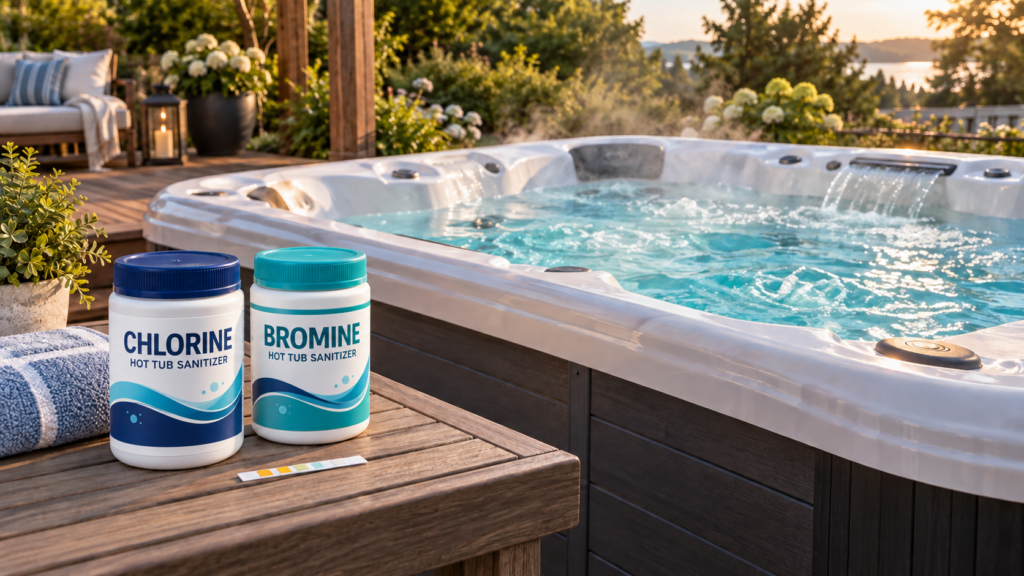
Chlorine vs. Bromine: Which Hot Tub Routine Fits You?
Chlorine or bromine? Ask a few hot tub owners, and you’ll probably hear a few different answers.
One likes chlorine because it’s affordable and familiar. Another prefers bromine because they like using a dispenser. Someone else has a salt system and wonders why everyone is still measuring chemicals.
Meanwhile, you want clean water and a relaxing soak.
Both chlorine and bromine can sanitize your hot tub effectively. The trick is choosing a routine that works with your spa—and that you won’t mind keeping up with.
Let’s look at what each option offers and what living with it actually involves.
💧 What You’ll Learn in This Report
- What people like—and don’t like—about chlorine and bromine
- How the maintenance routines compare
- What affects the cost
- Whether switching might help with odor or comfort
- How to choose an approach that fits your life
📖 Before You Buy Anything, Check Your Spa
I know. “Read the owner’s manual” probably isn’t the exciting answer you were hoping for.
But this quick check can save you some trouble.
Not every hot tub allows every sanitizer or dispenser.
For example, Hot Spring’s maintenance guidance restricts certain compressed chlorine and bromine products. So advice like “just put some bromine tablets in a floater” won’t work for everyone.
The same goes for any salt system, mineral cartridge, ozone, UV, or AOP equipment you already have. Check that the products you’re considering work with the whole setup.
If you’re unsure, ask your dealer:
“What are my approved options, and what would taking care of each one involve?”
That’s a much better starting point than coming home with whichever container happened to be on sale.
🧪 Let’s Talk About Chlorine
Chlorine is a familiar option, and there are good reasons people use it. It sanitizes the water and helps oxidize the contaminants that come along with soaking.
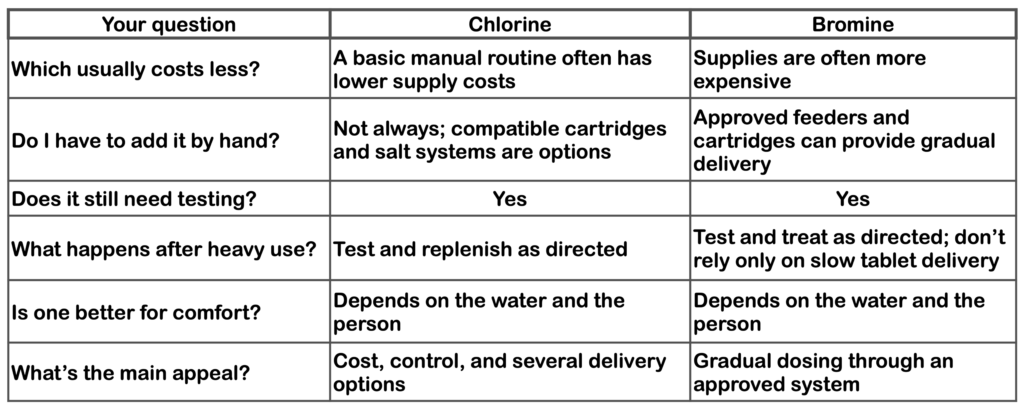
It also gives you several ways to handle water care. Depending on your spa, you might add it manually, use a specialized cartridge, or have a compatible saltwater system generate it for you.
What do people like about it?
For starters, a basic manual chlorine routine can be affordable.
If you don’t mind testing the water and measuring a dose when needed, you can keep your routine fairly straightforward. You know what you’re adding, and you can respond when a test shows the water needs attention.
Chlorine also gives you choices. If manual dosing doesn’t appeal to you, an approved cartridge or generator may handle some of that work. The specific options depend on your spa
What’s the catch?
With manual dosing, you’re the person responsible for replenishing it.
A quiet evening soak and a weekend with several guests can put very different demands on the water. You can’t assume the same amount will always be enough.
You also need to understand which chlorine product you’re using. Dichlor contains cyanuric acid, or CYA, which builds up with continued use and affects chlorine’s disinfecting performance.
You don’t need to memorize the chemistry. You do need a clear routine for the product you’re using.
Chlorine is worth considering if you want an economical manual routine, like having direct control, or have a compatible cartridge or salt system.
🛁 Now, What About Bromine?
Bromine is another effective way to sanitize hot tub water. It’s commonly used through approved tablets, cartridges, or other bromine programs.
The gradual delivery of a tablet system is a big part of its appeal. A properly managed dispenser releases sanitizer as the tablets dissolve.
What do people like about it?
For starters, a basic manual chlorine routine can be affordable.
If you don’t mind testing the water and measuring a dose when needed, you can keep your routine fairly straightforward. You know what you’re adding, and you can respond when a test shows the water needs attention.
Chlorine also gives you choices. If manual dosing doesn’t appeal to you, an approved cartridge or generator may handle some of that work. The specific options depend on your spa
What’s the catch?
Bromine supplies often cost more than a basic manual chlorine routine. You also need to understand the startup and oxidation steps for your particular program.
And that dispenser still needs you to keep it filled.
It can run empty. It may need adjustment. It may not keep up when several extra people use the hot tub.
If your spa is outdoors, follow the product’s sunlight and cover instructions, too. CYA does not protect bromine from sunlight.
Bromine is worth considering if your spa approves it and you like the idea of gradual dosing, along with the feeder care and treatment steps that come with it.
🔄 Which One Is Easier to Take Care Of?
Here’s where your habits matter more than someone else’s opinion.
If you use chlorine manually
You test the water, measure the approved product, and add it when needed. You also follow the balancing and oxidation steps in your program.
This can work well if you like a hands-on routine and don’t mind making adjustments yourself.
The challenge is consistency. The chlorine sitting in your cabinet can’t help the chlorine level in your hot tub.
If you use a bromine feeder
You follow the startup directions, establish the proper sanitizer level, and keep the dispenser or cartridge supplied and adjusted.
Some programs call for a separate startup product to establish a bromide reserve. Others work differently, so use the instructions that came with your system.
You’ll still test, replace supplies, and oxidize when directed. The dispenser handles gradual delivery, but you’re still checking that it’s doing its job.
If you use a chlorine cartridge or salt system
You may have less measuring to do, but you still need to understand the equipment.
For example, FROG @ease uses SmartChlor and minerals, with its own testing and maintenance instructions. You wouldn’t manage it the same way as a conventional dichlor routine. FROG @ease guidance
A compatible salt system generates chlorine from dissolved salt. It changes how chlorine gets into the water; it doesn’t make the hot tub chlorine-free. Hot Spring’s saltwater explanation
You’ll still check operation, balance the water, and maintain or replace components.
If your goal is less measuring, compare the delivery options before deciding between chlorine and bromine.
💰 What Will It Cost You?
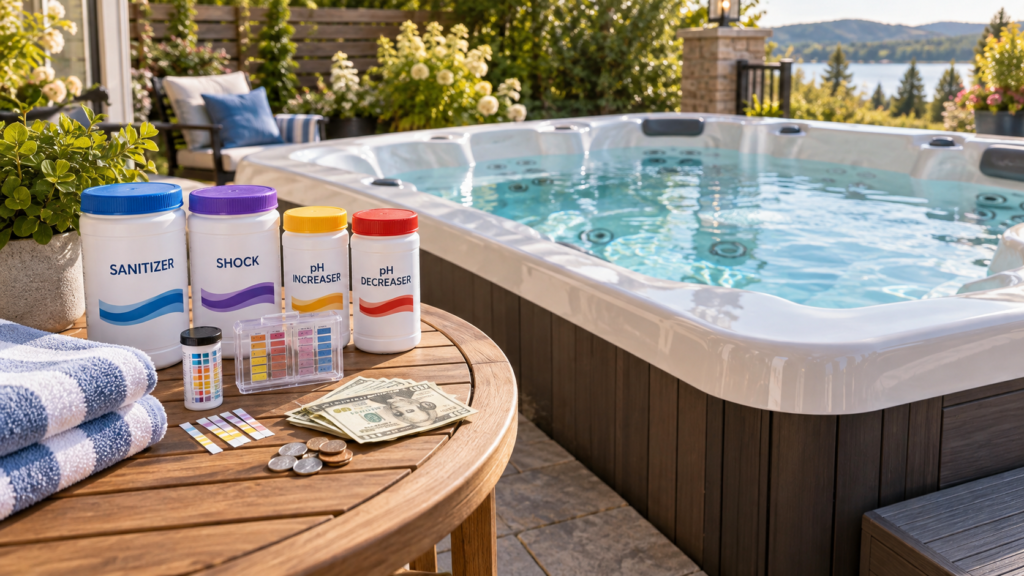
Looking at the price of two containers is a start, but it won’t tell you what the whole routine costs.
You’ll want to include startup supplies, sanitizer, any required oxidizer, test supplies, and replacement cartridges or generator components.
Ask your dealer for two estimates:
- What will the first year cost?
- What will I typically spend each year after that?
Have them base the comparison on your spa size and how you use it.
Two people soaking a few nights a week may use up your sanitizer differently than a family whose hot tub is the neighborhood gathering spot.
And give your time a little value, too. Paying more may make sense if the routine is easier for you to maintain. Just make sure you know what you’re getting and what you’ll keep buying.
👃 Will One Smell Better or Be Easier on My Skin?
Maybe—but there isn’t a guaranteed winner.
Bromine has a different odor, and some people prefer it. Others are perfectly comfortable with chlorine. Neither should be described as odorless or guaranteed to prevent irritation.
Before switching, take a look at the water you have now.
Are the sanitizer and pH readings where they should be? Are the filters clean? How old is the water? Have you added a fragrance or another product recently?
Also, notice when the problem happens.
Is it every soak? Only after a treatment? Only after a busy weekend?
Those details can help you work out whether you need a different sanitizer or a better handle on the current routine.
Use testing to guide your adjustments, rather than guessing from the smell. If irritation continues, stop soaking and seek medical advice.
✅ So, What Would I Choose?
I’d start with what your spa allows, then look at what matters most to you.
“I want to keep costs down.”
I’d take a close look at an approved manual chlorine program. It can be a practical option if you’re comfortable testing and adding sanitizer yourself.
“I’d rather not measure chemicals.”
I’d compare approved bromine feeders, chlorine cartridges, and compatible salt systems.
“We use the hot tub a lot.”
I’d focus on whether the delivery system can handle your usage and what the instructions say to do after heavy use.
Either sanitizer may work. Having a clear routine matters more than picking one based only on how often you soak.
“I’m away frequently.”
I’d arrange for someone to check the water and equipment.
Neither sanitizer turns a hot tub into something you can leave unattended indefinitely. A dispenser or generator is helpful, but it isn’t a substitute for someone checking on the spa.
“My current routine works well.”
Then you may already have a good answer.
If your water tests correctly, feels comfortable, and is manageable to maintain, think about what you expect to gain by changing.
You don’t need to switch just because your neighbor is enthusiastic about their system.
🔄 What If You Want to Switch?
You can—but make it a planned change.
A bromide reserve can remain even after the active bromine reading drops. Adding chlorine can reactivate it, so switching from bromine to a true chlorine routine generally requires draining and refilling.
Follow your spa’s cleaning and startup instructions for the new program.
Some bromine programs intentionally use chlorine as an oxidizer. That’s a specific process covered by the product directions—not something to improvise.
🏆 The Hot Tub Report Verdict
Chlorine can be a good fit if you want an affordable manual routine or prefer one of the compatible cartridge or saltwater options.
Bromine can be a good fit if your spa approves it and you prefer the gradual delivery of a feeder or cartridge program.
What matters most is choosing a routine you understand and can keep up with.
Water care should become a manageable habit—so you can get back to the reason you bought the hot tub in the first place.
Need help sorting through the options? The Hot Tub Concierge offers one-on-one guidance based on your hot tub, equipment, and soaking habits.
What are you using now—chlorine or bromine? Tell us what you like about your routine, or what you wish were easier, in the comments.
The Hot Tub Report Trusted Links & References
Recommended Reads from The Hot Tub Report
💬 Join the Conversation!
Have a question, tip, or hot tub story to share? Jump in! The Hot Tub Report is all about helping each other get more enjoyment out of hot tub ownership.
Just keep it friendly, helpful, and on topic. No spam, personal attacks, or inappropriate content, please. Comments that don’t fit the spirit of the community may be removed.
Be helpful. Be respectful. And happy hot tubbing! 🛁