Hot Tub Alkalinity: How To Test, Raise & Lower It
Hot Tub Alkalinity: Step‑by‑Step Testing and Adjustment Guide

Learn how to test, raise, and lower hot tub alkalinity, manage pH during adjustments, and avoid common mistakes that make water balance harder.
Keeping your hot tub water balanced gets frustrating when the pH keeps drifting after every adjustment. Before adding more pH increaser or decreaser, check the total alkalinity. It helps buffer changes in pH, and when it’s out of range, getting the water balanced can take more work.
Alkalinity and pH are related, but they measure different things. Understanding that difference helps you choose the right product—and avoid repeatedly adding chemicals without fixing the underlying problem.
In this report, we’ll explain how to test total alkalinity, raise or lower it, and manage the pH changes that can happen along the way. Start with the recommended range for your hot tub and water-care system, then make measured adjustments based on your test results.
💧 What You’ll Learn in This Report
- What total alkalinity does and how it differs from pH.
- How to test alkalinity and find the recommended range for your hot tub.
- What low or high alkalinity can mean for your water.
- How to raise alkalinity—and where baking soda fits in.
- How to lower alkalinity while keeping an eye on pH.
- Why running the jets can raise pH without raising alkalinity.
- Which adjustments to make first so you spend less time chasing your water balance.
💧 What Is Total Alkalinity in a Hot Tub?
Total alkalinity measures your water’s ability to neutralize acid. In most hot tubs, that buffering ability comes mainly from dissolved bicarbonates. Your test kit measures it in parts per million, or ppm.
If that sounds like chemistry class, here’s the practical part: alkalinity helps keep your pH from changing too easily. Think of it as a shock absorber for your water balance. It softens the impact of additions that would otherwise cause a sharper change in pH.
How is alkalinity different from pH?
The two work together, but they tell you different things:
- pH tells you how acidic or basic your water is right now.
- Total alkalinity tells you how much buffering capacity the water has against added acid.
You can have a pH reading that looks good while your alkalinity is out of range. That’s why testing one doesn’t replace testing the other.
When alkalinity is too low, pH can change quickly. When it’s too high, lowering pH can take more acid, and pH may rise again as aeration releases carbon dioxide from the water. The goal is enough buffering to make adjustments manageable.
Alkalinity isn’t the same as calcium hardness, either. Hardness measures dissolved calcium, while alkalinity measures acid-neutralizing capacity. They need separate tests and, when necessary, different adjustments.
Getting alkalinity into the recommended range makes pH easier to manage. It’s one part of balanced water, alongside pH, calcium hardness, and an appropriate sanitizer level.
🧪 How to Test Hot Tub Alkalinity—and What Range to Aim For
You can’t tell your alkalinity level by looking at the water. Clear water can still have a reading that needs attention, so testing is where to start.
A common target for total alkalinity is 80–120 ppm, but follow the range recommended for your hot tub and water-care system. Some systems specify a different range, and that matters more than the generic “ideal” marking on a test strip bottle.
Choose a test that measures total alkalinity
Hot tub test strips are convenient for routine testing. A drop-based kit can help when you need a more precise reading, especially if a strip’s color falls somewhere between two blocks.
Whichever you use, follow its instructions closely:
- Take the sample away from return jets and chemical dispensers.
- Follow the specified dipping, swirling, or drop-counting procedure.
- Read strips at the stated time—waiting longer can change the result.
- Keep strips and reagents tightly closed, dry, and within their expiration dates.
Compare test strips with the chart supplied for that exact product. A chart from another bottle or an online image may use different colors or ranges.
When should you test?
Include alkalinity in your weekly water-balance routine, or more often if your system’s instructions require it. Also test after a refill, a substantial water top-up, or when pH becomes difficult to manage.
After adding an adjustment product, allow it to circulate and wait the time specified on its label before retesting. Adding another dose too soon makes it easy to overshoot.
Read alkalinity and pH together
Before making an adjustment, write down both readings. Low alkalinity with low pH needs a different approach from high alkalinity with an already-low pH.
If a result looks unusual, repeat the test before reaching for a chemical bottle. A second reading takes far less effort than correcting an unnecessary adjustment.
Hot Tub Alkalinity: What Your Test Results Mean
Use the alkalinity range recommended for your hot tub and water-care system. 80–120 ppm is a common target, but your system’s instructions may specify something different.
| Test Result | What It Can Mean | What to Do Next |
|---|---|---|
| Below the recommended range | The water has less buffering capacity, so pH can change more easily. | Check pH, then use an alkalinity increaser as directed. Circulate and retest before adding more. |
| Within the recommended range | Alkalinity is where your system recommends it should be. | Check pH and sanitizer separately. An acceptable alkalinity reading doesn’t confirm that everything else is balanced. |
| Above the recommended range | Lowering pH may take more acid, and pH may tend to rise with aeration. | Check pH before adding a suitable acid-based adjustment product. Lower alkalinity gradually, following the label. |
| An unexpected or unclear reading | The result may reflect a recent adjustment, a testing error, or deteriorated testing supplies. | Repeat the test according to its instructions before making another adjustment. |
The goal is a useful operating range—not an exact number. If your recommended range is 80–120 ppm and your reading is 100 ppm, there’s no reason to adjust it just to reach 80.
🤷 What Happens When Hot Tub Alkalinity Is Too Low or Too High?
An out-of-range alkalinity reading doesn’t automatically mean your water is damaging the hot tub. It does mean you should look at pH alongside it before deciding what to adjust.
When alkalinity is too low
Low alkalinity gives your water less protection against a sudden drop in pH. An acidic product that would normally cause a modest change may have a bigger effect than you expect.
If pH drops too low and stays there, the water can become corrosive, potentially affecting metal components, heaters, and other materials. Low pH can also contribute to eye and skin discomfort.
The distinction matters: low alkalinity makes pH less stable; it isn’t, by itself, proof that corrosion is happening.
When alkalinity is too high
High alkalinity can make lowering pH more difficult. You may adjust the pH, get an acceptable reading, then find it creeping upward again after running the jets.
If pH remains high—particularly when calcium hardness is also elevated—the water can become more prone to calcium scale and cloudiness. Scale may collect on surfaces and equipment, including the heater.
High alkalinity alone doesn’t explain every cloudy-water problem, though. Filtration, sanitizer levels, and what bathers bring into the water still deserve attention.
Look for the pattern
If you keep adjusting pH and it won’t stay manageable, test alkalinity before adding another dose. Reading the two together helps you address the cause instead of repeating the same adjustment every few days.
🌤️ What Causes Hot Tub Alkalinity to Change?
Alkalinity doesn’t usually change without a reason. Your fill water, the products you add, and water replacement all play a part. If a reading starts moving, those are the first places to look.
Your fill water sets the starting point
Some water supplies have naturally high alkalinity; others have very little buffering capacity. Test after filling your hot tub so you know what you’re starting with.
Hard water doesn’t automatically mean high alkalinity. Calcium hardness and total alkalinity measure different things, even when both readings happen to be elevated.
Water-care products can move the reading
Acid-based products used to lower pH also lower total alkalinity. Repeated additions can gradually bring alkalinity below its recommended range.
Alkalinity increaser, usually sodium bicarbonate, raises it. Sodium carbonate, commonly used in pH increasers, also raises alkalinity. That’s one reason to read the label before choosing a product: two bottles intended to help balance water can affect the readings differently.
Sanitizers and oxidizers can also influence water balance over time, but they don’t all behave the same way. Avoid assuming every chlorine, bromine, or shock product has the same effect.
Top-ups and water replacement matter
Adding fresh water can move alkalinity toward the level in your source water. A small top-up may make little difference, while replacing a substantial amount can noticeably change the reading.
Evaporation leaves dissolved substances behind. Splash-out removes water and what’s dissolved in it. Depending on your source water, topping up after these losses can affect the balance differently.
Running the jets can change pH without changing alkalinity
Aeration encourages carbon dioxide to escape from the water, which can raise pH without directly raising total alkalinity. So if your pH climbs after running the jets, don’t assume your alkalinity climbed with it.
Before adjusting, think about what changed: a refill, several doses of pH decreaser, a different product, or frequent top-ups. That little bit of detective work can help you avoid making the same correction over and over.
📈 Before You Adjust Hot Tub Alkalinity
An unexpected reading can make it tempting to add a product immediately. Take a minute to confirm what the water needs first. It’s much easier to make a measured adjustment than to undo an oversized dose.
Confirm both alkalinity and pH
Test the two together. High alkalinity with high pH is a different situation from high alkalinity with an already-low pH. Adding acid without knowing both readings can push pH too low.
If the result looks unusual, repeat the test. Make sure your testing supplies are in date and that you’ve allowed enough circulation time after any recent chemical addition.
Review what you’ve already added
If you adjusted the water recently, follow the product’s waiting and retesting instructions before adding more. Stacking doses before the first one has fully mixed makes it difficult to know what’s working.
Know your water volume
Use your hot tub’s operating water volume when calculating a dose. Guessing from the number of seats or the hot tub’s outside dimensions can lead to an unnecessary correction later.
Follow the adjustment product’s label, including its directions for circulation, dosing, and retesting.
Consider whether the water needs replacing
Water age and condition matter, but an alkalinity problem alone doesn’t automatically mean it’s time to drain. Consider your water-care system’s replacement schedule, usage, and whether other water-quality problems are becoming difficult to manage.
Before draining to correct high alkalinity, test your source water. If it’s high too, a refill may put you right back where you started.
The goal is to make measured adjustments, then let your test results guide what happens next
🔻 How to Lower Hot Tub Alkalinity
Lowering alkalinity takes an acid-based adjustment product. The part that needs attention is that acid lowers both total alkalinity and pH. You need to watch both readings throughout the process.
Choose a product approved for your hot tub
Many hot tub pH decreasers contain sodium bisulfate, often called dry acid. These products can also lower total alkalinity.
Muriatic acid lowers both readings too, but use it only if your hot tub manufacturer permits it and the product label provides suitable directions. Acid products come in different concentrations, so their doses aren’t interchangeable.
Start with both test results
If alkalinity and pH are high, an acid-based adjustment can bring both down. If alkalinity is high but pH is already near the bottom of its recommended range, don’t keep adding acid simply to reach an alkalinity target. You’ll need to manage pH during the process.
Make measured adjustments
- Confirm your water volume and read the product’s dosing directions.
- Measure the recommended amount using the supplied directions for your readings and water volume.
- Add it exactly as instructed, following the label’s handling and circulation requirements. Never mix water-care chemicals together.
- Allow the water to circulate for the specified time.
- Retest alkalinity and pH before deciding whether another adjustment is needed.
Avoid pouring in a large dose to get the job done faster. Overshooting can leave you with low pH and another water-balance problem to correct.
What if pH gets low before alkalinity reaches its range?
Pause the acid additions. Aeration can raise pH without directly raising total alkalinity, which can help you continue the adjustment gradually. We’ll cover how that works in the next section.
The process may take more than one round. Let the test results guide each adjustment rather than adding several doses on a schedule.
⬇️ How to Lower Alkalinity Without Driving pH Too Low
This is the part that can feel like going in circles: your alkalinity is still high, but the acid you added has already brought pH down. Adding more acid would lower both again.
Aeration can help separate those two adjustments. It encourages carbon dioxide to escape from the water, raising pH without directly raising total alkalinity.
How to aerate your hot tub
Run the jets with the air controls open so they mix air into the water. The amount of aeration depends on your hot tub’s jet system and settings, so there isn’t one reliable run time for every model.
Keep the cover open during this process, stay nearby, and monitor pH. Follow your hot tub’s operating instructions.
Work through the adjustment gradually
- After an acid addition, circulate and retest according to the product label.
- If pH is near the bottom of its recommended range, pause the acid additions.
- Aerate and monitor pH. Alkalinity should remain approximately the same while pH rises.
- Reassess both readings. If alkalinity remains high and pH allows another adjustment, follow the product label for the next measured dose.
Don’t deliberately push pH below its recommended range to speed things up. If it’s already too low, correct that before continuing or get help from your dealer.
Why not just add pH increaser?
Many pH increasers contain sodium carbonate, which raises both pH and alkalinity. Using one immediately after lowering alkalinity can undo part of your progress. Aeration offers a way to raise pH without that same increase in alkalinity.
Once both readings are within the ranges recommended for your system, stop adjusting. Confirm your sanitizer level before using the hot tub, and recheck the balance during your next routine test.
🔺 How to Raise Hot Tub Alkalinity
Raising alkalinity is usually more straightforward than lowering it. The most common product is sodium bicarbonate, sold as alkalinity increaser. It adds buffering capacity and may also raise pH somewhat.
Is that the same as baking soda?
Yes—plain baking soda is sodium bicarbonate. It raises total alkalinity; it does not lower it.
A hot tub alkalinity increaser provides dosing instructions for water treatment, which makes the adjustment easier to measure. If your hot tub manufacturer permits household baking soda, use only plain sodium bicarbonate without fragrances, cleaners, or other additives. Baking powder is a different product.
Check pH before adding anything
Low alkalinity and low pH often occur together, but not always. Knowing both readings helps you avoid fixing one while pushing the other farther out of range.
If alkalinity is low but pH is already high, make measured adjustments and monitor both. Adding extra alkalinity increaser won’t solve the high pH.
Make the adjustment in measured steps
- Test alkalinity and pH to confirm the starting readings.
- Check your water volume and calculate the dose using the product label.
- Add the product as directed, following its instructions for application and circulation.
- Allow the specified mixing time, then retest both readings.
- Repeat only if needed, using the new results to guide the next dose.
There’s no advantage to aiming for the very top of the recommended alkalinity range. Once you’re within range, assess pH separately and adjust it if necessary.
Don’t confuse alkalinity increaser with pH increaser
Alkalinity increaser is typically sodium bicarbonate. Many pH increasers contain sodium carbonate, which raises pH more strongly while also raising alkalinity.
The names sound similar, but the products aren’t interchangeable dose for dose. Choose the product for the adjustment your water actually needs.
🛠️ What Should You Adjust First: Alkalinity, pH, or Sanitizer?
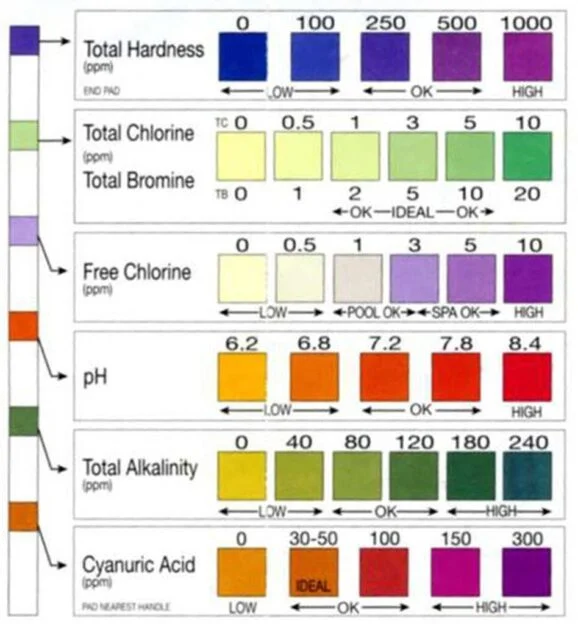
When several readings are off, it helps to have an order. For routine water balancing, address total alkalinity before fine-tuning pH. Alkalinity adjustments can move pH too, so getting the buffering into range first can save you from repeating an adjustment.
That doesn’t mean ignoring a low sanitizer reading while you spend hours working on alkalinity.
Test everything before adding anything
Start with alkalinity, pH, and the appropriate sanitizer test for your system. Those readings help you decide what needs attention and whether the hot tub is ready to use.
Use this order for routine balancing
- Adjust total alkalinity toward your system’s recommended range. Watch pH throughout the process, especially when lowering alkalinity.
- Fine-tune pH once alkalinity is in range. Allow each addition to circulate and retest as directed before making another adjustment.
- Confirm the sanitizer level. Follow your water-care system’s instructions for maintaining the required residual.
If sanitizer is low at the start, address it according to your system’s directions rather than waiting for perfect water balance. Keep the hot tub out of use until sanitizer and pH are within their recommended ranges.
Add products separately
This order isn’t permission to add several chemicals together. Follow each label’s application, circulation, and waiting instructions. Never mix chemicals together or combine them in a measuring container.
Once the readings are where they belong, stop adjusting. The goal is balanced, properly sanitized water—not matching one exact number on every test.
🧠 Final Thoughts: Make Alkalinity Part of the Routine
Alkalinity is easy to overlook until pH starts giving you trouble. Once you understand how the two work together, those repeated adjustments usually become easier to make sense of.
Start with a reliable test, follow the range recommended for your hot tub and water-care system, and make measured changes. Give each addition time to circulate before deciding the water needs more.
Remember that raising and lowering alkalinity work differently. Sodium bicarbonate raises alkalinity, while acid lowers both alkalinity and pH. When you’re lowering alkalinity, aeration can help bring pH back up without undoing that progress.
A good alkalinity reading is one part of water care. Keep testing pH and sanitizer, maintain your filters, and replace the water when needed. The payoff is a routine you understand—and fewer afternoons spent wondering which bottle to reach for next.
Your Hot Tub Alkalinity Checklist
- Test regularly: Include alkalinity in your weekly water-balance routine and after refills or substantial top-ups.
- Use your system’s range: Follow its instructions rather than assuming every hot tub needs the same target.
- Read alkalinity and pH together: Know both readings before making an adjustment.
- Measure each dose: Use your operating water volume and the product label.
- Allow time to mix: Follow circulation and retesting directions before adding more.
- Watch pH when lowering alkalinity: Pause acid additions before pH drops too low.
- Maintain sanitizer: Don’t let balancing work distract from keeping the water properly sanitized.
- Stop when you’re in range: There’s no need to chase an exact number.
💬 Still Chasing Your Hot Tub’s pH?
Alkalinity is only part of the picture. If your pH keeps climbing, drops too low, or seems to change every time you run the jets, understanding what’s behind that movement can save you a lot of extra adjusting.
Our hot tub pH report explains what affects the reading, how to raise or lower it, and how to avoid turning water care into a daily guessing game.
Hot Tub Alkalinity Guide
Looking for Another Hot Tub Answer?
Search The Hot Tub Report for more water care, troubleshooting, and buying advice.
Trusted Links & References
For more help with testing and water balance, these resources offer guidance from water-testing and hot tub care companies:
Always follow the instructions for your specific hot tub, water-care system, and adjustment products.
A Little More Hot Tub Know-How, Delivered
Get practical water care tips, maintenance advice, and helpful reports delivered right to your inbox. It’s free, and it’s all about making hot tub ownership a little easier.
HOT TUB CONCIERGE SERVICE
Need a Little More Help?
Sometimes a little one-on-one guidance makes all the difference.
Whether you’re shopping for a hot tub, troubleshooting a water problem, or just looking for some expert advice, I’m here to help.
Get personalized guidance during a 30-minute Hot Tub Concierge consultation.
Recommended Reads From The Hot Tub Report
Looking for more helpful advice? Explore these related reports for additional hot tub tips, practical guidance, and answers to common ownership questions.
💬 Join the Conversation!
Have a question, a helpful tip, or a hot tub experience to share? Drop a comment below! We’re here to help each other enjoy better hot tub ownership.
Please keep comments friendly, helpful, and on topic.