Hot Tub Air Locks: Causes, Fixes & Prevention
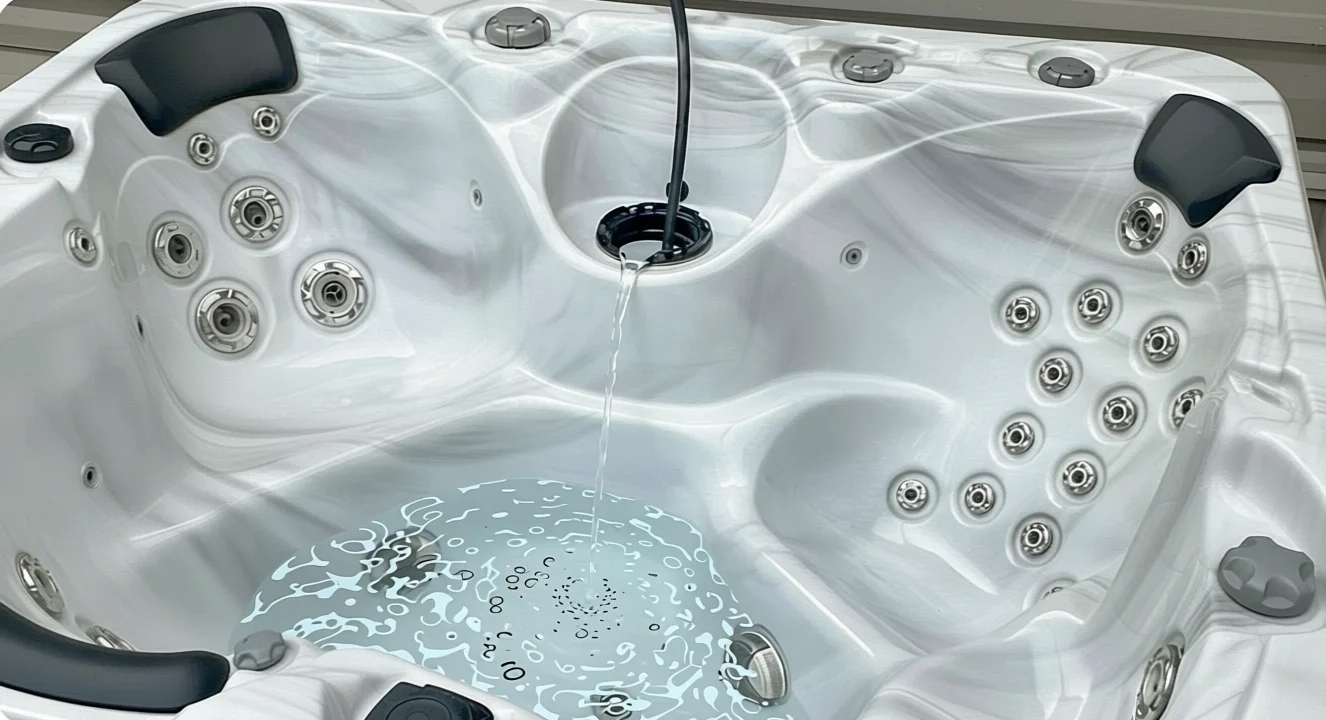
Why Hot Tub Air Locks Happen After a Refill
Jets not working after a refill? Learn the signs of a hot tub air lock, what to check first, and how to get water flowing again
You’ve drained, cleaned, and refilled your hot tub. You turn the power back on, press the jets button—and barely anything happens. After all that work, a quiet set of jets isn’t the reward you had in mind.
An air lock is one possible cause, especially right after a refill. Air trapped in the pump or plumbing can prevent the pump from getting water moving properly. You might hear it running, see a few bubbles, or get a flow warning on the display.
The next step is to work through a few basic checks and follow the startup procedure for your model. Don’t leave a pump running without water flow while waiting for the problem to clear itself.
In this report, we’ll cover how to recognize a possible air lock, what to try first, when to get help, and how the way you refill your hot tub can reduce the chances of it happening again.
💧 What You’ll Learn in This Report
- What an air lock is and why it can happen after a refill.
- How to recognize the signs and what else can cause poor water flow.
- What to check before trying to clear trapped air.
- How to follow your hot tub’s filling and pump-priming instructions.
- How to identify which pump or jet group is affected.
- When releasing air at the pump may be appropriate—and when to contact your dealer.
- How to confirm normal flow and reduce air lock problems during future refills.
💨 What Is a Hot Tub Air Lock?
An air lock happens when trapped air prevents a pump from getting water moving properly. It’s most common after draining, refilling, or work that lets air into the plumbing.
Your hot tub pump needs water inside it to establish a steady flow. Getting that flow started is called priming. If a large pocket of air remains in the pump or its supply line, the pump may run without delivering water through the jets.
How can there be trapped air when the hot tub is full?
A full shell doesn’t necessarily mean every pipe and pump has filled with water. Depending on the plumbing layout and how you refill, water can reach the normal level while an air pocket remains below.
That’s why the filling method matters. Using your model’s recommended filling point helps water reach the plumbing and gives air a way out.
An air lock can affect just one pump
On a hot tub with multiple pumps, one group of jets may work normally while another barely moves water. A separate circulation pump can also have trouble priming, which may affect heating and filtration.
Trapped air is a useful possibility to investigate after a refill. The next step is to look at the symptoms and check the basics before deciding how to clear it.
🔐 Signs of a Possible Hot Tub Air Lock
An air lock is more likely when a flow problem starts immediately after draining, refilling, or servicing your hot tub. Here are the common signs.
The pump runs, but the jets barely move water
You may hear the pump operating while its jets produce little or no flow. On a hot tub with multiple pumps, one group of jets might work normally while another doesn’t.
Water sputters from the jets
Brief bubbling during startup can happen as air clears. Continued sputtering or weak, uneven flow may mean the pump hasn’t fully primed.
A flow warning appears
The display may show a low-flow or no-flow message. Check your owner’s manual for its meaning—the same warning can have several causes.
The pump hums without moving water
A hum deserves attention, but it doesn’t confirm an air lock. A motor that can’t start can also hum. Stop the pump rather than repeatedly trying to get it running.
The timing helps narrow it down
If everything worked before a refill and flow stopped immediately afterward, trapped air is worth investigating. If the problem developed during normal use, also consider low water level, a dirty filter, closed jets, or an equipment problem.
Don’t leave a pump running without water flow while you investigate. Follow your model’s priming limits and stop if flow doesn’t establish.

⛑️ Before You Try to Clear an Air Lock
A few basic checks can save you from opening the equipment compartment when the problem is something simpler.
Check the water level
Make sure the water reaches the fill level specified for your hot tub. If it’s too low, the pump may draw in air through the filter area.
Open the adjustable jets
Some jets twist open and closed. Make sure the affected jets are open, and position diverter valves according to your startup instructions. A diverter may send water toward one group of seats and away from another.
Look at the filter
A dirty filter can restrict water flow. With power off, inspect and clean it as directed, then reinstall it correctly. If you’ve fitted a new filter, confirm that it’s the right cartridge for your model and that all packaging has been removed.
Read the display
Note any error message and look it up in your owner’s manual. A flow warning tells you there’s a circulation problem; it doesn’t identify the cause by itself.
Find your model’s startup instructions
Check the recommended filling point and priming procedure before restarting. Pump buttons, speeds, and permitted priming times vary between hot tubs.
Know when to stop
If the pump only hums, makes a grinding noise, or fails to establish flow within the manufacturer’s priming limit, switch it off. Repeatedly restarting it or letting it run longer can turn a startup problem into a repair.
If these checks don’t reveal the cause, move on to the approved priming procedure for your hot tub.
💧Filling Your Hot Tub to Help Prevent Air Locks
How you refill your hot tub can make the next startup easier. The goal is to help water fill the plumbing while giving trapped air a way out.
Turn off the power first
Keep power disconnected while draining and refilling. Restore it only after the water reaches the recommended level and you’ve completed your model’s pre-startup checks.
Use the recommended filling point
Many manufacturers recommend filling through the filter compartment or a specific filter standpipe. Follow your owner’s manual to identify the correct location, especially if your hot tub has several filters.
Remove only the filter or cap specified in those instructions. Leave standpipes and other fittings in place unless the manual specifically directs you to remove them.
Position the hose gently
Place the hose at the recommended opening without forcing it into the plumbing or wedging it tightly in place. Secure it so it stays put, and keep an eye on the fill. A hose that slips out can water the backyard surprisingly well.
Fill to the proper level
Use the fill mark or water-level guidance for your model. Don’t start the pumps early just because the seats are covered—there needs to be enough water above the intake area to avoid drawing in air.
Finish with the startup procedure
Reinstall any parts you removed, complete the manual’s remaining checks, and restore power. Follow the approved priming sequence and confirm that water is moving normally.
Correct filling reduces the chance of an air lock, but always check flow after a refill.
⛽️Follow Your Hot Tub’s Priming Procedure
Once the hot tub is filled to the correct level, the next step is to get water moving through each pump. Your owner’s manual should explain which buttons to press, which speeds to use, and how long to allow for priming.
Look for startup or priming mode
Some hot tubs enter a priming mode when power is restored. This gives you an opportunity to establish water flow before normal heating begins. Other models use a different startup sequence, so follow the instructions for your controls.
Watch for steady water flow
Use the specified pump buttons and look for water coming from the corresponding jets. A few bubbles may clear during startup, but you want steady flow—not continued sputtering or a pump running with no water movement.
If your hot tub has several pumps, confirm that each one establishes flow. A separate circulation pump may have its own startup checks.
Keep attempts within the stated limits
Some manufacturers allow briefly switching a pump off and on to help release trapped air. Follow that procedure only as directed, including the limit on repeated attempts.
Don’t assume the entire priming-mode countdown is safe running time for an unprimed pump. Your manual may specify a shorter limit when no water is flowing.
If flow doesn’t start, stop
Switch off power if the approved procedure doesn’t establish flow. A pump that only hums, makes unusual noises, or repeatedly stops needs attention rather than more attempts.
Contact your dealer if the instructions are unclear or the pump still won’t prime. Have your model information and any display message ready so they can help you choose the next step.
🔍 Identify Which Pump Is Having Trouble
If your hot tub has more than one pump, finding the affected jet group helps narrow down the problem.
Use the controls and watch the jets
During the approved priming procedure, operate each jet pump separately if your controls allow it. Note which button activates which group of jets and whether that group produces steady water flow.
For example, if Jets 1 works normally but Jets 2 produces little or no flow, you’ve identified which pump circuit needs attention. That still doesn’t confirm an air lock, but it gives you useful information.
Check the jet and diverter settings
Make sure the affected jets are open. Position diverter valves as directed in your manual so water can reach the jets you’re checking. A working pump may be sending most of its flow to another seat.
Remember the circulation pump
Some hot tubs have a separate pump for filtration and heating. It may operate quietly and won’t necessarily produce a strong stream from the massage jets. Follow your manual’s instructions for confirming circulation rather than judging it by jet pressure.
Leave physical pump identification until power is off
Once you know which jet group isn’t working, switch off power before opening the equipment compartment. Use the manual’s equipment diagram or ask your dealer to identify the corresponding pump.
Write down what you observed: which button you pressed, which jets responded, and any sound or display message. Those details can help your dealer guide you without repeating unnecessary startup attempts.
💨Releasing Trapped Air at the Pump

If the approved priming procedure hasn’t restored flow, trapped air may need to be released at the pump. Some models have a designated bleed fitting; others use a pump union—the large threaded connection joining the pump to the plumbing.
Confirm the correct fitting first
Use your owner’s manual or your dealer’s instructions to identify the release point. If you can’t clearly identify it, get help before loosening anything.
Disconnect power
Turn off power at the hot tub’s breaker or disconnect before opening the equipment compartment or touching a fitting. Turning the jets off at the control panel isn’t enough because pumps can restart automatically.
Release the air slowly
If your manufacturer permits this procedure, loosen the designated bleed fitting or union only enough to let air escape. Don’t remove the union nut completely. You may hear a hiss followed by water as the trapped air clears.
Keep escaping water away from motors, wiring, and electrical controls. Stop if you can’t manage the water safely.
Leave small hoses attached
A small hose connected to the pump isn’t necessarily a manual bleed point. Don’t pull it off or remove an unidentified cap. Small plastic fittings can become brittle and break.
Close the fitting securely
Once air has escaped and water appears, close the fitting according to the manufacturer’s instructions. Avoid overtightening plastic parts or forcing a stubborn union with large pliers. If it won’t move easily, contact your dealer.
Check before restarting
Look for leaks and make sure electrical components stayed dry. If water reached electrical equipment, leave power off and arrange service.
After everything is secured and access panels are back in place, follow the startup instructions again. If normal flow still doesn’t return, stop and contact your dealer rather than repeatedly loosening fittings and restarting the pump.
💦 Restart and Confirm Water Flow
After releasing trapped air and securing the fitting, follow your hot tub’s startup procedure. Stay nearby so you can confirm that the affected pump is moving water normally.
Look for steady flow
Check the jets supplied by that pump. Brief bubbling may occur as remaining air clears, followed by a steady stream of water. Continued sputtering, weak flow, or no flow means the problem hasn’t been resolved.
If your hot tub has multiple pumps, check each one within the manual’s priming limits.
Listen for normal operation
The pump should sound like it normally does. If it only hums, makes a grinding noise, or repeatedly stops, switch off power and contact your dealer.
Check the display and heating
Look for returning flow warnings or other messages. Once normal circulation is established, confirm that the hot tub returns to its normal heating cycle. Allow time for the water temperature to rise.
Watch for leaks
Check around the cabinet for new water. If you need to inspect the fitting inside the equipment compartment, disconnect power before opening the panel. Don’t reach inside while the hot tub is powered.
If flow still isn’t right, stop
Avoid repeating the same startup attempt over and over. Tell your dealer which pump or jet group is affected, what you’ve tried, and any messages on the display. That information helps them work out the next step.
⚠️ How to Reduce Air Locks During Future Refills
A consistent refill routine can help you avoid another round of quiet jets and puzzled looks at the control panel.
Use the correct filling point
Follow your hot tub’s instructions for filling through the designated filter opening or other recommended location. This helps water reach the plumbing as the hot tub fills.
Keep power off until filling is complete
Wait until the water reaches the recommended level and you’ve finished the pre-startup checks before restoring power.
Follow the startup settings
Position adjustable jets and diverter valves as your manual directs. Then use the approved priming sequence and confirm flow from each pump.
Maintain the water level between refills
Splashing and evaporation gradually lower the water. Keep it within the recommended range so the intake doesn’t draw in air during operation.
Plan refills for suitable weather
Choose a time when you can complete the refill and confirm normal circulation and heating. In cold weather, allow enough time to get help if startup doesn’t go as planned.
Pay attention if the problem keeps returning
An air lock after a refill is one thing. Repeatedly losing flow during normal use deserves a closer look. Have your dealer check for an underlying problem rather than making pump bleeding part of your regular routine.
Before putting your supplies away, confirm that every pump has established normal flow. Catching a startup problem while you’re still beside the hot tub is much easier than discovering it when you’re ready to soak.
🧠 Final Thoughts: Get the Water Moving Again
An air lock can turn a routine refill into a frustrating afternoon, but a few basic checks and the correct priming procedure may get things moving again.
Start with the water level, jet settings, and your model’s startup instructions. If trapped air needs to be released at the pump, identify the correct fitting and disconnect power before working inside the equipment compartment.
Know when to stop. If the pump won’t establish flow, only hums, or makes unusual noises, contact your dealer instead of repeatedly restarting it.
For the next refill, use the recommended filling point and confirm normal flow from each pump before calling the job finished. Then you can get back to the part of hot tub ownership you actually signed up for—the soak.
💬 Still Having Trouble After a Refill?
If your jets still won’t cooperate, trapped air may be only one possibility. Water level, control settings, and other startup issues can also interrupt your plans.
Read New Hot Tub Not Working? 7 Common Startup Problems & Fixes for more practical checks and help deciding when to contact your dealer.
🎬 Watch On YouTube
Looking for Another Hot Tub Answer?
Search The Hot Tub Report for more water care, troubleshooting, and buying advice.
A Little More Hot Tub Know-How, Delivered
Get practical water care tips, maintenance advice, and helpful reports delivered right to your inbox. It’s free, and it’s all about making hot tub ownership a little easier.
HOT TUB CONCIERGE SERVICE
Need a Little More Help?
Sometimes a little one-on-one guidance makes all the difference.
Whether you’re shopping for a hot tub, troubleshooting a water problem, or just looking for some expert advice, I’m here to help.
Get personalized guidance during a 30-minute Hot Tub Concierge consultation.
Recommended Reads From The Hot Tub Report
Looking for more helpful advice? Explore these related reports for additional hot tub tips, practical guidance, and answers to common ownership questions.
💬 Join the Conversation!
Have a question, a helpful tip, or a hot tub experience to share? Drop a comment below! We’re here to help each other enjoy better hot tub ownership.
Please keep comments friendly, helpful, and on topic.