- John Gill
- No Comments
When to Drain Your Hot Tub
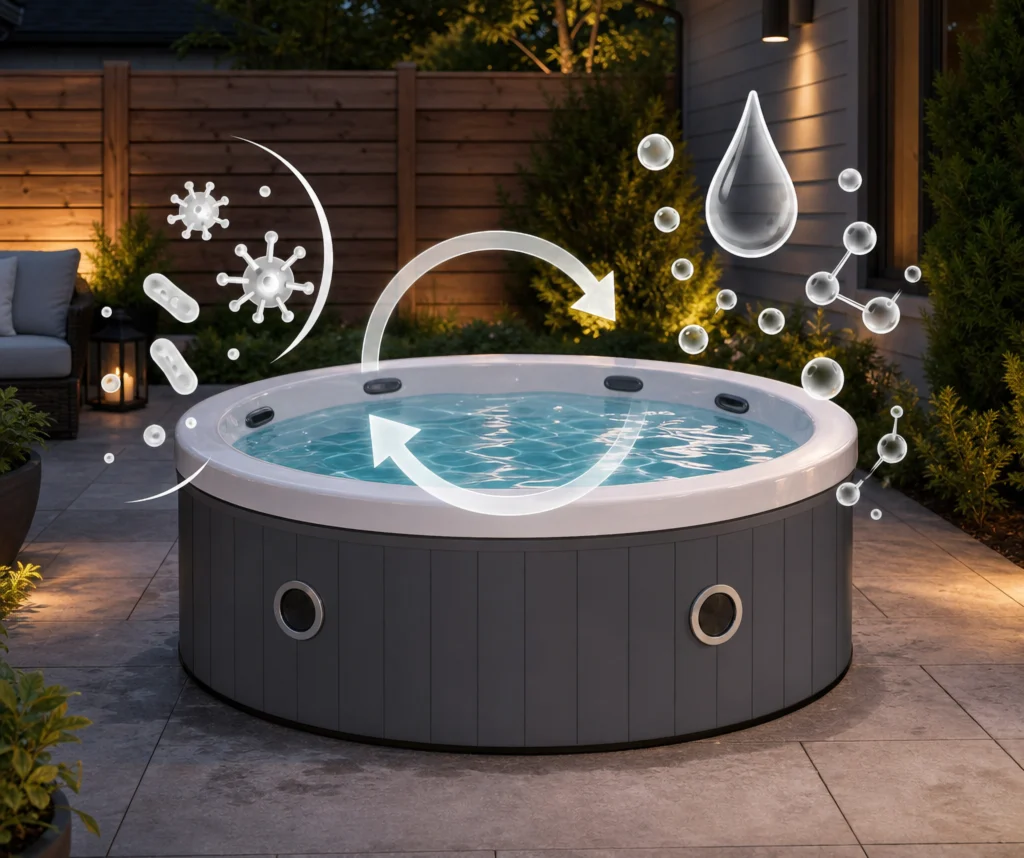
When to Drain Your Hot Tub (And Why It Matters More Than You Think)
Most hot tubs need a full drain and refill every 3–4 months. Saltwater hot tubs are the exception—they typically require a complete water change only once per year.
This guide explains why that schedule matters, what happens inside your plumbing as water ages, how chlorine, bromine, CYA, and bromide banks behave over time, and how to prevent the hidden problems that shorten water life and increase health risks.
What This Report Breaks Down
- How often to change hot tub water based on your sanitizer system
- Why water becomes unstable over time (TDS, CYA, bromamines)
- The role of chlorine, bromine, bromide banks, and CYA buildup
- How biofilm forms inside plumbing and how to remove it
- Why saltwater systems only need a yearly drain
- Signs your water is “done” and needs to be replaced
- How to extend water life with simple habits and weekly care
🧪 Why Hot Tub Water Needs Regular Changing
Hot tubs are small, hot, and heavily used. That combination accelerates contamination and chemical breakdown far faster than pools.
Over time, your water becomes overloaded with
- Organic waste (sweat, oils, lotions, cosmetics)
- Chemical byproducts
- Detergents from swimsuits
- Minerals from tap water
- Biofilm fragments
- Rising Total Dissolved Solids (TDS)
- CYA buildup (in chlorine systems using stabilized products)
- Spent Bromine byproducts (in bromine systems)
Even if the water looks clear, its chemistry may be unstable and its sanitation compromised.
⚠️ The Dangers of Not Changing Hot Tub Water
Water Chemistry Becomes Impossible to Control
As water ages, TDS, CYA, and bromine byproducts rise.
High levels of any of these create a cascade of problems:
- pH constantly drifting
- Alkalinity refuses to stay in range
- Calcium hardness is becoming unstable
- Sanitizer is burning off rapidly
- Cloudy or dull water
- Persistent foam
- Strong chemical odors
Once TDS, CYA, or bromine byproducts reach certain thresholds, balancing becomes nearly impossible—no amount of chemicals can “fix” old water.
A drain and refill is the only solution.

⚠️ Health Risks Increase Over Time
Warm water + high bather load + aging water chemistry = ideal conditions for harmful microorganisms.
Potential risks include:
- Pseudomonas aeruginosa (hot tub rash)
- Staph infections
- Legionella pneumophila (hot tub lung)
- Eye and skin irritation
- Respiratory irritation from chloramines and bromamines
- Increased asthma symptoms
Even well-maintained water becomes unsafe if the sanitizer can’t stay effective due to high CYA, high bromamines, or high TDS.
🦠 Biofilm Growth Inside Plumbing
Biofilm is the biggest hidden threat in hot tubs.
What is biofilm?
A slimy, protective layer of bacteria that forms inside plumbing, jets, and equipment.
Signs of biofilm:
- Sanitizer drops to zero within hours
- Water becomes cloudy repeatedly
- Musty or sour odors
- Filters get slimy
- Foam returns after every soak
- pH and alkalinity drift constantly
Biofilm is resistant to normal sanitizer levels. It must be purged with a specialized cleaner before draining.

🧼 The Biofilm Purge: Why It’s Essential
A purge is the most overlooked step in hot tub care.
Why purge?
If you drain without purging, you leave biofilm inside the plumbing. When you refill, that biofilm immediately begins contaminating your fresh water.
Purge benefits:
- Removes hidden organic waste
- Breaks down biofilm colonies
- Restores sanitizer efficiency
- Prevents recurring cloudy water
- Reduces chemical usage
- Extends water life
When to purge:
- Every water change if sanitizer demand is high
- At least once a year for all hot tubs
- Always before switching to a salt system
🔄 How Often to Change Hot Tub Water (By System Type)
Chlorine Systems
- Every 3–4 months
- CYA buildup is the limiting factor.
Bromine Systems
- Every 3–4 months
- Bromamine buildup and rising TDS are the limiting factors.
Saltwater Systems (The Exception)
Saltwater systems generate chlorine automatically and maintain extremely stable water chemistry.
Because of this:
- TDS rises more slowly
- pH and alkalinity drift less
- Sanitizer stays consistent
- Organic waste is oxidized more efficiently
- Water stays clear longer
- No CYA buildup
- No bromamine buildup
Salt Drain and refill schedule: Once per year
This assumes:
- Salt cell is Cleaned or changed regularly
- System output is set correctly
- Water is tested weekly
- Calcium hardness is kept in range
- An annual biofilm purge is performed
Salt systems are not “maintenance-free”—they’re “maintenance-stable.”
🛠️ How to Make Your Water Last Longer
Small habits make a big difference:
Before soaking:
- Shower (no lotions, deodorant, makeup, or hair products)
- Rinse swimsuits in plain water—never detergent
- Avoid fabric softeners
Weekly:
- Test water
Shock after heavy use
Rinse filters
Monthly:
- Deep-clean filters
- Wipe down the underside of the cover
Always:
- Maintain circulation 4–8 hours per day
- Keep sanitizer in range
- Keep the waterline clean
These steps dramatically extend the life and reduce chemical usage.
🔍 When to Drain Your Hot Tub
Even if you’re not at the 3–4 month mark, change your water if you notice:
- Sanitizer won’t hold
- Bromine or chlorine drops to zero quickly
- Water turns cloudy repeatedly
- Persistent foam
- Musty or sour odors
- pH and alkalinity constantly drift
- Filters get slimy
- Water feels “thick” or “silky” in a bad way
- CYA is above 80–100 ppm (chlorine systems)
- Bromine odor is strong (bromine systems)
These are classic signs of high TDS, high CYA, high bromamines, or biofilm contamination.
🧭 Final Takeaway
Changing your hot tub water isn’t just routine maintenance—it’s essential for:
- Safe soaking
- Stable water chemistry
- Equipment longevity
- Preventing biofilm
- Keeping sanitizer effective
- Preventing CYA buildup (chlorine)
- Preventing bromamine buildup (bromine)
- For most hot tubs, every 3–4 months is the sweet spot.
- For saltwater systems, once a year is usually enough.
Fresh water is easier to maintain, safer to enjoy, and better for your hot tub’s long-term health.
The Hot Tub Report Trusted Links & References
Recommended Reads from The Hot Tub Report
💬 Join the Conversation!
Have a question, tip, or hot tub story to share? Jump in! The Hot Tub Report is all about helping each other get more enjoyment out of hot tub ownership.
Just keep it friendly, helpful, and on topic. No spam, personal attacks, or inappropriate content, please. Comments that don’t fit the spirit of the community may be removed.
Be helpful. Be respectful. And happy hot tubbing! 🛁