Hot Tub Covers: Lifespan, Care Tips, & ASTM Safety
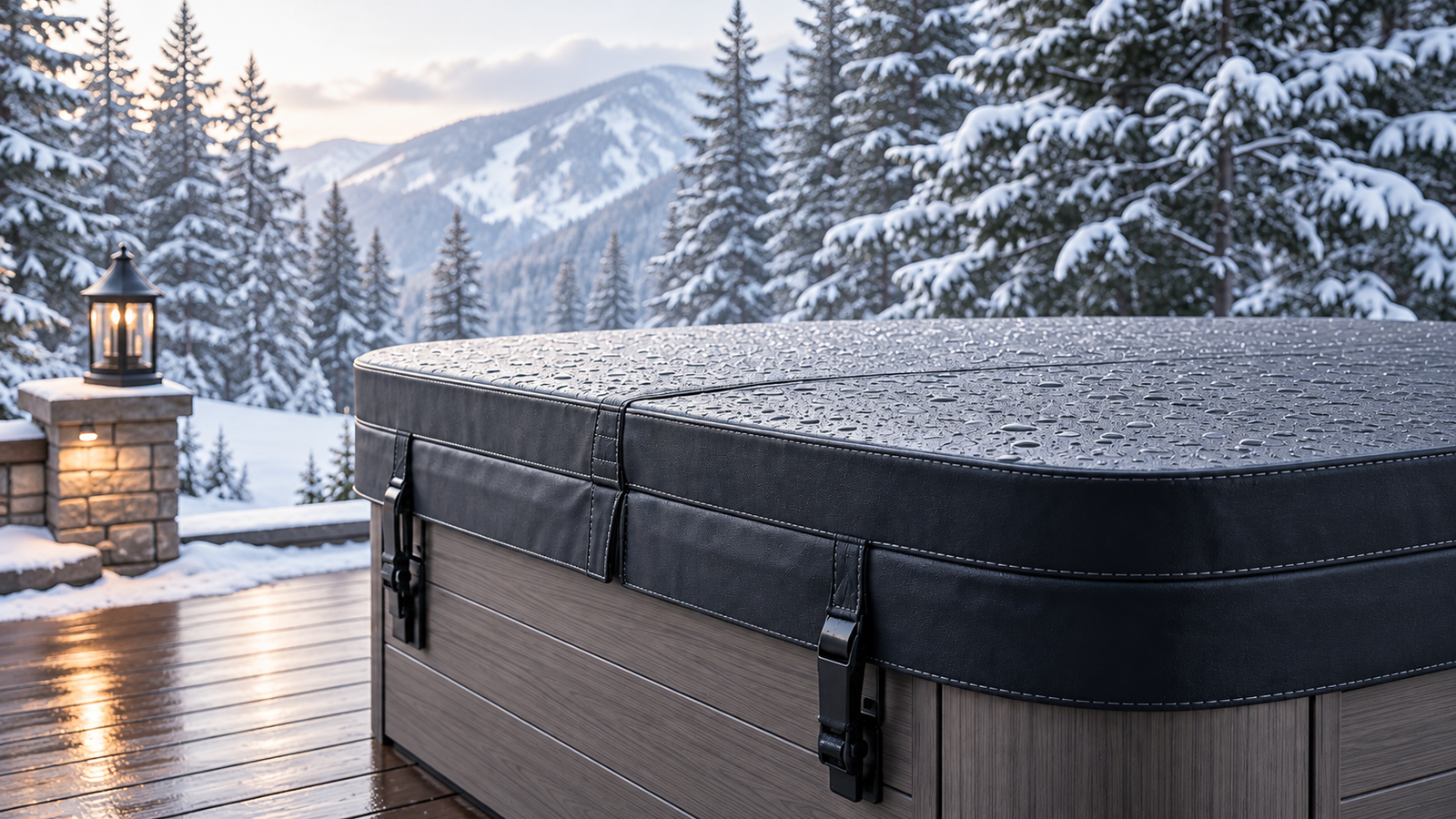
Hot Tub Covers 101: Lifespan, Maintenance & Measurement
Your hot tub cover faces heat and moisture underneath, weather on top, and regular lifting every time you use the water. Over time, that wear can affect how well it fits, insulates, and functions.
So how long should a cover last—and when is it time to replace it? Age is only part of the answer. This report will help you recognize the signs of wear, care for your current cover, and understand what matters when choosing a replacement.
Key Takeaways From This Report
- How cover condition, weather exposure, and everyday handling affect lifespan
- Which signs suggest your cover needs attention or replacement
- What ASTM F1346 compliance means when choosing a safety cover
- How foam density, thickness, taper, and fit influence performance
- How to care for your cover and protect it from avoidable damage
- What measurements and details to confirm before ordering a replacement
🧩 Your Hot Tub Cover Does More Than Keep Leaves Out
You probably don’t give your hot tub cover much thought until it becomes difficult to lift, starts sagging, or no longer fits properly. By then, replacing it may already be on your list.
A well-fitting cover helps hold in heat, reduces evaporation, and keeps debris out of the water. A suitable safety cover also helps restrict access when it’s correctly installed and secured.
But covers aren’t all built the same. Foam density, thickness, moisture protection, outer material, and construction all deserve attention—and the thickest cover isn’t automatically the best choice.
👉 Make‑Up of a Hot Tub Cover 👈
🔒 What ASTM F1346 Means for Your Hot Tub Cover
A thick, heavy cover isn’t automatically a safety cover. When shopping, look for documentation that the cover meets ASTM F1346, a standard covering safety performance and labeling for pool and hot tub covers.
The standard is intended to reduce drowning risk by restricting access to the water by children younger than five when the cover is correctly installed and used.
Look Beyond the Sales Description
Terms such as “heavy-duty,” “premium,” or “reinforced” describe features, but they don’t establish compliance with a safety standard.
Ask the supplier whether the specific cover you’re ordering meets ASTM F1346 and how that compliance is documented. ASTM publishes the standard; a claim that a cover meets it is different from independent certification.
Fit and Fasteners Matter
A safety cover needs to fit your hot tub and be installed according to its instructions. Straps, locks, anchors, and other fastening components must be present, functional, and properly secured.
Inspect these parts regularly. A damaged strap or loose anchor deserves attention even if the cover still looks good and holds in heat.
A Safety Cover Still Has Limits
Meeting a safety standard doesn’t make a cover a seat, walkway, or play surface. Keep people and pets off it, and follow the manufacturer’s instructions for snow removal and loading limits.
A secured safety cover is one layer of protection. It does not replace attentive supervision or other required access barriers.
📦 Foam Density: Why It Matters
When comparing traditional foam-core hot tub covers, thickness is easy to notice. Foam density deserves attention, too.
Density describes how much the foam weighs for a given volume. You’ll commonly see options labeled 1-pound, 1.5-pound, or 2-pound foam, meaning pounds per cubic foot. That’s different from how many inches thick the cover is.
Density and Thickness Work Together
For comparable expanded polystyrene foam, higher density generally provides greater strength and a higher insulation value per inch. A thinner cover made with denser foam may therefore compare favorably with a thicker cover made with lighter foam.
But density alone doesn’t tell you which complete cover will hold heat best. Thickness, the center hinge, edge fit, and the condition of the foam all contribute.
Strength Depends on More Than Foam
Denser foam can better resist compression, but the cover’s overall strength also depends on its dimensions, reinforcement, construction, and condition.
Don’t assume a particular density makes a cover suitable for heavy snow—or safe to stand on. Follow the manufacturer’s loading and snow-removal instructions.
Protecting the Foam Matters, Too
The moisture-resistant wrapping around the foam cores helps limit water absorption. Its material, sealed seams, and durability deserve attention alongside density.
Look at density, thickness, moisture protection, and fit together. A well-built cover needs all of them working properly.
📦 Cover Thickness and Taper: What to Look For
Many foam-core hot tub covers are thicker at the center and thinner at the outside edges. That slope is called the taper, and it helps rainwater run off rather than collect on top.
A cover described as 5 inches to 3 inches, for example, is approximately 5 inches thick at the center and 3 inches thick at the outer edge.
Thickness Is Only Part of the Comparison
More foam thickness can improve insulation when the material and other construction details are comparable. But the center measurement alone doesn’t tell you how the whole cover performs.
Consider the edge thickness, foam density, hinge insulation, and fit around your hot tub. A thick cover with gaps around the edges can still lose heat.
Taper Helps With Drainage
A sloped cover encourages water to drain, but it doesn’t guarantee that snow and ice will slide off. Follow the manufacturer’s removal instructions rather than allowing snow to accumulate.
If the cover begins sagging and collecting water, inspect its condition. A deeper puddle adds weight and may indicate that the foam or reinforcement is damaged.
Choose a Cover You Can Handle
A thicker or denser cover may also weigh more. Before ordering, confirm that your lifter supports its dimensions, thickness, weight, and attachment requirements.
The right cover should suit your climate, fit your hot tub, and be manageable enough that opening and securing it remains part of an easy routine.
Compare the complete construction—not just the biggest thickness number on the label.
👉What Happens in the Real World👈

⏳ How Long Does a Hot Tub Cover Last?
For a traditional foam-core cover, around four to six years is a useful planning estimate, but it isn’t an expiration date. Some need replacing sooner, while others remain serviceable longer.
The better question is: does your cover still fit, insulate, secure properly, and lift without becoming a struggle?
What Affects Its Lifespan?
A cover’s working life depends on several things:
- Weather exposure: Sunlight, rain, snow, ice, and wind all contribute to wear.
- Construction: The outer material, stitching, foam, reinforcement, and moisture barrier affect durability.
- Water care: Chemical exposure and unsuitable water conditions can damage cover materials.
- Handling: Dragging, forcing, or lifting a cover incorrectly can strain seams and damage the cores.
- Maintenance: Cleaning, inspecting fasteners, and removing accumulated debris help you catch problems early.
Cold weather alone doesn’t determine how long a cover will last. A sheltered hot tub and an exposed installation may put very different demands on otherwise similar covers.
Let Condition Guide Replacement
Don’t replace a sound cover simply because it reaches a particular birthday. Equally, don’t keep using a damaged one because you expected another year out of it.
If yours has become noticeably heavier, sags, leaves gaps, or can no longer be secured, it’s time to assess whether repair or replacement is appropriate.
A warranty is worth reviewing, too, but its length isn’t a promise of service life. Read what it covers, what it excludes, and whether replacement costs change as the cover ages.
🩺 Signs Your Hot Tub Cover Needs Attention
A little fading doesn’t necessarily mean your cover is finished. Changes in weight, shape, fit, and fastening are more useful signs of how well it’s doing its job.
It Has Become Much Heavier
If lifting the cover takes noticeably more effort than it used to, moisture may have entered the foam cores.
Don’t force a heavy cover or expect the lifter to compensate for the extra weight. Have the cover and lifter assessed, especially if opening or closing it has become difficult to control.
It Sags or Collects Water
A dipping center, bowed panels, or persistent puddles can indicate damaged foam or reinforcement.
More than a cosmetic issue, sagging can affect drainage and the way the cover sits on the hot tub. Broken or distorted cores generally need more attention than a surface patch can provide.
It No Longer Fits Properly
Look for gaps around the edges, corners that lift, or a hinge that no longer closes neatly. First, make sure nothing is obstructing the cover and that it’s positioned correctly.
If the gaps remain, the cover may have changed shape or suffered structural damage. A poor fit can increase heat and moisture loss.
Straps, Locks, or Anchors Are Damaged
A cover may still insulate well while its fastening system needs repair. Torn straps, broken buckles, failed locks, and loose anchors can compromise its ability to restrict access.
Arrange suitable repairs promptly using manufacturer-approved parts and instructions. Don’t rely on a cover with damaged fasteners as a secure barrier.
The Outer Material Is Deteriorating
Fading alone is usually less concerning than splits, brittle material, open seams, or exposed inner layers. Those defects deserve attention before damage spreads.
A persistent musty smell also warrants inspection and cleaning, although odor alone doesn’t establish that the entire cover needs replacing.
Small problems may be repairable. Widespread deterioration, waterlogged cores, or structural damage can make replacement the more practical choice.
🧼 How to Help Your Hot Tub Cover Last Longer
A few regular habits can reduce avoidable wear and help you spot problems while they’re still manageable. Start with the care instructions for your particular cover—vinyl and fabric surfaces may need different products.
Keep Water Care Consistent
Maintain water balance and sanitizer levels according to your hot tub and chemical-product instructions. Measure additions carefully rather than adding an extra dose “just in case.”
Never place chemical containers on the cover or allow concentrated products to spill onto it.
Open the Cover Regularly
If your hot tub stays closed for long periods, make opening the cover part of your weekly maintenance routine. This allows fresh air to circulate and trapped chemical vapors to disperse, while giving you an opportunity to inspect and clean the underside.
Regular airing doesn’t dry out waterlogged foam or repair a damaged moisture barrier, but it’s a useful opportunity to spot deterioration.
After adding chemicals, follow the product and hot tub manufacturer’s directions for circulation and how long the cover should remain open. Weekly airing is additional care—it doesn’t replace those instructions. Keep the uncovered hot tub supervised and secure the cover afterward.
Use a Compatible Cover Lifter
A suitable lifter makes opening and closing easier and can help keep the cover off the ground. It needs to match the cover’s dimensions, weight, and attachment requirements.
Release every fastening before lifting. Move the cover as instructed, and stop if it catches, twists, or becomes unusually difficult to operate.
Handles help you position the cover; they shouldn’t be used to drag it across the deck.
Clean the Material You Actually Have
Rinse away loose dirt and use the cleaning method recommended by the cover manufacturer. Pay attention to seams, folds, and the underside.
For vinyl covers, use a compatible cleaner and apply protectant only as directed. Fabric covers may require different care, so don’t assume a vinyl conditioner belongs on every cover.
Avoid abrasive tools, harsh solvents, and pressure washing unless the manufacturer specifically permits them. Rinse away cleaning residue before returning the cover to service.
Inspect While You Clean
Take a moment to inspect the stitching, handles, hinge, straps, and fasteners. Look for small tears, loose hardware, or areas that are beginning to pull apart.
Addressing a damaged buckle or loose anchor promptly can prevent a manageable problem from becoming a bigger one.
Secure It Between Uses
Close the cover fully and secure all required fasteners whenever the hot tub isn’t in use. This helps maintain its intended fit and restrict access.
In windy conditions, follow the manufacturer’s securing instructions. Avoid placing improvised weights on top, which can damage the cover.
Consistent care helps protect the cover you have and makes changes in weight, fit, and condition easier to notice.
❄️ Protecting Your Cover From Snow, Ice, and Extra Weight
A snow-covered hot tub can make a great winter scene, but accumulated snow adds weight to the cover. Wet snow can be especially heavy, so don’t assume a thick cover or dense foam makes it suitable for an unlimited load.
Remove Snow Gently
Follow your cover manufacturer’s instructions and remove accumulated snow before it becomes difficult to manage. A soft brush or broom can help clear loose snow without scraping the outer material.
Avoid shovels, sharp tools, and forceful scraping. Don’t push down hard on the cover while clearing it.
Don’t Chip Away at Ice
If ice has bonded to the surface, don’t try to break it loose by striking, prying, or bending the cover. You could damage the outer material or the foam underneath.
Ask the manufacturer how to handle ice buildup safely. Don’t use deicing chemicals or hot water unless they specifically approve that method.
Clear snow before operating the lifter, and stop if the cover appears frozen to the hot tub. Forcing it open can strain handles, seams, and lifting hardware.
Keep People and Pets Off the Cover
A hot tub cover isn’t a seat, standing platform, or play surface. Reinforcement and safety-standard compliance don’t make it suitable for everyday use that way.
Keep furniture, planters, tools, and other stored items off it, too. Concentrated weight can damage the cover even when the surface looks sturdy.
Choose a cover suited to your conditions, then follow its loading and snow-removal instructions. Thickness alone doesn’t tell you how much weight it can safely support.
👉 Replace With Confidence 👈
📏 How to Measure for a New Hot Tub Cover (Including Corner Radius)
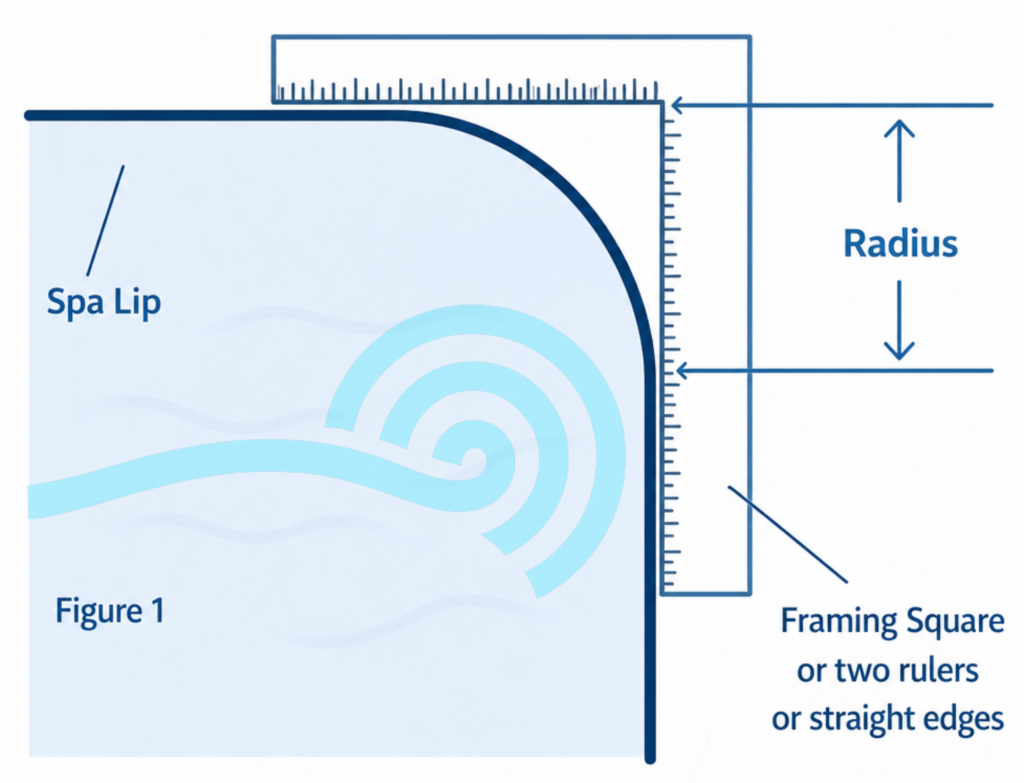
A replacement cover needs to fit your hot tub, close properly, and work with your lifter. Before measuring, get the supplier’s measurement sheet. Different cover designs may require different reference points or allowances.
Have your hot tub’s brand, model, and year handy, but confirm the dimensions rather than relying on the model name alone.
Measure Length and Width
For many standard covers, you’ll measure across the outside edges of the hot tub’s upper lip in both directions. Follow the supplier’s diagram to confirm exactly where to place the tape.
Record the actual measurements. Don’t automatically round up or add extra clearance unless the supplier asks you to.
An old cover can help confirm details, but don’t rely on its dimensions if it has stretched, shrunk, or changed shape.
Measure the Corner Radius
The corner radius describes how rounded each corner is. It isn’t the distance around the curved edge.
Use the supplier’s printable radius template or their framing-square method. With a framing square, the straight inside edges align with the two straight sides of the hot tub. Measure from the square’s inside corner to the point where the curved corner meets a straight side.
If the shape is difficult to identify, send the supplier a photograph with the measuring tool in position. Don’t guess between two radius options.
Confirm the Skirt Length
The skirt is the flap that hangs below the cover’s edge. It needs to accommodate the hot tub’s cabinet and any ledges or projections.
Follow the supplier’s instructions for where the measurement starts and ends. A skirt that catches or bunches against the cabinet can interfere with how the cover sits.
Mark the Fold Direction
Show which way the cover should fold and where it will rest when open. Don’t assume the hinge follows the longer dimension.
Confirm compatibility with your lifter, including any brackets or hardware that attach directly to the cover. Some lifters require specific reinforcement or mounting provisions.
Record Straps and Special Features
Note the number, length, and placement of securing straps, along with any unusual corners, raised features, cutouts, or other details that affect fit.
Photograph the hot tub from above and from each side. Include the lifter and existing fastening points so the supplier can see the complete setup.
Review the Order Before Approving It
Compare the supplier’s final drawing with your measurements, fold direction, skirt length, and strap locations. Confirm who is responsible for any fitting allowance.
A few extra minutes confirming the details can prevent an expensive mistake—especially with a custom cover that may not be returnable.
🧠 Final Thoughts
A good hot tub cover should hold in heat, fit properly, secure as intended, and be manageable to open and close. Its age matters less than whether it still does those jobs well.
Regular cleaning, sensible handling, and attention to water care can help protect it. When the cover becomes unusually heavy, loses its shape, or develops damaged fasteners, address the problem before it gets worse.
When replacing it, look beyond thickness alone. Compare foam density, moisture protection, hinge construction, fit, and documented safety-standard compliance. Confirm your measurements and lifter requirements before ordering.
The right cover makes everyday ownership easier—and deserves the same consideration as the equipment underneath it.
💬 Make Water Care Part of Cover Care
Looking after your cover goes hand in hand with looking after the water underneath it. A consistent routine helps you manage water balance, use chemicals correctly, and spot problems early.
Explore Hot Tub Water Care 101 for practical guidance on testing, sanitizing, and keeping up with everyday maintenance.
Looking for Another Hot Tub Answer?
Search The Hot Tub Report for more water care, troubleshooting, and buying advice.
Trusted Links & References
These resources offer additional guidance on hot tub cover care, safety standards, and replacement considerations.
For cleaning products, loading limits, lifter compatibility, and replacement measurements, follow the instructions supplied by your cover manufacturer.
A Little More Hot Tub Know-How, Delivered
Get practical water care tips, maintenance advice, and helpful reports delivered right to your inbox. It’s free, and it’s all about making hot tub ownership a little easier.
HOT TUB CONCIERGE SERVICE
Need a Little More Help?
Sometimes a little one-on-one guidance makes all the difference.
Whether you’re shopping for a hot tub, troubleshooting a water problem, or just looking for some expert advice, I’m here to help.
Get personalized guidance during a 30-minute Hot Tub Concierge consultation.
Recommended Reads From The Hot Tub Report
Looking for more helpful advice? Explore these related reports for additional hot tub tips, practical guidance, and answers to common ownership questions.
💬 Join the Conversation!
Have a question, a helpful tip, or a hot tub experience to share? Drop a comment below! We’re here to help each other enjoy better hot tub ownership.
Please keep comments friendly, helpful, and on topic.