- John Gill
- No Comments
Buying a Hot Tub: How to Choose a Spa You’ll Love for Years
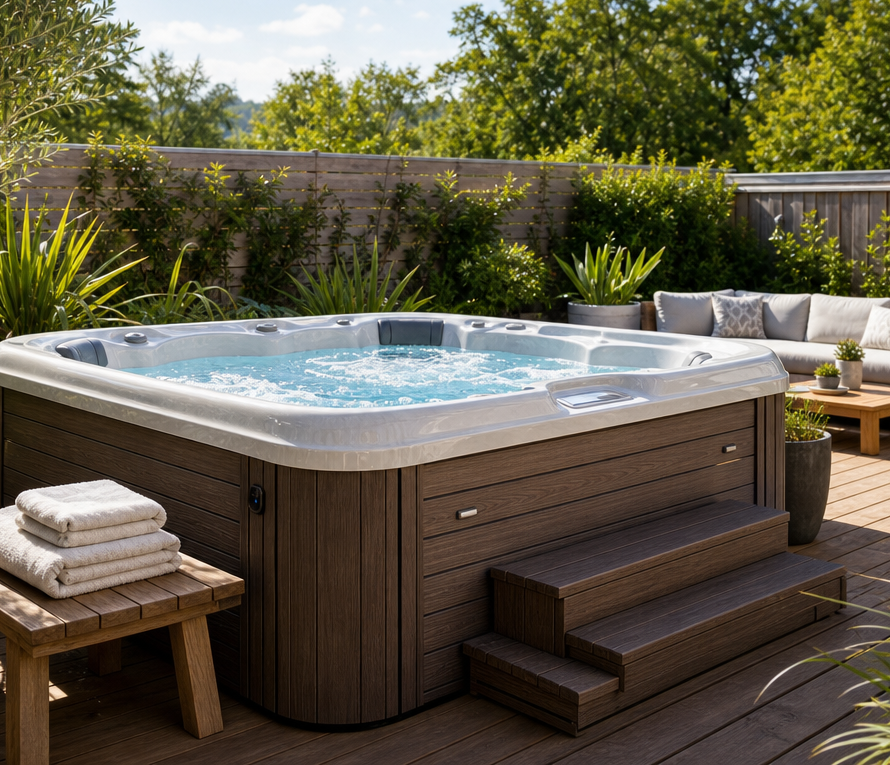
Buying a Hot Tub: A Clear, Honest Guide for First‑Time Buyers
Here’s what you’ll take away:
• Start with fit, not features
• Comfort depends on engineering
• Insulation drives long‑term cost
• Know what you’re paying for
• Weekly care is simple
• Dealer quality matters more than brand
• Ask smarter questions
🧩 An Editor’s Deep‑Dive Guide
Buying a hot tub should feel exciting, grounding, and full of possibility—not like you’re decoding a new language. But when you’re new to the category, it’s hard to know which details matter, which specs are marketing noise, and which decisions will shape your day‑to‑day experience for the next decade or more.
This guide goes deeper than the usual “Top 10 Tips” list. These are the questions real first‑time buyers ask—and the answers that actually help you make a confident, long‑term decision.
🏠 1. Will a Hot Tub Fit My Space and Lifestyle?
Before you fall in love with a model, you need to know it will work for your home, your routines, and your long‑term plans. This is the foundation of every smart purchase.
Size & Seating — What actually determines comfort
Most shoppers start by comparing seat counts. But seat count is marketing shorthand, not a comfort metric.
The real comfort factor is foot well size.
A generous foot-well:
- Prevents knee‑knocking and toe‑touching
- Allows adults to sit naturally in each seat
- Makes the tub feel larger than its exterior dimensions
If you’re comparing two similarly sized models, the one with the larger foot well will almost always feel more open, more comfortable, and more usable for groups.

Placement — Patio, deck, or yard?
A hot tub needs a smooth, level, load‑bearing surface.
The tub itself may weigh 700–1,000 lbs empty—but filled with water and people, it can exceed 4,000–6,000 lbs.
Common placement options:
- Concrete pad — Gold standard for stability
- Reinforced deck — Works beautifully when engineered correctly
- Compacted gravel pad — Affordable, effective, and increasingly popular
- Pavers — Acceptable if properly leveled and supported
The key is stability. A tub that shifts or settles creates long‑term stress on the shell and plumbing.
Electrical — 110V vs 220V (and why it matters long‑term)
110V (“plug‑and‑play”)
- Pros: No electrician, lower upfront cost
- Cons: Slower heating, weaker jet performance, can’t run jets and heater simultaneously
VS
220V (hardwired)
- Pros: Stronger jets, faster heating, more efficient, fewer limitations
- Cons: Requires an electrician
If you want a true hydrotherapy experience—not just warm water—220V is the standard.
Delivery Access — Can it physically reach your backyard?
Hot tubs are delivered on their side using a specialized cart or sled. Most homes are easy. But:
- Tight gates
- Sharp turns
- Steep slopes
- Elevated decks
…may require a crane. A good dealer will assess this before delivery.
Maintenance — What does weekly care look like?
Modern systems have made ownership dramatically easier. With today’s filtration and sanitizing technology, weekly care is typically:
- Test water
- Add a small amount of sanitizer
- Rinse filters as needed
If you can maintain a houseplant or a goldfish, you can maintain a hot tub.
💦 2. How Will It Feel?
(Jets, Comfort, Performance & Water Quality)
Once shoppers know a tub will fit, they shift to the heart of the experience: how it feels on your body.
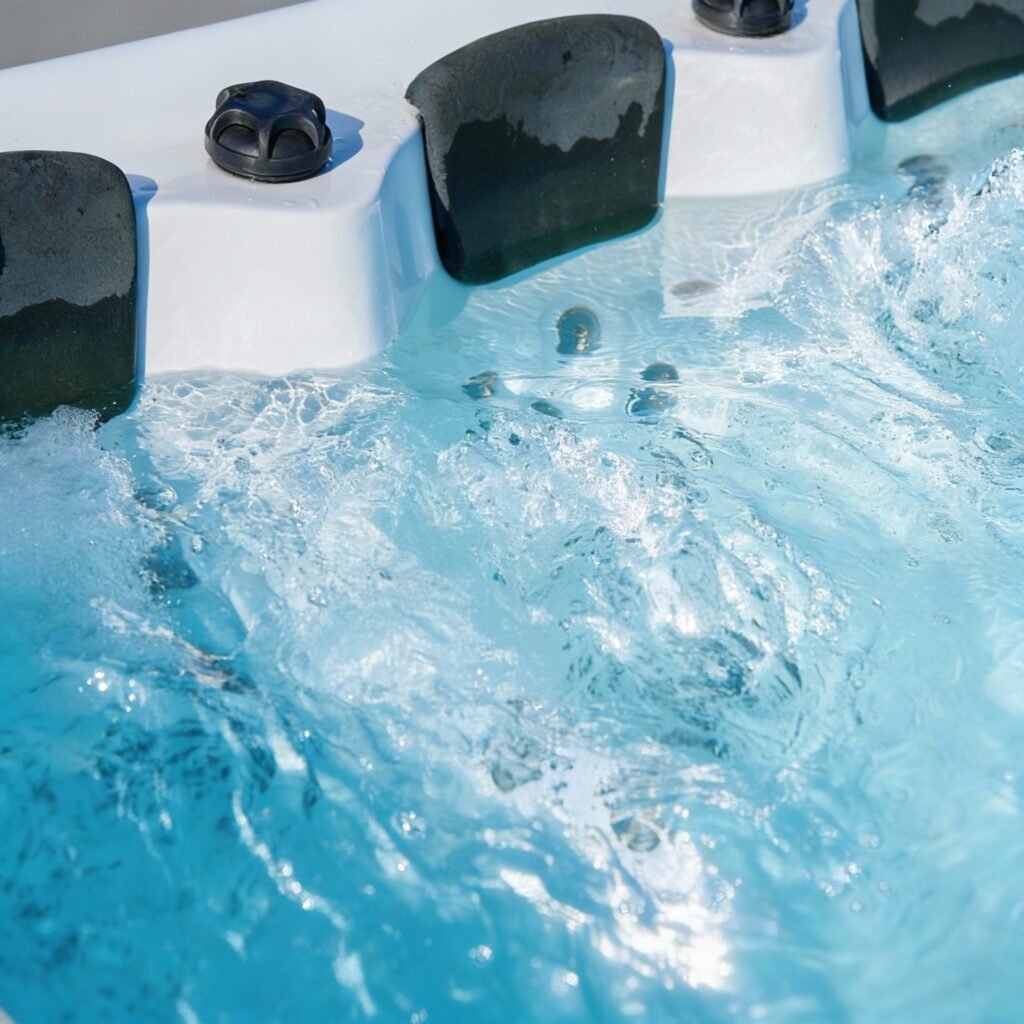
Jet Pressure — The truth behind jet count
Jet count is one of the most misleading specs in the industry.
What actually determines performance:
- Pump power
- Plumbing diameter and efficiency
- Jet design and placement
- Flow control
A well‑engineered tub with 25–35 jets can outperform a poorly designed tub with 60+ jets. More jets often means weaker jets, because the pump’s power is divided too many ways.
Massage Zones — Variety creates a full‑body experience
A great hot tub is designed like a circuit:
- Deep therapy seats for shoulders, back, and hips
- Cool‑down seats for circulation
- Lounges for full‑body relaxation
- Upright seats for social soaking
- Neck and trap jets for tension relief
Each seat should feel intentional—not just a different angle of the same massage.
Water Care Systems — Saltwater, chlorine, ozone, UV
Your water care system affects:
- Water feel
- Skin sensitivity
- Chemical usage
- Maintenance frequency
- Long‑term cost
There’s no universal “best.” The right system depends on your lifestyle, sensitivity, and how hands‑on you want to be.
Energy Efficiency — Insulation is everything
Insulation determines:
- Monthly operating cost
- Winter performance
- Heat retention during outages
- Noise levels
Premium tubs use:
- Multi‑layer insulation
- Sealed cabinets
- Insulated bases
- Tight‑fitting covers
In cold climates, insulation is the single biggest factor in long‑term cost.
Filtration — The unsung hero of water clarity
A strong filtration system:
- Reduces chemical use
Improves clarity - Extends water life
- Keeps maintenance predictable
Filters typically last 12–24 months with proper care.
💰 3. What Will It Really Cost?
Hot tub pricing spans a wide range because build quality, engineering, and insulation vary dramatically.
Price Ranges — What you actually get at each level
Entry Level
Basic insulation, simple controls, limited power, shorter lifespan
Mid‑Range
Better insulation, stronger pumps, ergonomic seating, more reliable components
Premium
Advanced engineering, top‑tier insulation, quiet operation, long lifespan, excellent hydrotherapy
Luxury
Best‑in‑class materials, therapy‑grade performance, smart features, longest lifespan
The biggest differences are engineering, insulation, and long‑term reliability—not the number of lights or cupholders.
What’s Included — Not all packages are equal
Some retailers include:
- Steps
- Cover
- Cover lifter
- Delivery
- Setup
- Chemicals
Others charge for each item. Always compare total ownership cost, not just the sticker price.
Operating Costs — Electricity, chemicals, filters
A well‑insulated tub can cost significantly less to run each month. Expect:
- Lower electricity usage
- Fewer chemicals
- Longer water life
- Less heat loss in winter
Financing — Monthly payment options
Most retailers offer flexible financing. Monthly payments are common and often more affordable than people expect.
🧼 4. What Does Ownership Look Like?
This is where shoppers imagine life after the purchase—and where the right tub makes all the difference.
Weekly Care — Simple and predictable
Most owners spend 5–10 minutes a week on water care.
Water Chemistry — Easier than it looks
Once you understand the basics, water care becomes second nature. Good retailers provide:
- Step‑by‑step guides
Videos - Free water testing
- Troubleshooting support
Winter Use — Built for cold climates
A well‑insulated tub thrives in winter. Premium models can maintain heat for days during outages—critical in northern climates.
Service — Who supports you after the sale
This is where dealers separate themselves.
A great dealer:
- Services what they sell
- Stocks parts
- Has trained technicians
- Supports you long after the warranty ends
A hot tub is a 10–20+ year product. Your dealer relationship matters more than the brand name on the shell.
🛠️ 5. Who Should I Buy From?
Compare dealers, not just tubs.
A great dealer makes ownership easy. A poor dealer makes even a great tub frustrating. Look for:
- Strong reputation and reviews
- In‑house service department
- Transparent pricing
- Education‑first approach
- Long‑term customer support
- Your experience depends more on the dealer than the brand.
🔍 Smart Questions Most Shoppers Don’t Know to Ask
These questions separate confident buyers from overwhelmed ones:
- Can I wet‑test this model
- What type of insulation does it use
- How many pumps power how many jets
- How is the equipment accessed for service
- What are the real‑world energy costs
- What’s the warranty—and who actually performs the service
- How long has this dealer been supporting this brand
If a retailer can’t answer these clearly, keep looking.
⭐ Your Next Step
The Hot Tub Report Trusted Links & References
Recommended Reads from The Hot Tub Report
💬 Join the Conversation!
Have a question, tip, or hot tub story to share? Jump in! The Hot Tub Report is all about helping each other get more enjoyment out of hot tub ownership.
Just keep it friendly, helpful, and on topic. No spam, personal attacks, or inappropriate content, please. Comments that don’t fit the spirit of the community may be removed.
Be helpful. Be respectful. And happy hot tubbing! 🛁