Cloudy Hot Tub Water: Causes and a Step-by-Step Fix
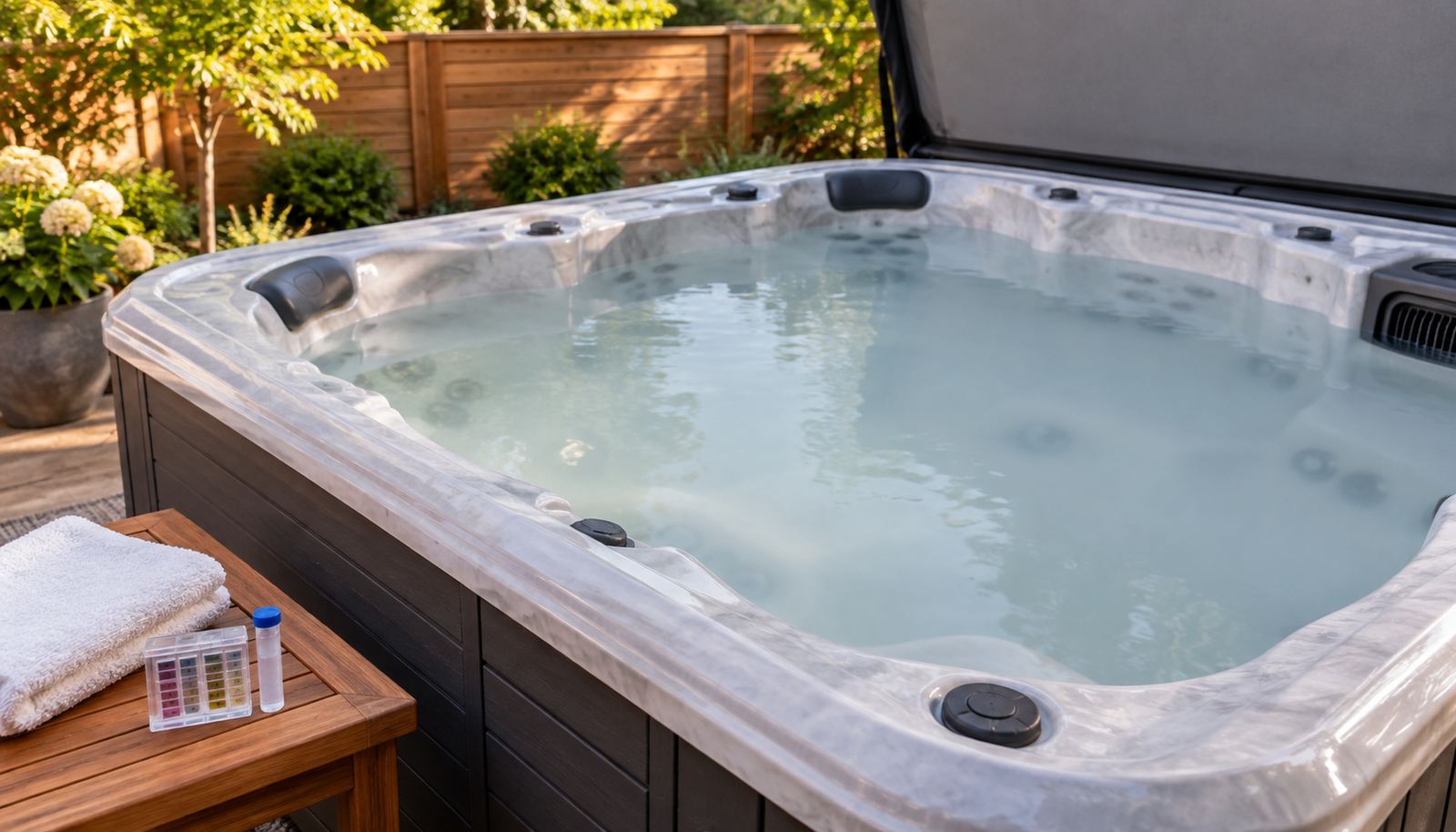
Why Is My Hot Tub Water Cloudy? What to Check First
Discover what causes cloudy hot tub water and how to troubleshoot sanitizer, fill water, filters, and circulation before adding more chemicals.
You know the feeling.
You’ve had a long day, you’re already picturing yourself sitting in warm, bubbling water, and then you flip open the cover.
Instead of clear water, you’re staring at something that looks more like a glass of skim milk.
That’ll put a damper on your evening.
Cloudy hot tub water means something needs a closer look. The trick is figuring out what that “something” is before you start adding products at random.
Let’s work through it together.
👀 What You’ll Learn
The common causes of cloudy hot tub water.
How your fill water can contribute.
Why adding more sanitizer isn’t always the answer.
What to check and correct, step by step.
When cleaning, professional help, or a fresh refill makes sense.
🔎 Why Is My Hot Tub Water Cloudy?
Think of cloudiness like a check-engine light. It tells you something needs attention, but it doesn’t tell you exactly what.
Dirty filters, excess organic material, inadequate sanitation, suspended particles, and old water are all common suspects.
Sometimes there’s one issue. Other times, a few things are happening together.
🧴 Body Oils, Lotions, and Everyday Dirt
Everyone brings a little something into the hot tub: sweat, body oils, sunscreen, cosmetics, or detergent residue from swimwear.
Outdoor debris and dirty surfaces can contribute, too. The shell, waterline, and underside of the cover deserve attention alongside the water itself.
After a busy soaking weekend, your usual care routine may need adjusting to handle the extra load. Hot Spring explains these contamination sources.
🧪 Low Sanitizer Levels
Your sanitizer needs to remain at the appropriate level even when nobody is soaking.
If it drops too low, germs have more opportunity to grow. And yesterday’s reading doesn’t tell you whether tonight’s water is ready.
A strong chemical smell isn’t a reliable test, either. The CDC notes that properly chlorinated hot tub water has little odor. Use your test kit rather than your nose.
⚖️ Water Balance Problems
Sanitizer gets plenty of attention, but pH, total alkalinity, and calcium hardness matter, too.
High pH can reduce chlorine’s effectiveness. Under certain conditions, calcium can come out of solution as fine particles, creating a whitish haze. Total alkalinity helps stabilize pH, so consider the readings together.
If you also notice rough, chalky deposits, check calcium hardness rather than assuming the water simply needs more sanitizer.
🚰 Trouble That Starts With the Fill Water
Fresh water doesn’t necessarily mean balanced water.
Your hose may deliver water with high calcium, metals, or fine sediment. If cloudiness starts right after a refill, check the source before blaming your maintenance routine.
Hard water can contribute to white haze and scale. Metals are a different clue: iron or copper may cause discoloration or staining, which isn’t the same as white cloudiness.
Test the fill water’s pH, alkalinity, and calcium hardness. Ask your dealer about metals testing if needed.
A hose prefilter may help with certain contaminants, but check its capabilities. A sediment filter won’t necessarily remove dissolved calcium.
🧼 A Dirty, Damaged, or Loose Filter
Your filter collects particles that would otherwise remain in the water.
Debris and oily residue can build up in the pleats, and a quick rinse may not remove everything. Damage matters, too.
There’s another easy thing to miss: installation. A clean filter still needs to be seated and secured correctly. Jacuzzi specifically lists a loose filter as a possible cause of cloudy water in its water-maintenance guidance.
🔄 Poor Circulation
Filtration needs water moving through the system.
Flow warnings, interrupted filtration cycles, or changes in normal operation deserve a closer look. Weak jets can have several explanations, so treat them as a clue rather than a diagnosis.
Check the basics in your owner’s manual before assuming a pump needs replacing.
🧴 Too Many Products or Too Much Treatment
Sometimes the cloudiness appears after we’ve been trying to improve the water.
Jacuzzi identifies excessive chemical loading as another possible contributor. If the timing points to a recent addition, review the product, dose, and instructions before adding anything else. Source: Jacuzzi.
That’s why “a little extra just in case” can make troubleshooting harder.
🛁 Water That’s Due for Replacement
Water doesn’t last indefinitely, even with consistent care.
The replacement schedule depends on your tub, water-care system, and usage. If it’s becoming harder to manage, compare the refill date with your manufacturer’s guidance.
🫧 First, Could That Milky Look Be Tiny Air Bubbles?
Air bubbles can make water appear cloudy, especially when checking fresh fill water.
Put some in a clear container and let it stand. If the cloudiness clears from the bottom upward as bubbles rise, trapped air is a likely explanation. United Utilities describes this simple check.
This helps identify an appearance issue. It does not confirm that hot tub water is properly sanitized.
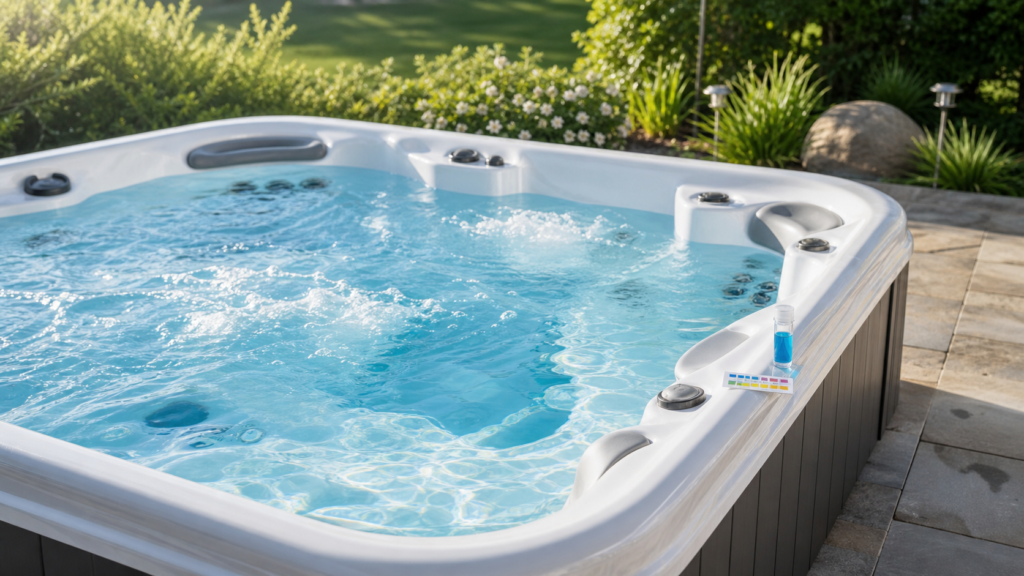
📝 Step 1: Pause the Soaking and Gather Clues
Hold off on soaking while you investigate persistent cloudiness.
Ask yourself:
Did it start after heavier use?
Did it appear after a refill or product addition?
Did you use a different water source?
When was the filter last cleaned or removed?
Have you changed filtration settings?
Is there a flow warning or unusual pump noise?
Write down what stands out. A few notes are much more useful than trying to remember everything after several treatments.
🧪 Step 2: Test Before Adding Anything
Check sanitizer, pH, total alkalinity, and calcium hardness.
Use testing supplies that are in date and suitable for your system. If you use chlorine, check free chlorine—not just total chlorine. If a reading seems unusual or difficult to interpret, ask your dealer to test a sample.
For general reference, the CDC recommends:
💧 Hot Tub Water Check
CDC guidance at a glance
| Reading | CDC hot tub guidance |
|---|---|
| Chlorine |
At least 3 ppm Readings above 10 ppm need attention. |
| Bromine | 4–8 ppm |
| pH | 7.0–7.8 |
💡 A quick reminder: Use the sanitizer row that applies to your system. Follow product labels and your hot tub’s instructions for treatment and reentry.
ppm = parts per million. Source: CDC Healthy Swimming
Follow your system’s instructions and product labels for operating targets, treatment, and reentry requirements.
⚖️ Step 3: Correct What the Results Show
Follow the treatment sequence recommended for your tub and products.
Measure carefully, allow the specified circulation and waiting time, and retest before another adjustment. Never mix chemicals together.
Disinfection depends on several factors, including concentration, pH, temperature, and contact time. HealthLink BC explains why those conditions matter.
If readings look acceptable but problems keep returning, have your dealer review the products you use as well as the results. Some factors affect performance without causing visible cloudiness themselves. For example, cyanuric acid slows disinfection.
Don’t abruptly mix or switch sanitizer systems. Get advice on the appropriate procedure.
🧼 Step 4: Inspect, Clean, and Reinstall the Filter
Follow your manual’s procedure for safely removing the filter.
Check for debris, oily residue, damage, and signs that replacement is due. Use the cleaning method approved for that filter, and avoid household soap.
When reinstalling it, confirm that it fits and secures properly.
Make a note of the cleaning date. “I think I did it recently” gets less dependable once a few busy weeks go by.
🔄 Step 5: Check Filtration and Water Movement
Confirm that:
- The water level matches the manual’s recommendation.
- No flow errors are showing.
- Filtration cycles are running as intended.
- The pump sounds and operates normally.
If you recently changed an economy setting or filtration schedule, include that in your troubleshooting notes.
Persistent equipment errors need attention. Repeated water treatments won’t repair a mechanical fault.
💧 Step 6: Decide Whether Additional Treatment Fits
Should You Shock Cloudy Hot Tub Water?
An oxidizing treatment may be appropriate when organic waste has accumulated.
But shock products differ, and a nonchlorine oxidizer does not automatically replace your sanitizer.
Use a product approved for your system and follow its directions for dosage, circulation, ventilation, testing, and reentry.
What About Clarifier?
A compatible clarifier may help a filter capture certain fine particles.
Check your tub and filter instructions first. Clarifier won’t correct inadequate sanitation, repair equipment, or replace proper water balance.
Use the specified amount. Adding more because the first dose hasn’t finished working can leave you with another variable to untangle.
🦠 Step 7: Investigate Problems That Keep Coming Back
If cloudiness returns quickly despite appropriate care, look beyond the visible water.
Biofilm is a microbial layer that can develop on wet surfaces and protect germs from disinfectants.
Cloudiness alone doesn’t prove biofilm is present. However, recurring problems alongside slime, persistent odors, or difficulty maintaining sanitizer warrant professional advice.
Ask whether the tub needs a manufacturer-approved plumbing-cleaning or decontamination procedure. Simply replacing the water may leave the underlying problem behind.
🛁 Step 8: Know When to Drain and Refill
A water change may make sense when the water is due for replacement or appropriate troubleshooting hasn’t resolved the issue.
Follow your tub’s draining, cleaning, refilling, and startup instructions. Address any source-water or equipment problem before expecting the refill to solve everything.
If it’s freezing outside, plan the job with your dealer. Draining the shell doesn’t necessarily empty the plumbing.
⏳ How Long Does Cloudy Hot Tub Water Take to Clear?
There’s no dependable timeline that applies to every tub.
The cause, treatment, filtration, and starting condition all affect the outcome. Follow the product’s stated timing, then reassess with fresh test results.
If you aren’t seeing the expected improvement, ask for help before repeating doses. Bring your readings, product names, filter-care history, and refill date.
Before soaking again, make sure persistent cloudiness is resolved, equipment is operating properly, and all readings and treatment-specific reentry conditions are satisfied.
✅ Help Keep Cloudy Water From Coming Back
A few steady habits make a difference:
- Test regularly and before soaking.
- Check sanitizer after heavier use.
- Shower beforehand and rinse soap off thoroughly.
- Clean filters on schedule and reinstall them correctly.
- Care for the waterline, shell, and cover as directed.
- Keep up with filtration and water-balance checks.
- Measure products carefully and record additions.
- Replace water according to your system and usage.
Regular testing, disinfection, and adequate filtration are also central to HealthLink BC’s residential hot tub guidance.
You don’t need a complicated tracking system. A notebook or a note on your phone will do.
🧠 Final Thoughts
Cloudy hot tub water is frustrating, especially when you were already looking forward to getting in.
Start with the clues, test the water, and check the filter and circulation. Remember that the fill water and recent product additions may be part of the story, too.
Work through what you find, give treatments their directed time, and ask for help when the problem keeps returning. That’s a much more manageable approach than guessing your way through the chemical shelf.
💬 What Happened Before Your Water Turned Cloudy?
Was it a busy weekend, a fresh refill, a missed filter cleaning, or something else entirely?
Share your experience in the comments, and save this guide for your next water-care check. If you’ve found a simple habit that helps keep your tub clear, we’d love to hear it.
Having a problem with foamy water? Read the Full Report: Hot Tub Foam: Common Causes and How to Fix It
Looking for Another Hot Tub Answer?
Search The Hot Tub Report for more water care, troubleshooting, and buying advice.
A Little More Hot Tub Know-How, Delivered
Get practical water care tips, maintenance advice, and helpful reports delivered right to your inbox. It’s free, and it’s all about making hot tub ownership a little easier.
HOT TUB CONCIERGE SERVICE
Need a Little More Help?
Sometimes a little one-on-one guidance makes all the difference.
Whether you’re shopping for a hot tub, troubleshooting a water problem, or just looking for some expert advice, I’m here to help.
Get personalized guidance during a 30-minute Hot Tub Concierge consultation.
Recommended Reads From The Hot Tub Report
Looking for more helpful advice? Explore these related reports for additional hot tub tips, practical guidance, and answers to common ownership questions.
💬 Join the Conversation!
Have a question, a helpful tip, or a hot tub experience to share? Drop a comment below! We’re here to help each other enjoy better hot tub ownership.
Please keep comments friendly, helpful, and on topic.