- John Gill
- No Comments
Weekly Hot Tub Maintenance Made Easy: Chlorine, Bromine, Salt & @Ease
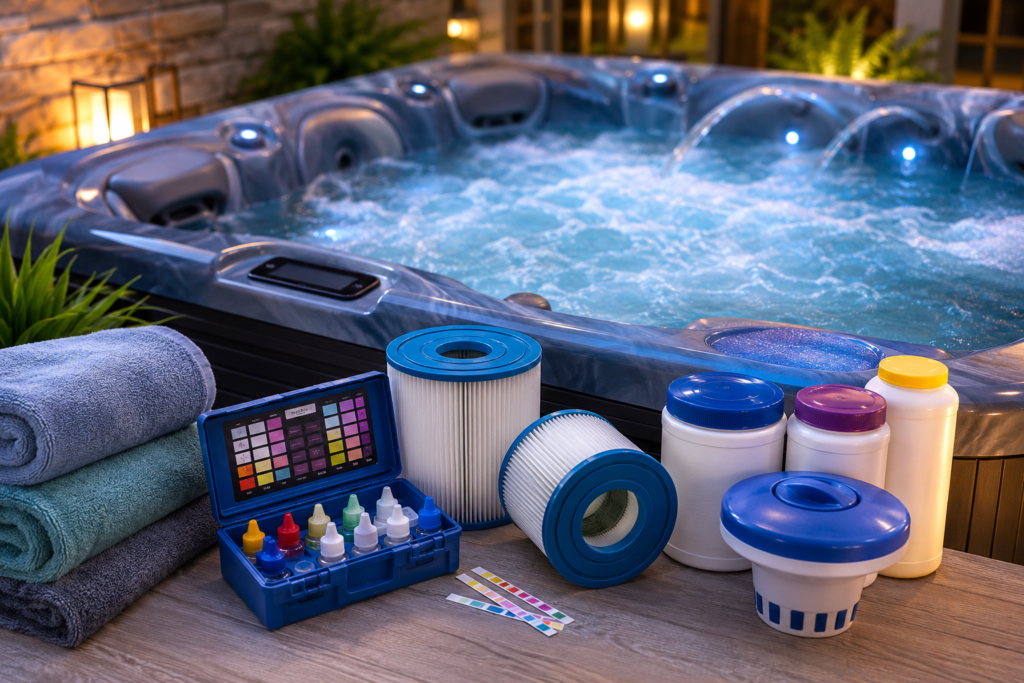
Weekly Hot Tub Maintenance Made Easy: A Sanitizer‑by‑Sanitizer Guide
Keeping your hot tub clean and balanced doesn’t have to eat up your whole Saturday. Most of the work comes down to a short weekly routine — and exactly what that routine looks like depends on which sanitizer system you’re running. Below, we break down weekly maintenance for the four most common setups: chlorine, bromine, saltwater, and Frog @Ease.
Key Takeaways From This Report
- The universal weekly checklist every hot tub owner should follow
- How weekly care changes for chlorine, bromine, saltwater, and Frog @Ease systems
- Why weekly shock treatments matter (even with ozone or mineral systems)
- How temperature checks, enzymes, and clarifiers improve water clarity
- The role of calcium hardness and why it prevents foaming and equipment damage
- How to spot early signs of ozone failure, filter wear, or cover issues
- The simple routine that keeps water clear and equipment running smoothly
Before diving into the specifics, here’s the weekly baseline every hot tub owner should follow, regardless of sanitizer type:
📅 Universal Weekly Checklist (All Sanitizers)
- Test your water (sanitizer, pH, total alkalinity).
- Adjust levels as needed.
- Check water level and top off so the pump doesn’t run dry.
- Verify your temperature — accidental bumps or heater issues can waste energy or stress equipment.
- Rinse or inspect your filter; deep clean monthly or quarterly depending on usage.
- Wipe the waterline to prevent scum buildup.
- Optional weekly boosters:
- Enzymes to reduce scum lines and break down oils and other organic waste.
- Calcium hardness awareness:
Not a weekly test, but keep CH between 150–250 ppm to prevent foaming, scaling, and heater damage.
With that baseline in place, here’s how each sanitizer type changes your weekly to‑do list.
💥 Chlorine
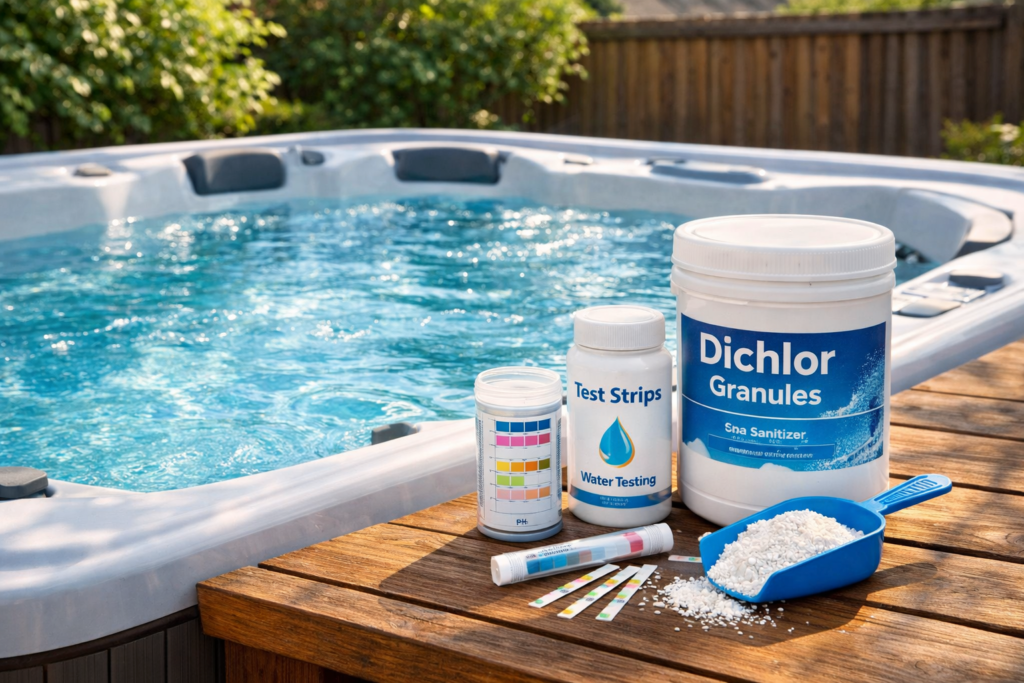
Chlorine is the most common hot tub sanitizer because it’s affordable, fast‑acting, and easy to find. On a weekly basis, chlorine users should:
- Test chlorine levels and keep them in the 3–5 ppm range.
- Shock weekly with a non‑chlorine shock (potassium monopersulfate) to oxidize contaminants.
- Add chlorine granules as needed to maintain a consistent residual.
- Monitor pH and alkalinity and adjust as needed.
- Keep total alkalinity between 80–120 ppm, since swings make chlorine less effective and harder to stabilize.
Chlorine tends to fluctuate more than other sanitizers, especially with frequent use, so weekly testing is the minimum — twice a week is better if your tub sees a lot of soakers.
🔵 If You’re Using Ozone with Chlorine
Ozone systems inject a secondary oxidizer into the water, reducing how hard your chlorine has to work.
- You can typically maintain a lower chlorine residual (0.5–1 ppm) since ozone handles a good share of oxidation.
- Still shock weekly — ozone reduces chlorine demand but doesn’t replace the need to break down bather waste.
🏵️ Bromine
Bromine is a popular alternative to chlorine, especially for owners sensitive to chlorine’s smell or for tubs kept at higher temperatures, since bromine holds up better in hot water. Weekly bromine maintenance includes:
- Test bromine levels and keep them in the 3–5 ppm range.
Check and refill your bromine feeder (floating dispenser or inline). - Shock weekly with non‑chlorine shock to oxidize contaminants without disrupting your bromine reserve.
- Monitor pH and alkalinity — bromine is slightly more forgiving than chlorine but still needs proper balance.
Bromine builds up a reserve in the water over time, so once your feeder is dialed in, weekly maintenance is often more about topping off and shocking than constant adjustment.
🌊 Salt (Saltwater Chlorine Generator)
Saltwater systems use a salt cell to generate chlorine on demand, giving you the sanitizing power of chlorine with a softer feel and less manual dosing. Weekly tasks include:
- Test salt level with dedicated salt strips and compare to your system’s target range.
- Test chlorine output — still aim for 3–5 ppm.
- Inspect the salt cell for scale buildup; rinse lightly if needed.
- Shock after parties or heavy use.
- Check pH and alkalinity — salt systems tend to push pH upward over time.
🐸 Frog @Ease
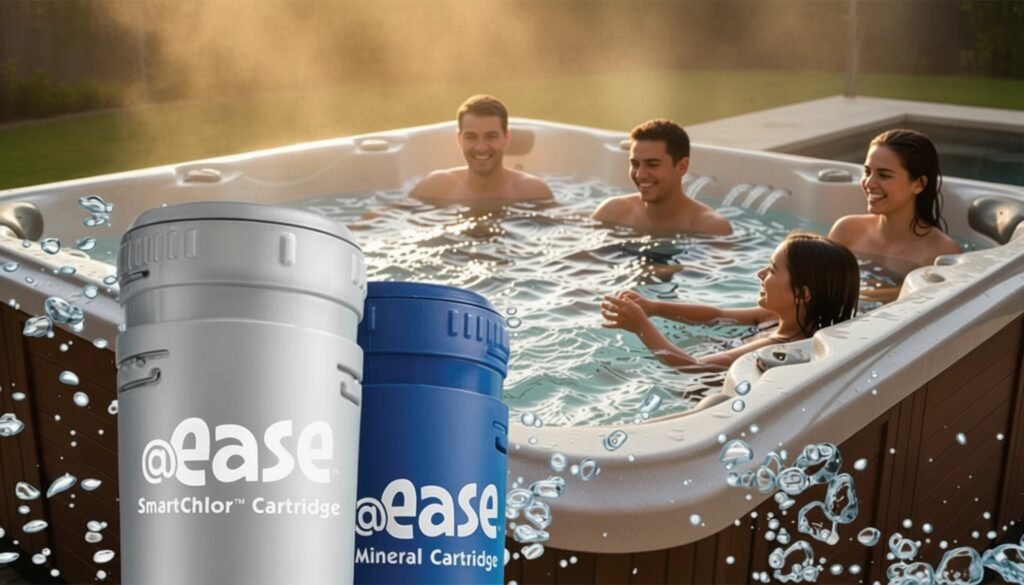
The Frog @Ease system uses a mineral cartridge alongside a lower‑dose chlorine (SmartChlor) cartridge to reduce the amount of sanitizer you need to add manually. Weekly maintenance looks a little different:
- Test sanitizer levels with a frog @ease test strip— @Ease typically runs at 0.5–1.0 ppm because minerals handle part of the job.
- Check SmartChlor status using Frog @Ease test strips. Cartridges last about a month.
- Shock weekly with non‑chlorine shock — essential because @Ease runs at low sanitizer levels.
- Check pH and alkalinity to ensure minerals + SmartChlor perform correctly.
🔵 If You’re Using Ozone with Frog @Ease
Many Frog @Ease systems are paired with an ozonator.
If that’s your setup:
- Confirm the ozonator runs during filter cycles.
- With ozone active, you can often keep sanitizer levels at the lower end of the @Ease range.
- Still shock weekly — ozone and minerals reduce workload but don’t replace oxidation.
- Watch for cloudy water or rising sanitizer demand — often the first sign the ozone bulb or CD cell needs replacing.
- Replace ozone components every 6–12 months depending on usage.
🛠️ Other Components to Check
⚗️ Ozone Systems
- Inspect the ozone injector and tubing for cracks or disconnection every 6 months.
- Replace the ozone bulb or CD cell per the manufacturer’s recommendations as output fades gradually
🛡️ Covers
- Wipe down the underside to prevent mold.
- Condition vinyl covers to prevent drying and cracking.
🌀 Filters
- Inspect for wear, cracks, and the center band.
- A degraded band allows pleats to stick together, reducing filtration efficiency.
🏁 The Bottom Line
The Hot Tub Report Trusted Links & References
Recommended Reads from The Hot Tub Report
💬 Join the Conversation!
Have a question, tip, or hot tub story to share? Jump in! The Hot Tub Report is all about helping each other get more enjoyment out of hot tub ownership.
Just keep it friendly, helpful, and on topic. No spam, personal attacks, or inappropriate content, please. Comments that don’t fit the spirit of the community may be removed.
Be helpful. Be respectful. And happy hot tubbing! 🛁