- John Gill
- No Comments
110V vs 220V Hot Tubs: Which Delivers the Better Experience
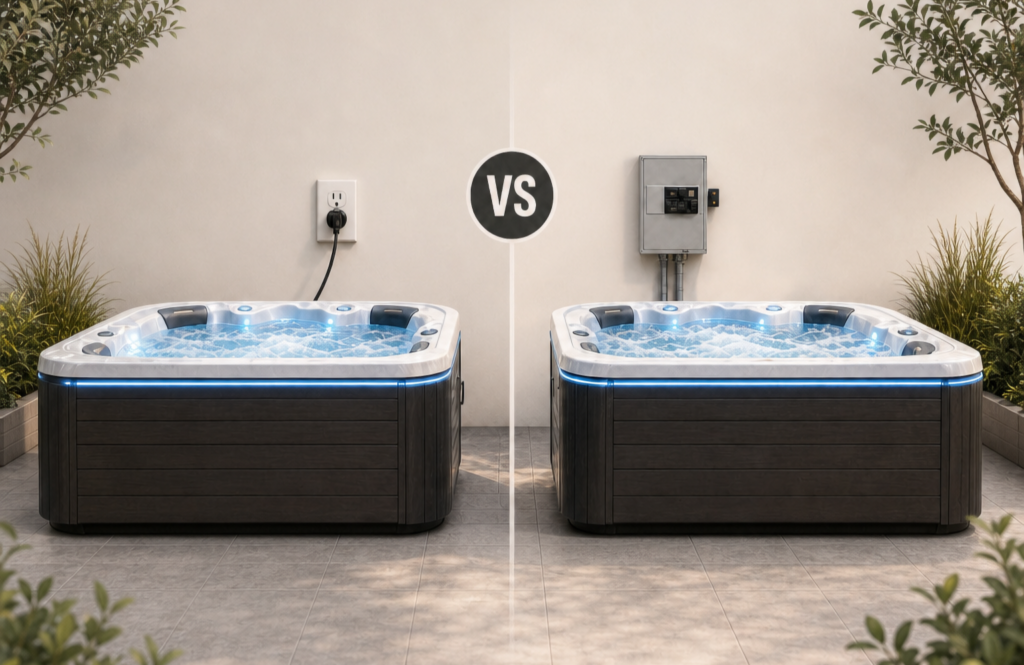
110V vs. 220V Hot Tubs: Pros, Cons, Costs & Cold‑Climate Performance
If you’re trying to decide between a 110‑volt plug‑and‑play hot tub and a 220‑volt hardwired hot tub, our guide explains every difference — heating speed, jet performance, energy usage, installation cost, winter reliability, and long‑term ownership.
What This Report Makes Simple
- The true performance differences between 110‑volt and 220‑volt hot tubs
- How voltage affects jet strength, massage quality, and overall hydrotherapy
- Why heating speed and temperature recovery matter for daily use
- How each voltage impacts energy consumption and monthly operating costs
- What voltage performs better in cold climates like the Northeast
- Installation requirements, electrical considerations, and long‑term ownership factors
🔌 What’s the Difference Between 110V and 220V Hot Tubs?
A hot tub’s voltage determines how much electrical power it can use at one time.
More power means:
- faster heating
- stronger jets
- better temperature recovery
- more reliable winter performance
110v VS 220v A Side by Side Comparison
110V Hot Tubs (Plug‑and‑Play)
- Plug into a standard outlet
- No electrician required
- Lower‑powered heater and pump
- Best for small spas and casual use
VS
220V Hot Tubs (Hardwired)
- Requires a dedicated electrical line
- Must be installed by an electrician
- Supports larger heaters and multiple pumps
- Best for full‑size spas and frequent use
💦 Jet Power & Massage Experience
Jet performance is one of the biggest differences homeowners notice.
110V Jet Experience
- One pump
- Lower water flow
- Gentle massage
- Jets weaken with multiple users
- Heater shuts off during high‑jet use
VS
220V Jet Experience
- One or two pumps
- Strong, consistent pressure
- Deep‑tissue hydrotherapy
- Jets stay powerful with multiple users
- Heater runs while jets are on
If you want the “showroom jet experience,” 220V is the only way to get it.
🌡️ Heating Speed & Temperature Recovery
This surprises most homeowners.
110V Heating
- 1 kW heater
- Gains 1 degree per hour
- Temperature drops during long sessions
- Slow recovery
- Struggles in cold climates
VS
220V Heating
- 4–5.5 kW heater
- Gains 3-5 degrees per hour
- Maintains heat during use
- Fast recovery
- Reliable in freezing weather
🔋 Energy Usage: Which Costs More to Run?
Heating performance affects daily enjoyment and winter reliability.
110V Energy Behavior
- Draws less power
- Runs longer to heat
- Heater shuts off during jet use
- Higher winter energy bills
VS
220V Energy Behavior
- Draws more power
But heats faster
Runs fewer hours
More efficient for full‑size spas
Result: A 220V spa often costs less per month to operate.
💰 Installation Cost vs. Long‑Term Cost
110V Installation
- No electrician
- No permit
- Lowest upfront cost
- Best for renters or temporary setups
VS
220V Installation
- Requires electrician
- $500–$1,200 typical
- Permanent installation
- Lower long‑term operating cost
❄️ Cold Climate Performance (Critical for the Northeast)
110V in Winter
- Slow heating
- Temperature drop during use
- Higher energy usage
- Not ideal for January/February
VS
220V in Winter
- Maintains heat
- Strong jets
- Lower energy usage
- Best for year‑round soaking
🧱 Which Voltage Fits Your Lifestyle?
Choose 110V If You Want:
- Easy setup
- Lower upfront cost
- A small spa
- Occasional use
- Portability
VS
Choose 220V If You Want:
- Strong jets
- Fast heating
- Reliable winter performance
- Lower long‑term cost
- A full‑size spa
🏁 Final Recommendation
Choosing between a 110‑volt plug‑and‑play hot tub and a 220‑volt hardwired spa affects everything from jet strength to heating speed, energy usage, and winter reliability.
A 110V spa offers easy setup and the lowest upfront cost, but it heats slowly, delivers gentler jets, and struggles to maintain temperature in cold climates.
A 220V spa requires an electrician and a dedicated line, yet provides faster heating, stronger and more consistent jet performance, better temperature recovery, and lower long‑term operating costs — especially for full‑size spas or year‑round use.
For casual soaking or small portable tubs, 110V works well. For powerful hydrotherapy, reliable winter performance, and efficient daily use, 220V is the better long‑term choice.
The Hot Tub Report Trusted Links & References
Recommended Reads from The Hot Tub Report
💬 Join the Conversation!
Have a question, tip, or hot tub story to share? Jump in! The Hot Tub Report is all about helping each other get more enjoyment out of hot tub ownership.
Just keep it friendly, helpful, and on topic. No spam, personal attacks, or inappropriate content, please. Comments that don’t fit the spirit of the community may be removed.
Be helpful. Be respectful. And happy hot tubbing! 🛁