The 10 Most Overrated Hot Tub Features
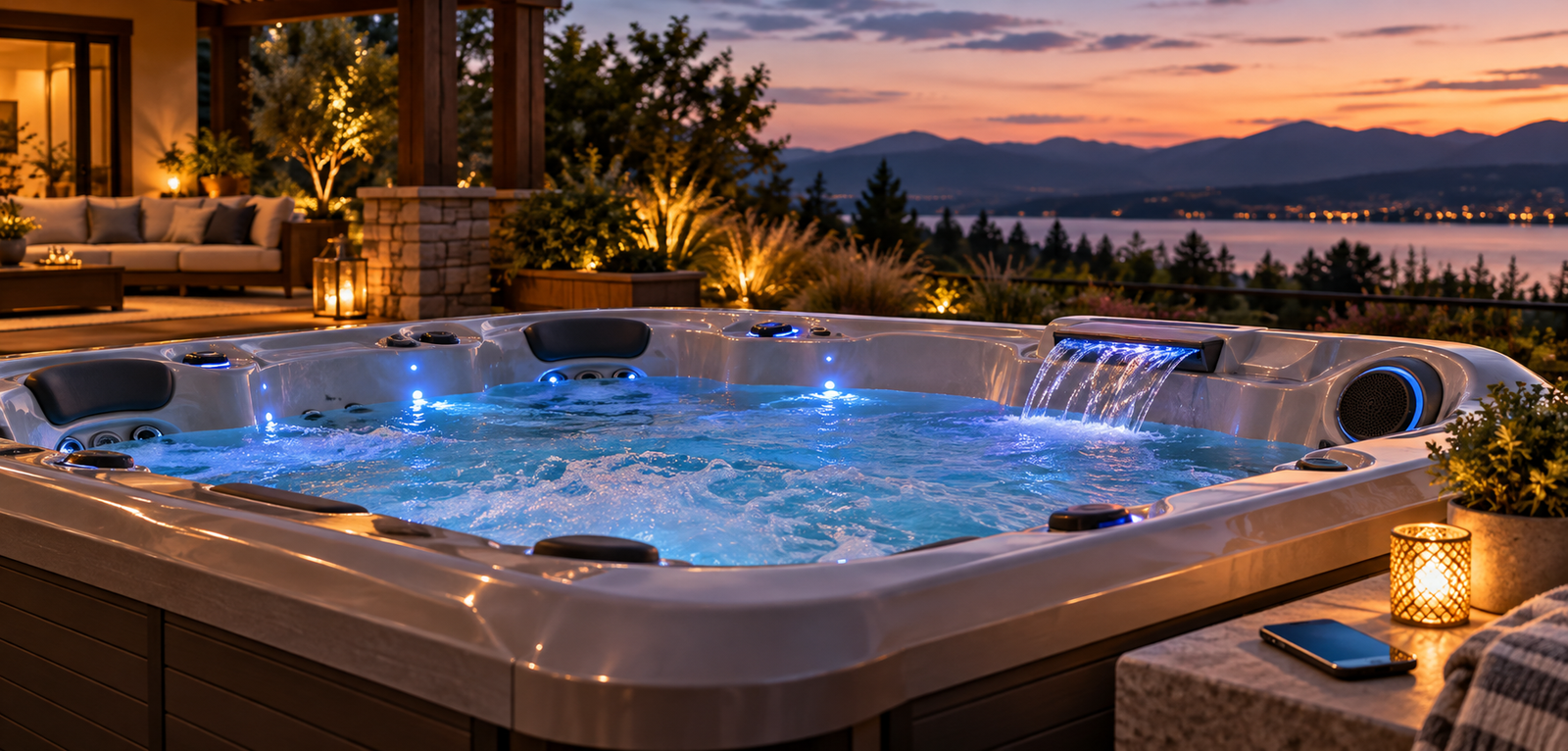
Which Hot Tub Features Are Worth Your Money?
Shopping for a hot tub should be exciting. After all, you’re looking for something that’s going to help you relax, unwind, and enjoy a little more quality time at home.
But if you’ve started comparing hot tubs, you’ve probably noticed something.
There’s an awful lot of information coming at you.
Jet counts, horsepower, waterfalls, LED lighting, Bluetooth speakers, automated water-care systems, Wi-Fi connectivity—the list goes on.
And somehow, every manufacturer seems to have that one feature you absolutely can’t live without.
Now, I’ll be the first to admit it. I’m a bit of a tech nut. I love gadgets, new technology, and clever features. But there’s one thing I always ask myself:
Does this actually make the experience better?
Because having the latest technology doesn’t necessarily mean you’re getting something useful.
I’ve spent more than 20 years helping people shop for hot tubs, and I’ve learned that some of the features that get the most attention in the showroom aren’t necessarily the ones owners appreciate most a few years down the road.
So let’s take a look at ten hot tub features that I think sometimes get more attention than they deserve—and how to determine whether they’re worth paying for.
📋 What You'll Learn in This Report
Why more jets and bigger pumps don’t automatically mean better massage performance.
What separates a great built-in sound system from one that disappoints.
Why decorative waterfalls can become a water-care concern when rarely used.
When lighting and touchscreen controls actually improve your hot tub experience.
What smart water monitors and automated water-care systems can—and can’t—do.
Why Wi-Fi connectivity can be particularly valuable during the winter.
How to determine whether a feature is genuinely worth the investment.
🤔 First, What Makes a Hot Tub Feature Overrated?
Before we get started, I want to make something clear.
I’m not suggesting that the features we’re about to discuss are bad, unnecessary, or something you should avoid.
In fact, I like quite a few of them.
A feature becomes overrated when buyers give it more importance than the actual benefit it provides.
Think of it this way.
A well-designed sound system might be one of your favorite features if you enjoy listening to music while relaxing.
But if the speakers sound terrible, what exactly did you pay extra for?
The same goes for automated water care, Wi-Fi connectivity, or fancy lighting.
💡 Here's the important part: A feature should earn its place in your hot tub by making ownership more enjoyable, convenient, or dependable—not simply by looking impressive on a specification sheet.
With that in mind, let’s start with one of the biggest selling points in the hot tub industry.
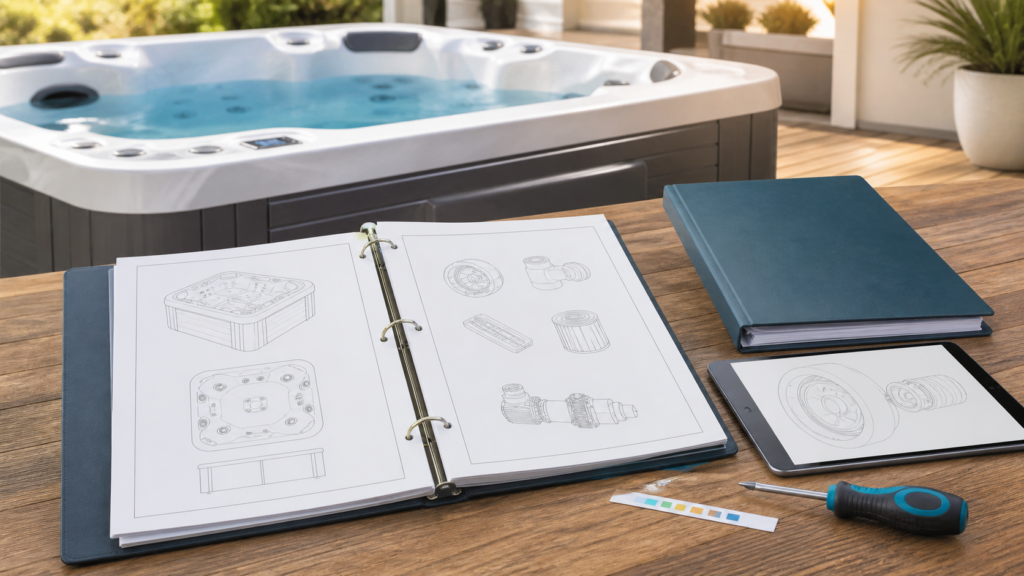
💦 1. Jet Count: More Jets Doesn't Mean a Better Massage
If there’s one number that gets a lot of attention when comparing hot tubs, it’s the jet count.
One hot tub has 35 jets. Another has 50. And the model across the showroom has 75.
So naturally, the one with 75 jets must give you the best massage, right?
Not necessarily.
The number of jets tells you very little about the quality of the massage you’re going to experience.
What matters much more is how those jets are designed, where they’re positioned, and how effectively the plumbing and pumps deliver water to them.
A hot tub with fewer, well-positioned jets can provide a much better massage than one with twice as many jets that aren’t particularly effective.
And don’t overlook adjustability.
Being able to control the intensity of your massage can be more useful than simply having more jets.
✅ What to look for: Jet placement, massage variety, adjustability, and how the jets feel against your body.
💬 John's Take: You aren't buying a collection of jets. You're buying a relaxing, comfortable massage experience. Whenever possible, wet-test the hot tub before making your decision.
⚙️ 2. Pump Horsepower: Bigger Isn't Always Better
Horsepower is another specification that can make one hot tub sound more impressive than another.
You’ll see advertisements featuring large horsepower numbers, multiple pumps, and claims about powerful massage performance.
But here’s something buyers don’t always realize.
Not all horsepower ratings tell the same story.
Some specifications emphasize peak or maximum horsepower rather than the continuous operating horsepower of the pump.
And even when you’re comparing legitimate operating ratings, pump horsepower is only one piece of the puzzle.
Plumbing design, flow restrictions, jet configuration, and overall hydraulic efficiency all influence how a hot tub performs.
A poorly designed system with a powerful pump isn’t necessarily going to provide a better massage than a well-engineered system with a smaller pump.
Think about it like a car.
Having a bigger engine doesn’t automatically mean you’re getting a better vehicle.
✅ What to look for: Actual jet performance, efficient plumbing design, and how comfortably the system delivers its massage.
💡 The bottom line: Don't buy horsepower. Buy performance.
🎵 3. Built-In Audio Systems: Not All Hot Tub Sound Systems Are Created Equal
I have to admit, I like having music available when I’m relaxing in a hot tub.
And a built-in sound system can be a pretty appealing feature.
But here’s something I’ve learned over the years.
Not all hot tub audio systems are created equal.
Some manufacturers have put considerable thought and engineering into their entertainment systems.
They use components designed for the demanding environment surrounding a hot tub, with sound quality that can be surprisingly good.
And when the system is properly integrated, you get great sound without having to worry about finding a place for a portable speaker.
Other systems?
Well, let’s just say they look a lot better on the specification sheet than they sound in person.
Poor-quality speakers, weak bass, distortion at higher volumes, and questionable long-term durability can turn an exciting feature into a disappointment.
And remember, a hot tub is a pretty challenging environment for electronic equipment.
There’s moisture, humidity, temperature changes, and exposure to chemicals.
A well-engineered system needs to be designed with those conditions in mind.
Then there’s the question of serviceability.
If a speaker or electronic component fails five years down the road, can it be repaired or replaced without a major expense?
For some buyers, an outdoor-rated portable Bluetooth speaker may be a perfectly reasonable alternative.
But I wouldn’t automatically dismiss a good integrated audio system.
When it’s done right, it can genuinely improve the hot tub experience.
✅ What to look for: Sound quality, component durability, weather resistance, ease of operation, and long-term serviceability.
💬 John's Take: If audio is important to you, ask the dealer to demonstrate the system. Listen to it at different volume levels. A good hot tub sound system should sound good—not just look impressive in the brochure.
🌊 4. Waterfalls and Decorative Water Features: Pretty, But Will You Use Them?
Here’s something buyers don’t always think about.
When a waterfall isn’t used regularly, water can remain sitting in its plumbing. Depending on the design, that lack of circulation can create conditions that encourage biofilm growth.
But not all waterfall systems are designed the same way.
Some are connected to a dedicated circulation pump, while others operate through the jet pumps. Certain designs may even allow a small amount of water to continue flowing when the waterfall control is turned off.
That doesn’t necessarily mean every section of the plumbing is being flushed.
✅ What to look for: Ask your dealer how the waterfall is plumbed, whether water moves through the supply line when the feature is turned off, and how often the manufacturer recommends operating it.
💡 My advice: If your hot tub has a waterfall, don't forget about it. Running it regularly according to the manufacturer's instructions helps exchange water in plumbing that might otherwise receive little circulation.
💡 5. Elaborate LED Lighting Packages: How Much Lighting Do You Really Need?
Let me start by saying that I actually like LED lighting in hot tubs.
A little underwater lighting can create a wonderful atmosphere, especially when you’re relaxing outdoors in the evening.
It can also help illuminate steps and seating areas.
But there’s a difference between lighting that genuinely enhances your hot tub experience and an elaborate system that’s more impressive in a showroom than it is at home.
Do you really need dozens of different lighting programs?
Maybe.
If you enjoy entertaining or creating different moods around your hot tub, those extra options might be something you’ll appreciate.
On the other hand, you might discover that after experimenting with all the different settings, you end up using the same two or three colors most of the time.
And there’s nothing wrong with that.
✅ What to look for: Good illumination, attractive lighting, easy controls, reliability, and whether the available options create the atmosphere you want.
You don't necessarily need a backyard light show to enjoy a relaxing evening in your hot tub.Sometimes a soft blue glow is all it takes.
🖥️ 6. Oversized Touchscreens and Complicated Controls: Technology Should Make Things Easier
Technology has made its way into just about everything we own, and hot tubs are no exception.
Today’s control systems can offer colorful displays, touchscreen menus, programmable schedules, and access to numerous settings.
And some of these systems are excellent.
But more technology doesn’t always mean greater convenience.
If changing the temperature or operating your jets requires navigating through several menus, you might find yourself wishing for a simple button.
There are also practical considerations.
How easy is the screen to read in bright sunlight? Can you operate it with wet fingers? And what happens if that expensive control panel needs replacing?
A well-designed touchscreen can be a pleasure to use.
A poorly designed one can make even the simplest tasks frustrating.
✅ What to look for: Intuitive operation, readable displays, reliable controls, and convenient access to the settings you use most.
💡 Remember: Technology should simplify the experience—not turn adjusting the temperature into a computer lesson.
🛋️ 7. Advertised Seating Capacity: More Seats Doesn’t Mean More Comfort
Here’s something I think deserves a lot more attention when shopping for a hot tub.
Seating.
You’ll see hot tubs advertised as five-person, six-person, or even eight-person models. Some have deep therapy seats, full-body loungers, cool-down seats, and all kinds of specialized seating arrangements.
Sounds impressive, doesn’t it?
But here’s the question.
Just because a hot tub has seven seats, does that mean seven adults can actually sit comfortably in it?
Not necessarily.
🛁 Not All Hot Tub Seats Are Created Equal
Hot tub manufacturers design their seating in different ways.
Some offer deep, contoured seats that surround your body with jets. Others provide more open seating arrangements that allow you to move around more freely.
And then there are loungers.
A full-body lounger can be one of the most relaxing places in a hot tub. But it can also be one of the most disappointing features if it doesn’t fit your body properly.
Ever sit in a lounger and feel yourself floating right out of it?
That’s more common than you might think.
Your height, body shape, and natural buoyancy all affect how comfortably you’ll sit in a particular seat.
The same applies to seat depth.
A seat that’s perfect for someone who’s six feet tall might leave a shorter person struggling to keep their shoulders above the water.
👥 Seating Capacity vs. Actual Usable Space
Another thing to consider is how much room everyone has.
A hot tub might technically have seating for seven people, but that doesn’t mean seven adults will have enough legroom to relax comfortably.
Footwell space is especially important.
If everyone’s feet are constantly bumping into each other, that spacious-looking hot tub can start feeling pretty crowded.
And here’s something else worth considering.
How many people are actually going to use your hot tub regularly?
If it’s primarily you and your spouse, comfortable seating for two or three people might be far more valuable than squeezing in extra seats you’ll rarely use.
✅ What to look for: Comfortable seat depth, proper back support, adequate legroom, useful seating variety, and enough space for the people who will actually use the hot tub.
💬 John's Take: Don't buy a hot tub based on how many people the brochure says it holds. Buy one based on how comfortably it fits the people who will be using it. And whenever possible, wet-test the hot tub before making your decision. You'll learn more in 15 minutes sitting in the water than you will from an hour of looking at seating diagrams.
🧪 8. Smart Water Monitors: Helpful Technology, But Know Their Limitations
Smart water monitors are becoming an increasingly interesting part of hot tub technology.
The idea of having technology monitor certain water conditions and provide information about what’s happening inside your hot tub is appealing.
Instead of constantly wondering what’s happening with your water chemistry, a monitoring system may provide readings, trends, or alerts that help you stay informed.
And there’s real value in that.
But I think it’s important to understand exactly what you’re getting.
Not all water monitors measure the same things.
Some measure pH and oxidation-reduction potential, or ORP, which can provide information about the water’s oxidizing conditions.
But ORP is not the same as a direct measurement of free chlorine or bromine.
Other systems may use sensors designed to measure specific water-care parameters.
Accuracy, calibration requirements, and replacement costs can vary considerably.
And even with a sophisticated monitor, there may be important water-balance factors that still require manual testing.
The biggest misconception is believing that installing a water monitor means you no longer need to pay attention to your water.
That’s simply not the case.
A water monitor doesn’t necessarily know everything that’s happening in your hot tub.
And depending on the system, the information it provides may require some interpretation.
✅ What to look for: What the monitor actually measures, how accurate and dependable those measurements are, what ongoing maintenance is required, and whether the information helps you make better water-care decisions.
💬 John's Take: I like the idea of having more information about my hot tub water. But information is only useful when it's reliable and you understand what it's telling you. Smart water monitoring should support good water-care habits, not replace them.
🧴 9. Automated Water-Care Systems: Less Work Doesn't Mean No Work
This is one of the areas where I think buyers can become especially confused.
Manufacturers offer a variety of systems designed to simplify hot tub water care.
You’ll hear about saltwater chlorine generation, cartridge-based sanitizer systems, ozone, UV, and automated dosing technology.
And many of these systems provide genuine benefits.
But they don’t all work the same way, and they don’t all perform the same functions.
For example, a saltwater chlorine generation system produces chlorine from dissolved salt.
It isn’t a chlorine-free system.
Ozone and UV can provide supplemental treatment, but they don’t replace the need to maintain an appropriate sanitizer residual in the hot tub water.
Cartridge-based systems may simplify sanitizer delivery, but cartridges still need monitoring and replacement.
Some advanced systems can measure certain water conditions or deliver deliver a dose of chemicals at the touch of a button.
That’s useful technology.
But here’s what I want buyers to understand.
There is no water-care system that completely eliminates the responsibilities of hot tub ownership.
You’ll still need to maintain proper water balance, check sanitizer levels, clean filters, and replace your water when necessary.
And depending on the system, there may be replacement cartridges, sensors, salt cells, or other ongoing expenses to consider.
I’ve always been a believer in finding ways to make hot tub maintenance easier.
After all, the less time you spend taking care of your hot tub, the more time you have to enjoy it.
But there’s an important difference between simplifying water care and eliminating it.
 What to look for: How the system actually works, what maintenance is still required, and how much it costs to operate over time.
John's Take: I'm a big believer in making hot tub water care as simple as possible. But simple doesn't necessarily mean automatic. The best water-care system is one that helps you consistently maintain clean, properly balanced water without making ownership unnecessarily complicated.
📱 10. Wi-Fi and Smartphone Apps: Look Beyond Remote Controls
I like being able to control things from my phone, and hot tubs are no exception. Adjusting the temperature or checking settings without stepping outside is convenient. But before paying extra for connectivity, I’d want to know what else the system can do.
For me, the bigger benefit is getting a notification when something may need attention—especially during a Northeast winter.
Imagine you’re away from home in January and the hot tub’s circuit breaker trips. A system that alerts you to lost communication could give you a reason to check on the spa before you would otherwise notice a problem.
That alert doesn’t necessarily mean the hot tub has lost power. It could also mean your Wi-Fi or internet connection is down. Either way, knowing something has changed can be useful.
The important part is understanding how the particular system works. An app that lets you operate the jets may not provide fault notifications or communication-loss alerts. And if your home loses both power and internet, whether you receive an alert depends on how the monitoring service is designed.
Before buying, ask:
Will it notify me if it loses communication with the hot tub?
Which faults or operating problems can trigger an alert?
What happens to notifications if the spa loses power or my home’s internet goes down?
Are there subscription fees or additional equipment requirements?
For a vacation home or a hot tub used through cold winters, those answers may matter much more than being able to change the lighting from your couch. Remote monitoring can help you spot a problem, but someone still needs to respond.
What to look for: Useful alerts, clear information about what the system monitors, and an explanation of what happens during power or internet outages.
John’s Take: Changing the temperature from my living room is convenient. Getting a heads-up that my hot tub might need attention while I’m away is the feature I’d be more interested in paying for.
📊 Quick Comparison: Hot Tub Features vs. What Really Matters
Here’s a simple way to look at the ten features we’ve discussed.

| Feature Getting Attention | What to Look at Instead |
|---|---|
| High jet counts | Effective massage and proper jet placement |
| Big horsepower numbers | How the jets actually feel and perform. |
| Built-in audio | Sound quality, durability, and serviceability |
| Decorative waterfalls | Regular water circulation and practical value |
| Elaborate LED packages | Useful, reliable lighting |
| Oversized touchscreens | Simple, dependable controls |
| Advertised seating capacity and loungers | Actual seating comfort, ergonomics, and usable space |
| Smart water monitors | Accurate, actionable water information |
| Automated water care | Reliable sanitation and manageable maintenance |
| Wi-Fi and smartphone apps | Useful monitoring and meaningful alerts |
I’m not telling you to avoid any of these features.
I’m suggesting that you look past the marketing and ask whether they’re really going to make a difference in your everyday hot tub experience.
That’s where smart buying decisions begin.
✅ Five Questions to Ask Before Paying Extra for a Hot Tub Feature
The next time you’re comparing hot tubs, I want you to ask yourself a few simple questions.
1. Am I Really Going to Use This Feature?
It’s easy to get excited about something in a showroom.
But picture yourself using your hot tub six months from now.
Will this feature still matter?
2. Does It Improve My Comfort, Relaxation, Convenience, or Peace of Mind?
If it makes your hot tub experience noticeably better, that’s a good reason to consider it.
And remember, some features provide value beyond entertainment.
A monitoring system that alerts you to a potential problem may be worth more than something you use every day.
3. Is It Well-Designed and Built to Last?
There’s a big difference between a feature that’s thoughtfully engineered and one that’s included just to make the specification sheet look impressive.
Ask how it works, what makes it different, and whether the manufacturer has a good track record with that technology.
4. What Will It Cost to Maintain or Repair?
Some features involve additional electronics, sensors, cartridges, or replacement components.
Understand the long-term cost, not just the purchase price.
5. Would I Rather Spend That Money on Something More Important?
Maybe that upgraded sound system or connected monitoring package is worth it to you.
Or maybe you’d be happier putting that money toward a better-built hot tub, a higher-quality cover, or another feature that improves long-term ownership.
There’s no universal answer.
💡 The important thing is making the choice based on your priorities—not somebody else’s sales pitch.
🧠 Final Thoughts
After more than two decades in the hot tub business, I’ve seen some pretty impressive features come and go.
And I’ll tell you something.
The features that get the most attention in the showroom aren’t always the ones that make people happy they bought a hot tub.
A great sound system, an effective water-care system, or a connected monitor that gives you peace of mind can absolutely be worth having.
But there’s a difference between technology that provides real benefits and features that simply look impressive in a brochure.
What really matters is how you feel about your hot tub after you’ve owned it for a while.
Is it comfortable? Do you enjoy the massage? Is it easy to maintain? And do the features you paid for actually make your experience better?
Because at the end of the day, that’s what this is really about.
Not the number of jets.
Not how many horsepower are printed on the brochure.
And certainly not how many different colors your hot tub can display.
It’s about enjoying warm water, relaxing after a long day, spending time with family and friends, and having a place where you can escape the noise for a little while.
That doesn’t mean you shouldn’t enjoy the extras.
If there’s a feature you love and it’s worth the investment to you, absolutely enjoy it.
Just make sure you’re paying for something that adds value to your hot tub experience.
The best hot tub isn’t necessarily the one with the most features. It’s the one you’ll still love using years after you bring it home.
And that’s a buying decision worth getting right.
🔍 So, What Hot Tub Features Are Actually Worth Paying For?
Now that we’ve looked at ten hot tub features that sometimes get more attention than they deserve, let’s talk about the features that really make a difference.
Because while some bells and whistles are nice to have, others can make your hot tub more comfortable, easier to maintain, more energy-efficient, and more enjoyable for years to come. Coming Next: Hot Tub Features That Actually Matter (And Are Worth Paying For)
We’ll explore the features worth investing in, what to look for when comparing hot tubs, and how to make a buying decision you’ll feel good about long after delivery day.
Read the Full Report (Coming in the Next Report)
The best hot tub isn’t the one with the most features. It’s the one with the right features for you.
Looking for Another Hot Tub Answer?
Search The Hot Tub Report for more water care, troubleshooting, and buying advice.
Trusted Links & References
A Little More Hot Tub Know-How, Delivered
Get practical water care tips, maintenance advice, and helpful reports delivered right to your inbox. It’s free, and it’s all about making hot tub ownership a little easier.
HOT TUB CONCIERGE SERVICE
Need a Little More Help?
Sometimes a little one-on-one guidance makes all the difference.
Whether you’re shopping for a hot tub, troubleshooting a water problem, or just looking for some expert advice, I’m here to help.
Get personalized guidance during a 30-minute Hot Tub Concierge consultation.
Recommended Reads From The Hot Tub Report
Looking for more helpful advice? Explore these related reports for additional hot tub tips, practical guidance, and answers to common ownership questions.
💬 Join the Conversation!
Have a question, a helpful tip, or a hot tub experience to share? Drop a comment below! We’re here to help each other enjoy better hot tub ownership.
Please keep comments friendly, helpful, and on topic.