
Mastering Alkalinity
Mastering Alkalinity

If you’re new to hot tubbing, it’s easy to assume alkalinity and pH are the same thing — or that they don’t matter much. Even seasoned hot tub owners sometimes struggle to understand the difference.
This guide breaks down what alkalinity really is, why it matters, and how to correct it when things go wrong
By the end, you’ll know:
- How to adjust alkalinity in a hot tub
- What happens when alkalinity is too low or too high
- Whether chlorine affects alkalinity
- How to lower alkalinity without crashing pH
- Whether baking soda reduces alkalinity
- Whether to adjust alkalinity or chlorine first
- What causes high alkalinity in the first place
💧 What Is Alkalinity?
Total Alkalinity refers to the concentration of alkaline minerals — primarily calcium, magnesium, and bicarbonates — that buffer your pH and prevent rapid swings. Think of alkalinity as your hot tub’s shock absorber. When it’s in range, your pH stays stable, your sanitizer works properly, and your water stays clear.
🧪 Testing for Alkalinity
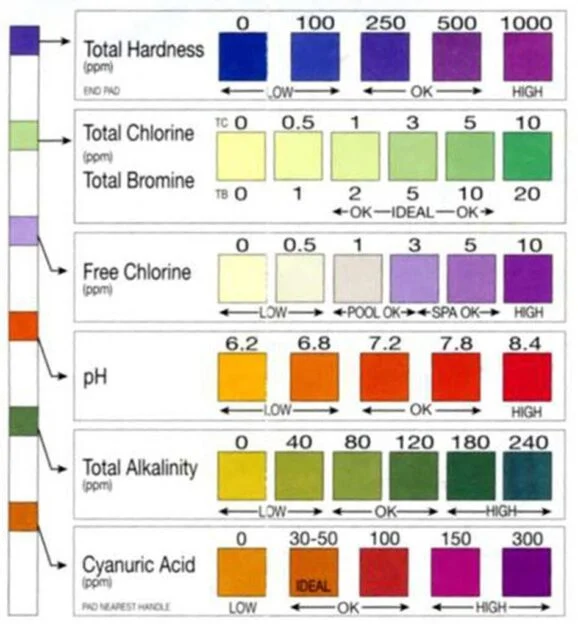
Alkalinity measures your water’s ability to resist pH changes.
pH measures how acidic or basic the water is.
Ideal alkalinity range: 80–120 ppm
You can test using:
Drop kits (most accurate and stable color readings)
Test strips (quick and convenient)
Local water testing at a hot tub store
Beginners should test weekly. Once you’re comfortable, twice per month is usually enough for regular use.
⚠️ Can Alkalinity Damage My Hot Tub?
Yes — both low and high alkalinity can cause real problems.
When alkalinity is too low (<80 ppm):
- Corrosion of heaters, pumps, and metal components
- Etching or staining of surfaces
- Eye and skin irritation
- Green or discolored water
- Wild pH swings
When alkalinity is too low
<80 pp:
- Corrosion of heaters, pumps, and metal components
- Etching or staining of surfaces
- Eye and skin irritation
- Green or discolored water
- Wild pH swings
When alkalinity is too high
>120 ppm:
- Scale buildup on jets, heaters, and shell
- Cloudy water
- Eye and skin irritation
- Elevated pH that becomes difficult to lower
🌦️ What Affects Alkalinity?
Alkalinity can drift due to:
- Rainwater entering the tub
- Lotions, oils, deodorants, and hair products
- High‑alkalinity source water
- Evaporation (minerals concentrate as water level drops)
- Chemical treatments
- Microbial activity
- Frequent sanitizer use (chlorine and bromine can slowly lower alkalinity)
📈 High Alkalinity
Most high‑alkalinity issues come from:
- High‑alkalinity fill water
- Body oils and lotions
- Overuse of calcium‑based chlorine
- Evaporation concentrating minerals
Before adjusting:
How old is the water?
Like expired milk. If it’s older than four months, drain and refill. Old water behaves unpredictably
How to lower alkalinity
1-Sodium Bisulfate (pH Down)
Recommended
- Best for small bodies of water like hot tubs
- Lowers alkalinity predictably
- Adjust pH afterward if needed
2-Muriatic Acid
Use with caution
- Very strong and caustic
- Only for extreme cases or very hard source water
- Follow label instructions carefully
- When in doubt, consult a professional or consider trucked‑in water
📉 Low Alkalinity
Low alkalinity can be caused by:
- Low‑alkalinity source water
- Rainwater dilution
- Heavy sanitizer use
- Acidic lotions and oils
- Microbial activity consuming alkaline compounds
How to raise alkalinity
Baking soda (sodium bicarbonate).
It raises alkalinity reliably and only slightly increases pH.
Adjustment rule
Always adjust gradually.
Small doses prevent overshooting and keep water chemistry stable.
🧭 Conclusion
Alkalinity is the foundation of balanced hot tub water. Keeping it between 80–120 ppm prevents corrosion, scaling, cloudy water, irritation, and unstable pH.
Use:
- Sodium bisulfate to lower alkalinity
- Baking soda to raise alkalinity
🚀 Next Steps
- Test weekly (or twice monthly once experienced)
- Use a drop kit for best accuracy
- Maintain 80–120 ppm alkalinity
- Lower high alkalinity with sodium bisulfate
- Raise low alkalinity with baking soda
- Make gradual adjustments
- Keep up with overall maintenance (filters, cleaning, water changes)
- Ask a pro if you’re unsure — water chemistry is easier with guidance

Join The Hot Tub Report Community
Subscribe for Smarter, Better Hot Tubbing
Swim N Soak Channel